Hiking clothing materials: GORE-TEX, eVent, Pertex, softshell and merino – what is each best for?
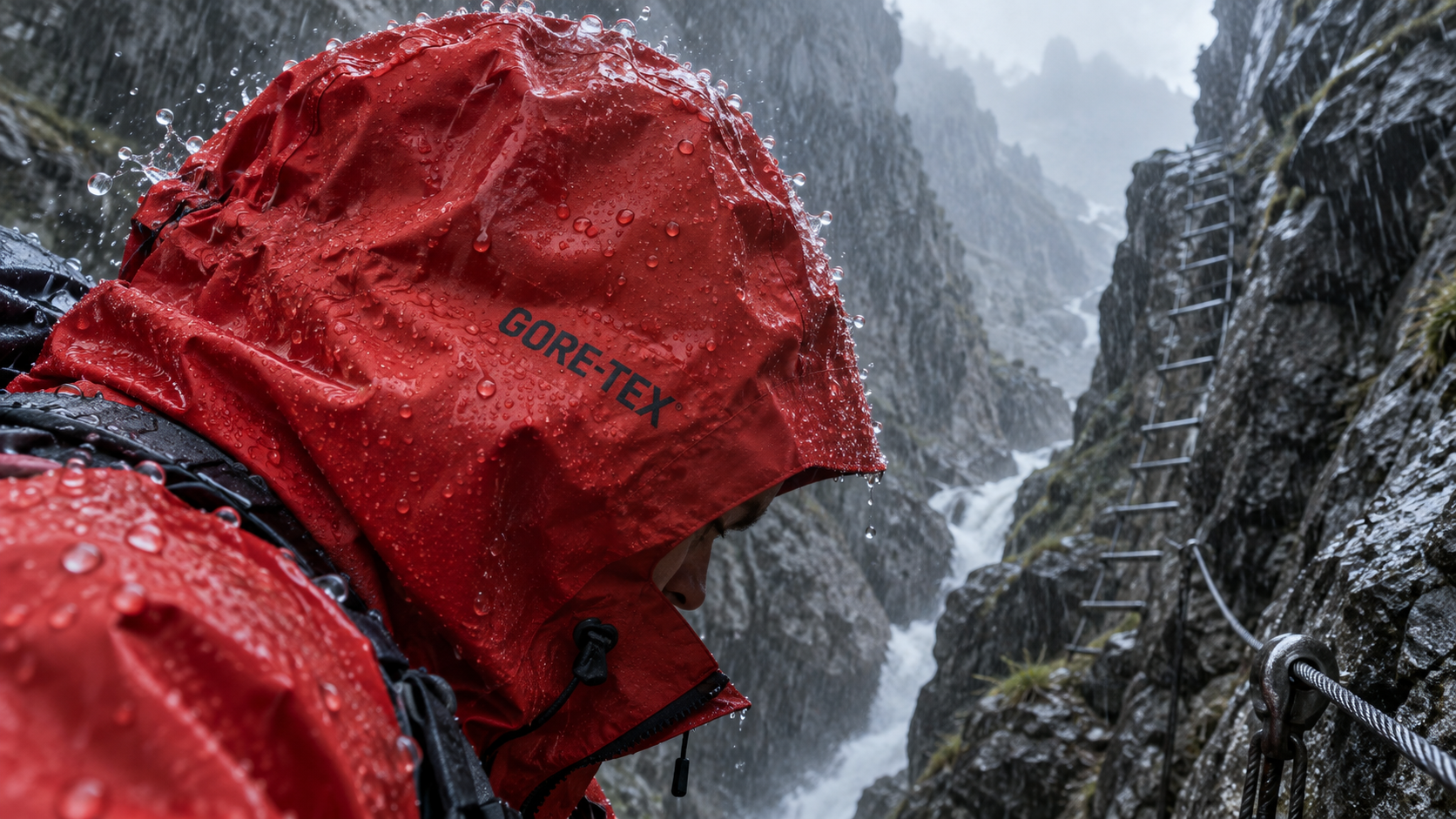
With technical clothing it is easy to shop by logo instead of by function. Yet a membrane hardshell, a breathable softshell, a merino base layer and an active insulation layer solve completely different problems. There is no single “best” material: what matters is the weather, your effort level, how long you will wear it and the terrain you will use it in.
It is the brand name of a specific membrane and laminate system; the face fabric, layer construction and cut of the finished garment are just as important.
In a 3L shell, the face fabric, membrane and inner protective backer are bonded together into one laminated material.
You can stay completely dry from rain while overheating and soaking yourself from the inside in a shell that is too closed for the activity.
Base layer, midlayer and wind or rain protection work together as a usable mountain clothing system.
- Persistent rain: hardshellYou need a membrane shell with taped seams; a softshell is not the same thing.
- Dry, windy movement: softshell or windshellThey breathe better, feel less like a plastic bag, and are often what you actually wear most of the day.
- Base layer: merino or syntheticMerino is strong for multi-day wear and odour control; synthetics excel when you sweat heavily and need fast drying.
- Do not look only at the membraneFit, pit zips, hood, face fabric, seam construction and DWR all strongly affect real-world usability.
First work out what the name on the label actually means
Four different things are mixed together in the language of outdoor clothing
Once you separate them, choosing becomes much easier.| Category | Examples | What does it mean? |
|---|---|---|
| Fibre / raw material | polyester, polyamide/nylon, polypropylene, merino | What the yarn is made from; it influences moisture management, durability and feel, among other things. |
| Membrane / laminate | GORE-TEX, eVent, Dermizax, Sympatex, Pertex Shield | The key layer in a hardshell for keeping water and wind out while allowing moisture vapour to escape. |
| Construction | 2L, 2.5L, 3L, softshell, grid fleece | Describes how the material or garment is built. |
| Proprietary brand system | FUTURELIGHT, H2No, HELLY TECH | A manufacturer’s own technology or performance system; it is not always one single membrane. |
Patagonia’s H2No Performance Standard is not the name of a specific membrane. It is a performance standard covering waterproofness, breathability, surface water repellency and durability. Likewise, a “GORE-TEX jacket” is more than a membrane: the full laminate, seam tape and finished garment construction all contribute to how it works.
GORE-TEX and its alternatives solve the same basic problem in different ways
The purpose of a hardshell: keep liquid water out while letting moisture vapour escape
“Breathable” does not mean that you will never sweat on a hard uphill.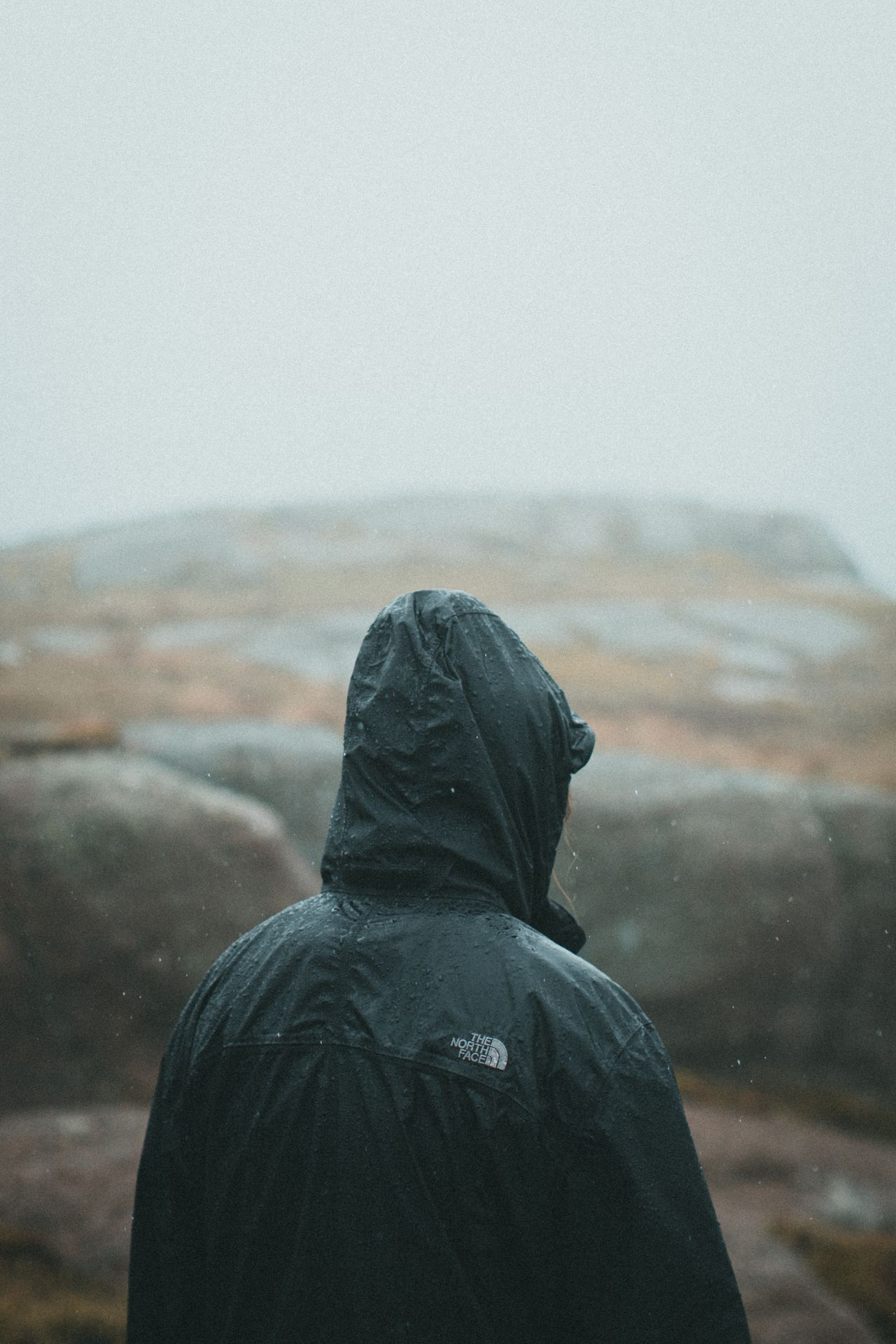
| Technology | Basic principle / character | What should you pay attention to? |
|---|---|---|
| GORE-TEX | Microporous membrane system; current products include both ePE- and ePTFE-based solutions. Durable waterproofing, full windproofness and broad application. | Not every GORE-TEX garment is the same: face fabric, layer construction and product line all matter. |
| eVent Waterproof | Air-permeable microporous system; the manufacturer uses the term Direct Venting to emphasise direct vapour and air movement. | Interesting for high-output use, but the cut and ventilation of the finished jacket are still decisive. |
| Pertex Shield / Shield Air | Family of lightweight, packable shell fabrics available in 2L, 2.5L and 3L versions. Shield Air uses an air-permeable electrospun nanofibre membrane. | Construction ranges from ultralight shells to robust mountain 3L garments. |
| Dermizax | Toray’s stretchable waterproof-breathable membrane family, with several versions including EV and NX aimed at higher moisture transfer. | Often found in softer and stretchier shells; check the exact version. |
| Sympatex | Non-porous hydrophilic polyester-based membrane; vapour moves outward by molecular diffusion. PFAS- and PTFE-free. | Because it works differently, do not compare laboratory figures one-to-one with microporous membranes without checking the test method. |
| Polartec NeoShell | A waterproof technology focused on air permeability; Polartec targets substantial airflow while maintaining a 10,000 mm waterproof rating. | Strong for active use, but chasing the highest possible hydrostatic-head figure is not its main purpose. |
There is no universal winner. On a fast summer mountain day, vapour transfer and air exchange may matter more; on multi-day alpine trips in stormy weather, durability, dependable waterproofing and mechanical resistance move to the front.
The membrane name tells you little if you do not know how the jacket is built around it
What do 2, 2.5 and 3 layers mean?
They do not tell you how many jackets you are wearing.Hydrostatic head and breathability: compare numbers only when the test is comparable
A 10K, 20K or 30K marketing figure alone does not tell you which jacket will work better on your body.| Metric | What does it mean? | How should you read it? |
|---|---|---|
| Hydrostatic head (mm) | The hydrostatic water pressure a fabric withstands in a laboratory before leaking. | A higher value indicates more reserve, but seams, zips, abrasion and pressure from backpack straps also matter. |
| MVTR | How much water vapour passes through the material over a given time. | Within the same test method, a higher value is generally better; figures from different standards may not be directly comparable. |
| RET | Measures resistance to moisture-vapour transfer. | Here a lower value is better, but ranking only makes sense within the same test system. |
| Air permeability | Whether actual air can pass through the structure. | It can matter greatly during active use, but fully windproof systems intentionally allow almost no airflow. |
A well-placed pit zip or a two-way front zip can make a bigger comfort difference on a steep climb than a small laboratory-performance gap between two good membranes.
Not every mountain day needs a waterproof membrane
A softshell is often better to wear when sustained rain is not the problem
More airflow, stretch and quieter fabric make a big difference while moving.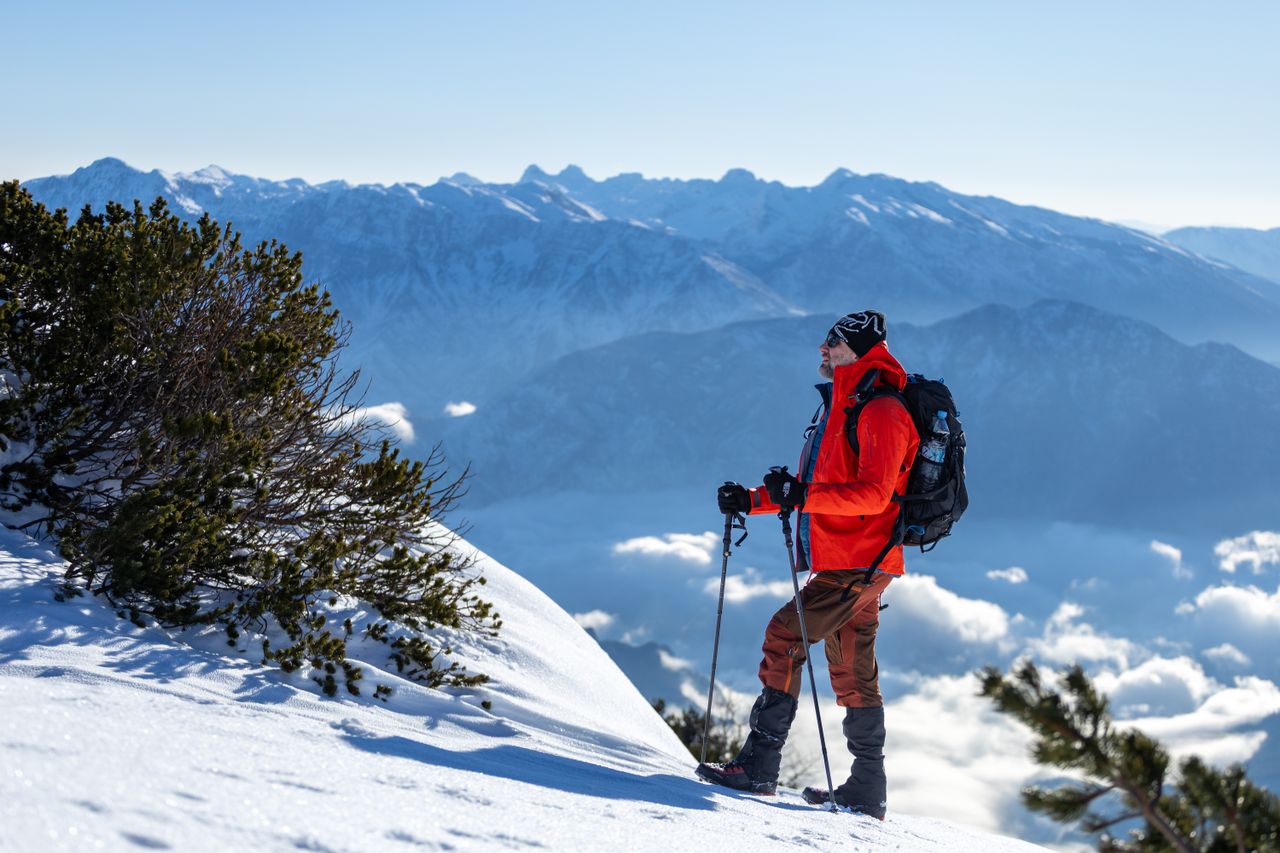
For active use in drier or changing weather
Usually a stretch-woven nylon/polyester fabric, often treated with DWR. It is wind-resistant, abrasion-resistant and can cope with light precipitation, but it is not a hardshell substitute in prolonged rain.
For minimum-weight wind protection
Very thin, tightly woven nylon or polyester. Exceptionally light and packable; air permeability can be good depending on the model, but there is usually no waterproof membrane.
On a dry, windy ridge or a fast climb, a membrane-free layer is often more comfortable. The hardshell can stay in the pack as an emergency layer and come out only for real rain, wet snow or severe weather exposure.
The layer against your skin is not simply there to “keep you warm” – its job is moisture and comfort management
Merino, polyester and polypropylene all have a sensible place
How much you sweat and how many days you wear the layer often matter more than the season.| Material | Strengths | Compromise | When is it good? |
|---|---|---|---|
| Merino wool | Good temperature regulation, comfortable moisture feel, natural odour resistance. | Dries more slowly than lightweight synthetics and can be more delicate and expensive. | Multi-day hiking, cool weather, changing intensity, limited washing opportunities. |
| Polyester | Fast drying, good moisture spreading, durability, very broad product range. | Can retain odours more easily; comfort depends strongly on knit and treatment. | High-output movement, summer, trail use, fast hiking, regular washing. |
| Polypropylene | Very light, hydrophobic, absorbs little water and dries quickly. | Can feel less natural against the skin, and odour management varies by product. | Heavy sweating, active cold-weather sports, lightweight technical base layers. |
| Blends | Can combine merino comfort with synthetic durability and faster drying. | There is no single formula: a 40/60 blend can behave very differently from an 80/20 blend. | For general hiking, often the most practical middle ground. |
It is not a “forbidden” material on an easy walk in warm, dry weather. In cold, wet or high-mountain environments, however, it holds a lot of water and dries slowly, so as a technical base layer it gives you less safety margin if you sweat heavily or get soaked.
A midlayer works when it retains as much heat as you can still tolerate at your activity level
“Warm jacket” covers very different technologies
What works on a fast uphill is not the same as what works when you stand on a windy summit for half an hour.Polartec Alpha was specifically developed for stop–go activity, while several PrimaLoft families emphasise heat retention in damp conditions. The two materials therefore make sense in different roles.
A brand name can be useful shorthand, but it does not replace the technical specification
Who uses what? A few typical examples
Not a complete list, but a guide to recognising the names on labels.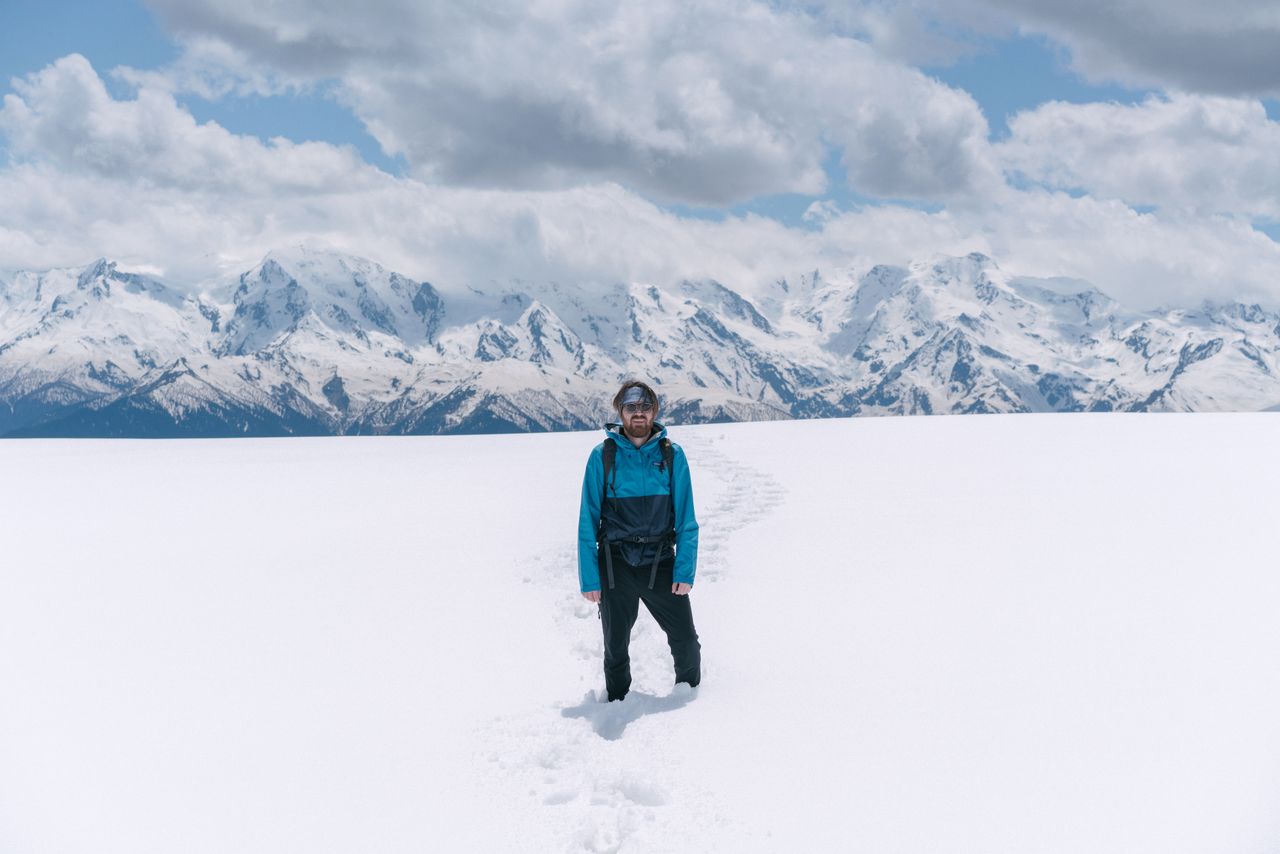
| Brand / system | What is worth knowing? |
|---|---|
| GORE-TEX | An independent technology brand used by many garment manufacturers. New-generation ePE laminates are made without intentionally added PFAS; Gore’s current range includes both ePE and ePTFE membrane systems. |
| The North Face FUTURELIGHT | A nanospun polyurethane membrane used by the brand as a waterproof-breathable system. The North Face also offers its proprietary DryVent technology. |
| Patagonia H2No | Not a single membrane, but a performance standard and testing system. Since spring 2025, Patagonia says its new products are made without intentionally added PFAS. |
| Helly Hansen HELLY TECH | A system combining a DWR-treated face fabric, waterproof-breathable membrane and an inner layer that varies by product. The brand also uses polypropylene-based base-layer technology under the LIFA name. |
| Rab + Pertex | Rab’s current waterproof range includes both GORE-TEX and Pertex; some Pertex Shield models, for example, specify 20,000 mm hydrostatic head and 2.5L or 3L construction. |
| Toray Dermizax | A material-supplier technology used by multiple clothing brands. DX, EV, NX and other versions place different emphasis on waterproofing, moisture transfer and stretch. |
A single brand may use several different membranes at the same time. So asking “which brand is best?” is less useful than asking what construction, face fabric, ventilation and cut a specific model actually has.
Start from the use case, not the logo
A practical selector
The same person may prefer very different fabrics on a summer low-mountain hike and in the Alps in November.| Use | Sensible material combination | Why? |
|---|---|---|
| Summer day hike | light polyester/merino top + thin windshell + lightweight 2.5L rain jacket in reserve | Low weight, good ventilation, separate protection for an unexpected shower. |
| Autumn or spring mountain hike | merino or synthetic base layer + grid fleece + softshell + 3L hardshell | Highly adaptable; you can move without a membrane for long periods and switch to full protection when weather deteriorates. |
| High-mountain / alpine day | fast-drying base layer + active midlayer + durable 3L shell + separate insulated jacket | Large weather margin, abrasion resistance and a dedicated warm layer for stops. |
| Multi-day trekking | merino blend or two rotating synthetic tops + fleece + rain shell | Odour control, drying and repairability become more important than chasing the absolute minimum weight. |
| Active winter hiking | synthetic/polypropylene base layer + grid fleece or Alpha + softshell + hardshell in reserve | Moves moisture while walking, while a separate puffy layer can be added during stops. |
Loss of water repellency does not necessarily mean membrane failure
DWR works on the surface of the face fabric; it is not what makes the membrane itself waterproof.If rain no longer beads on the jacket and the outer fabric instead darkens as it absorbs water, that is called wet-out. The membrane may still be waterproof, but the jacket can feel colder and clammy, and moisture transfer may worsen. Today’s PFAS-free DWR finishes may require more regular cleaning and maintenance.
- Wash it according to the manufacturer’s instructions. Body oils, dirt, sunscreen and contamination reduce performance.
- If permitted, reactivate the DWR with heat. Tumble drying or careful ironing only according to the care label.
- If repellency no longer returns, renew it. A spray-on or wash-in treatment may be suitable if recommended by the manufacturer.
- Damaged seam tape is a different problem. Delamination, peeling seam tape or a hole requires actual repair.
Frequently asked questions
These are the points that cause the most confusion on clothing labels.Is GORE-TEX always better than other membranes?
It is not that simple. GORE-TEX has a strong quality-control system and high waterproofing requirements, but on a particular trip a lighter Pertex shell, a more air-permeable eVent design or a stretchier Dermizax construction may be more comfortable. Judge the actual jacket, not only the membrane name.
Is a 20,000 mm hydrostatic head enough for the mountains?
It is generally considered a serious level of waterproof protection, but it is not a guarantee by itself. Test method, material ageing, seams, pressure from backpack straps and the cut of the jacket all matter.
Softshell or hardshell?
If sustained rain or wet snow is a realistic risk, choose a hardshell. If you are moving actively in dry, windy weather, a softshell is usually more comfortable. On many mountain hikes both make sense: softshell on your body, hardshell in the pack.
Merino or synthetic base layer?
Merino is strong for multi-day wear and odour control; polyester or polypropylene has an advantage when you sweat heavily and need very fast drying. A blended fabric is often the best compromise for many hikers.
Why does my waterproof jacket feel wet if it is not leaking?
It may be condensation and your own sweat, or the face fabric’s DWR may be exhausted and the fabric may have wetted out. That can create a clammy feeling even when the membrane itself is not leaking.
Not every layer needs to be waterproof.
The more closed membranes you wear unnecessarily, the harder it is for heat and moisture to escape. The job of a waterproof shell is to deal with bad weather, not to be compulsory all day.
Moisture management → temperature control → wind protection → precipitation protection.
If you build your clothing system in this order, it becomes much easier to decide whether merino, fleece, softshell, GORE-TEX or another membrane gives you a real advantage.
Sources and background
Membranes and brand technologies continue to evolve, so this article focuses on the underlying principles. When choosing a specific model, always check the manufacturer’s current technical specification.
- GORE-TEX — membrane construction, ePE/ePTFE, waterproofing and lamination
- GORE-TEX — new-generation ePE membrane and laminates made without intentionally added PFAS
- GORE-TEX — DWR, wet-out and care
- eVent Fabrics — Waterproof and Direct Venting technology
- Pertex — Shield 2L, 2.5L and 3L systems
- Pertex — Shield Air air-permeable nanomembrane
- Toray — Dermizax, EV and NX technologies
- Sympatex — hydrophilic, non-porous polyester membrane
- Polartec — NeoShell and weather-protection technologies
- Polartec — Power Grid moisture management and thermoregulation
- Polartec — Alpha active insulation
- PrimaLoft — synthetic insulation designed to retain performance in damp conditions
- Patagonia — H2No Performance Standard
- The North Face — FUTURELIGHT nanospun PU technology
- Helly Hansen — HELLY TECH system
- Helly Hansen — polypropylene and LIFA material
- Smartwool — merino moisture management, odour resistance and thermoregulation
- Hasan Hüseyin TURAN / Pexels — hero image
- Jonathan Cooper / Pexels — waterproof jacket in mountain terrain
- Amel Uzunovic / Pexels — technical layering in snowy terrain
- ArtHouse Studio / Pexels — winter hiking clothing