
How to Clean, Care for and Store Hiking Boots: Products and Practical Methods
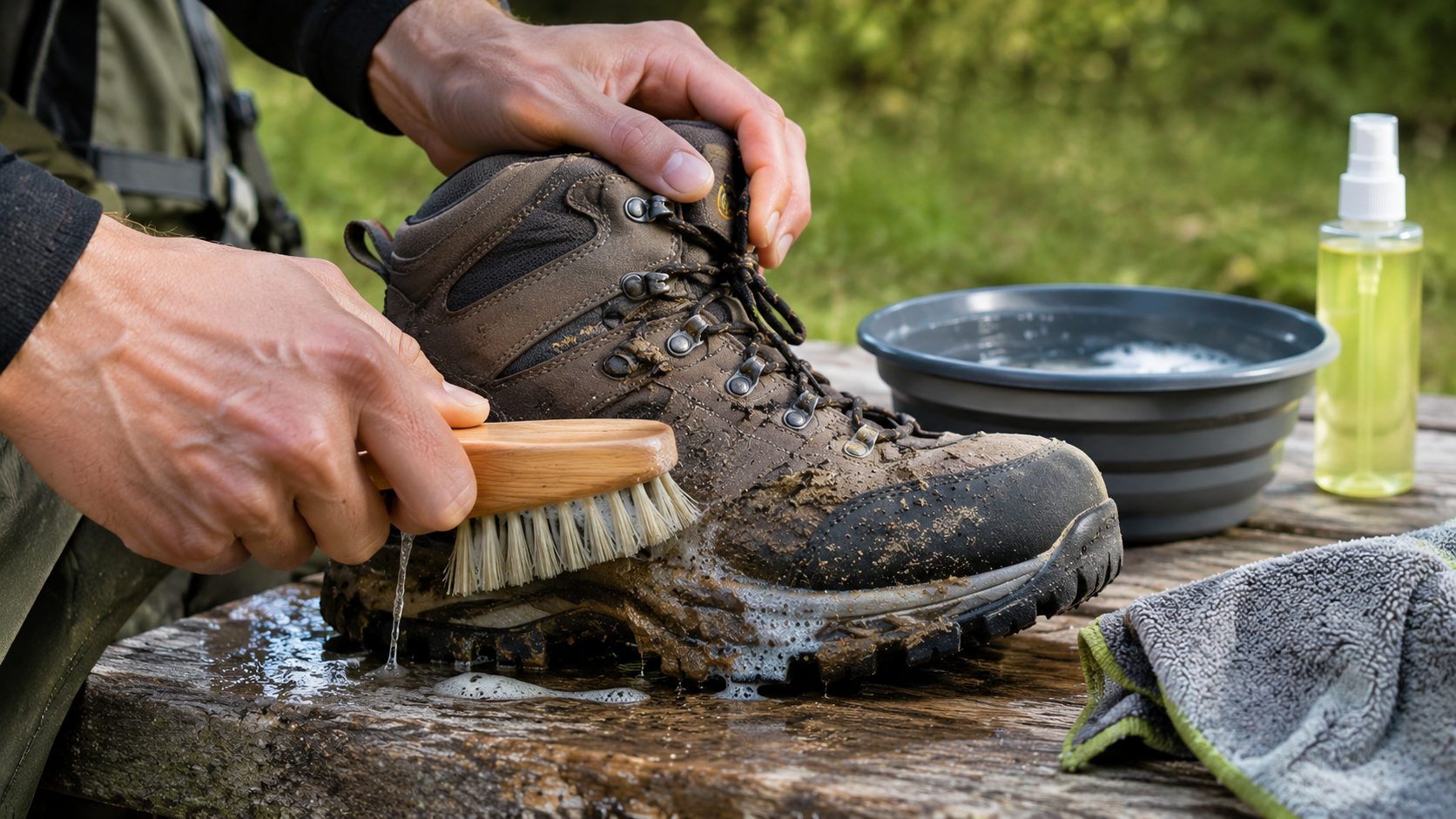
Muddy hiking boots do not always need a cleaning product, and wax is not suitable for every type of leather. Proper care starts with identifying the material and ends with appropriate storage. Here are specific products, the order in which to use them and methods that work over the long term.
Gently, by hand
With a material-specific treatment
Cool, dry and ventilated
Check the sole and take a test walk
Ten minutes that can save you a deep clean
Do not leave mud in the stitching or outsole tread until your next hike.
Start by removing dirt rather than reaching for a spray. Dried clay tends to linger around seams and creases in the upper, while stones lodged in the tread are worth removing separately.
- Remove the laces and insoles. Open the tongue wide; moisture evaporates much more slowly beneath the insole.
- Brush the outsole. Remove stones from the tread with a blunt wooden or plastic tool; do not puncture the rubber.
- Wash the outside with lukewarm water. A soft brush and cloth are usually enough. Avoid aggressive scrubbing along the seams.
- If oily, sticky or embedded dirt remains, use a cleaner specifically intended for hiking footwear, then rinse according to its instructions.
- Dry the insoles separately. Leave the tongue open in a well-ventilated spot; store the boots only once they have dried completely.

After mud, road salt, animal-related contamination or dirt embedded in the surface. After a dry, dusty hike, brushing and airing out are often sufficient.
What should you clean them with? Three specific products
A cleaner is not the same thing as a water repellent or leather conditioner.
Suitable for waterproof, breathable hiking footwear, including compatible GORE-TEX models. Apply to a wet surface, work in with a brush or applicator, then rinse thoroughly.
A spray-on cleaner for fabric, leather and mixed-material uppers. Useful if you want to clean your backpack and boots with the same product.
A LOWA-recommended cleaner for more heavily soiled boots. It complements gentle cleaning with lukewarm water; appropriate leather care may be needed afterwards.
After most hikes, these two tools matter more than any chemical cleaner. Deep outsole lugs can be cleaned with a firmer, non-metal brush.
Do not use bleach, strong solvents, laundry powder or fabric softener. Do not machine-wash membrane-lined footwear; instead of soaking the whole boot, clean affected areas by hand.
Choose care products according to the upper material
Do not rely on the word “universal” on the bottle.
| Upper material | Recommended care | Important limitation |
|---|---|---|
| Smooth full-grain leather | Meindl Sportwax (where approved by the manufacturer) or LOWA Active Cream for compatible LOWA models. | Wax may darken leather; with membrane-lined boots, follow the instructions for the specific model. |
| Nubuck and suede | Nikwax Nubuck & Suede Proof or Meindl Conditioner & Proofer; use an appropriate suede brush. | A thick layer of wax can flatten the nap and darken the material. |
| Fabric and leather combination | Nikwax Fabric & Leather Proof or Grangers Footwear Repel Plus. | Heavy greases and thick waxes do not belong on fabric panels. |
| Membrane-lined (e.g. GORE-TEX) | A water-based water-repellent treatment approved by the footwear manufacturer and suitable for the upper material. | Restoring surface water repellency does not repair a damaged membrane. |
How can you identify the material? Smooth leather is uniform and relatively glossy; nubuck has a finely sanded, matte finish; suede has a visibly raised nap. A mixed-material boot may combine several types of panels. If in doubt, consult the manufacturer’s material description and care instructions.
Smooth leather: cream or wax, and where should it go?
Apply leather care thinly and evenly; do not saturate the boot.
Meindl Sportwax: On suitable smooth-leather Meindl boots, apply a thin layer after cleaning and drying, using a soft cloth or sponge. Do not overlook the folds beside the tongue. Heating is unnecessary. Treated leather may become darker and smoother.
LOWA Active Cream: A leather-care cream recommended by LOWA to help prevent drying out. Apply a small amount to clean, dry leather and spread it with a soft cloth or brush according to the manufacturer’s instructions. For other brands, first check compatibility with the upper material.

Meindl recommends Sportwax for certain leather boots, while general GORE-TEX membrane-care guidance cautions against heavy waxes and greases because of their effect on breathability. Not every membrane-lined leather boot should be treated the same way: follow the instructions for your specific boots.
Nubuck, suede and fabric: restoring water repellency
Reapply a treatment only when water no longer beads on the upper after cleaning.
For nubuck and suede, designed to preserve the texture of the surface. Apply to clean, still-damp boots; wipe off excess product after approximately two minutes, then allow to dry naturally.
For fabric-and-leather combinations. After cleaning, spray evenly onto the damp surface, especially around seams; wipe away excess after approximately two minutes.
A water-based treatment suitable for various upper materials. Spray onto clean, still-damp boots, then wipe off the excess; allow the boots to dry completely before use.
A conditioning and water-repellent treatment for Meindl nubuck and suede boots. It is particularly relevant when recommended for your specific model.
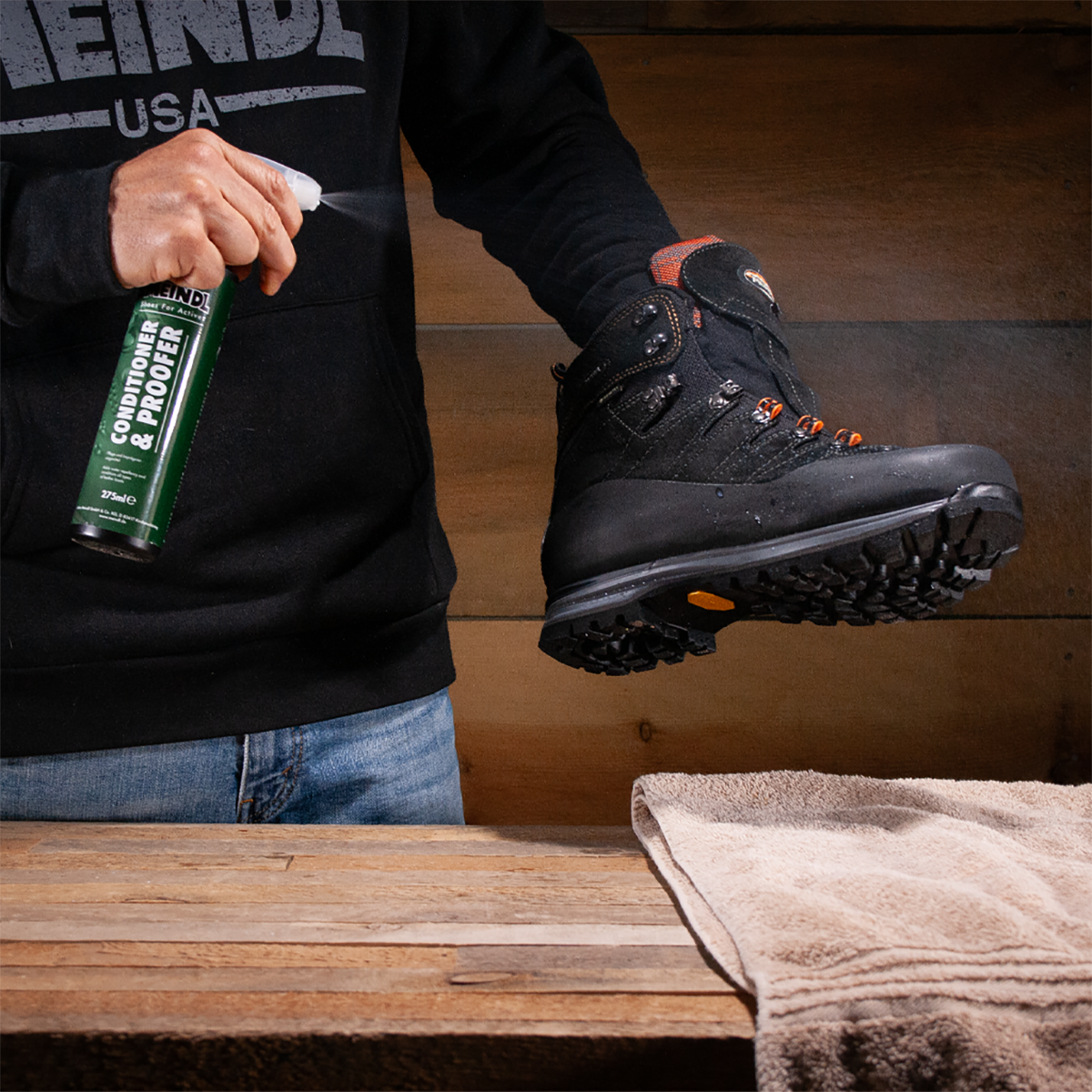
A suitable treatment reduces the amount of water absorbed by the outer material. It cannot turn a non-membrane boot into fully waterproof footwear or fix leaking seams or a damaged membrane. Light-coloured leather and nubuck may change shade; test on an inconspicuous area first.
Drying boots without damaging the leather or adhesive
Speeding up drying with high heat can cause more damage than the time saved is worth.
Remove the insoles, loosen or remove the laces, and open the tongue. If the boots are wet inside, loosely fill them with absorbent paper or a clean cloth, replacing saturated paper as needed. Let the boots dry at room temperature in a well-ventilated area.

| Method | Suitable? | Why? |
|---|---|---|
| Open tongue in a dry, ventilated room | Yes | Gentle drying without overheating the adhesive. |
| Loosely inserted paper, replaced regularly | Yes | Helps remove internal moisture more quickly. |
| Radiator, oven, hot hairdryer or campfire | No | Leather can dry out, adhesives may weaken and the sole may separate. |
| Direct sun behind a car’s rear window | No | Heat exposure can be extreme and may damage both the upper and the adhesive. |
If the boots smell: first inspect the removable insole and drying conditions. Do not pour perfume or an unidentified disinfectant into the boot; use only products permitted by the membrane and lining manufacturers. Replacing a worn-out insole sometimes resolves persistent odour.
How and where should you store boots for months?
A cool, dry, ventilated location matters more than an expensive storage box.
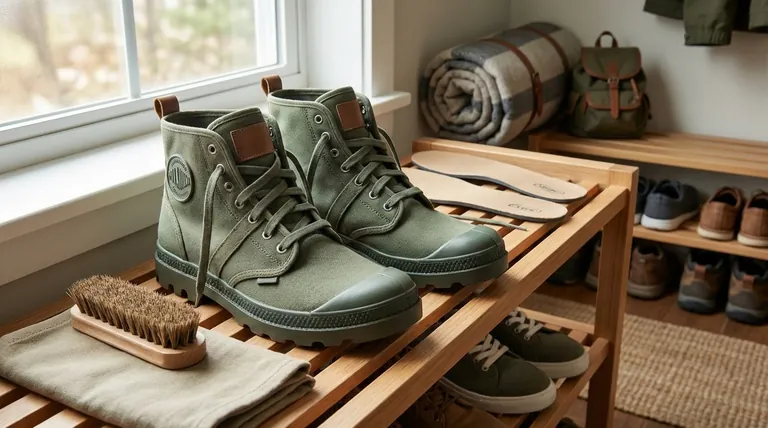
A good basic option indoors in a dry place with a stable temperature. Do not leave boots wrapped up all winter if they are still damp.
Useful for keeping dust off once the boots are completely dry. Do not compress them inside the bag.
Help the boots keep their shape. Do not leave damp paper inside; if you used it for drying, replace it and remove it once the boots are dry, or use fresh, dry paper.
Airtight plastic bags, vacuum-storage bags, damp cellars, hot attics, direct sunlight and storage next to radiators.
Polyurethane (PU) midsoles can also deteriorate while boots are in storage; damp storage conditions and long periods without use are particularly unfavourable. Even boots that look new after years in a box need a careful sole inspection before a hike. Regular use may help, but it does not completely stop the material’s natural ageing.
Four checks before wearing them again
These checks show whether your stored boots are ready for the trail.
- Sole edges: inspect where the toe and heel areas meet the upper. There should be no gaps, lifting rubber edges or bulges.
- Midsole: if it is cracked, sticky, powdery or crumbles under finger pressure, do not wear the boots on a long hike.
- Inside the boot: the insole and lining should be dry and free from odour and mould; check that the laces and lace hooks are intact.
- Test walk: after prolonged storage, try the boots on a short walk that is easy to cut short, rather than heading straight into a multi-hour mountain hike.
A water-repellent treatment protects the upper; it cannot repair sole adhesive or a crumbling midsole. If structural damage is visible, professional repair or replacement is required.
What is actually worth buying?
You do not need seven different bottles: choose a kit that matches your boot material.
| Your boot type | Practical starter kit | When should you add something? |
|---|---|---|
| Smooth leather | Soft brush + Nikwax Footwear Cleaning Gel + a leather cream or wax recommended by your boot manufacturer. | If water no longer beads, add a water-repellent treatment approved by the manufacturer. |
| Nubuck or suede | Soft brush + Nikwax Footwear Cleaning Gel + Nikwax Nubuck & Suede Proof. | A specialist nubuck brush for restoring the nap, if the material permits it. |
| Fabric and leather with a membrane | Soft brush + Nikwax Footwear Cleaning Gel + Nikwax Fabric & Leather Proof. | Alternatively, Grangers Footwear + Gear Cleaner and Footwear Repel Plus. |
| Meindl nubuck / LOWA leather | Meindl Conditioner & Proofer or LOWA Active Cream, but only on materials approved for the specific model. | Follow the brand’s specialist care programme if routine cleaning is no longer enough. |
With occasional use, care products can often last for several years. Applying another layer after every hike does not automatically improve your boots: keeping them clean and dry, and treating them only when necessary, matters more.
Three signs that tell you what to do next
The upper wets out, but your socks stay dry
Surface water repellency has often weakened. Cleaning followed by a suitable DWR treatment may improve the situation.
Your socks are wet, but there is no visible external damage
Sweat, water entering through the top of the boot and membrane damage are different causes. Check where moisture first appears.
The sole separates or the midsole crumbles
Waterproofing treatment will not fix this. A repair specialist needs to assess the sole unit and whether it can be repaired.

Manufacturer care guides and image sources
Technical review: 16 November 2026. Product suitability depends on the upper material and the care instructions for the specific boot model. A product being named here does not mean it is suitable for every boot.
- GORE-TEX – cleaning, drying and DWR care for footwear
- Nikwax – how to use Footwear Cleaning Gel
- Nikwax – Nubuck & Suede Proof
- Nikwax – Fabric & Leather Proof
- Grangers – Footwear + Gear Cleaner and Footwear Repel Plus
- Meindl – Sportwax, Conditioner & Proofer and drying
- LOWA – Shoe Clean, Active Cream and storage guidance
- Meindl – PU midsole hydrolysis and storage
Images: the photographs illustrate the techniques discussed. Captions contain descriptive text only.
- Hero image – cleaning hiking footwear outdoors, Travel Fanatics
- Brushing – Victor Adrian / Best For My Feet, Wikimedia Commons (see file page for licence)
- Leather conditioning – Victor Adrian / Best For My Feet, Wikimedia Commons, CC BY 3.0
- Waterproofing – Meindl USA
- Drying – Mammut
- Storage – Jihua3515, illustrative image