
Waterproof Duffel Bags: Which Can Be Submerged and Which Only Resist Rain?
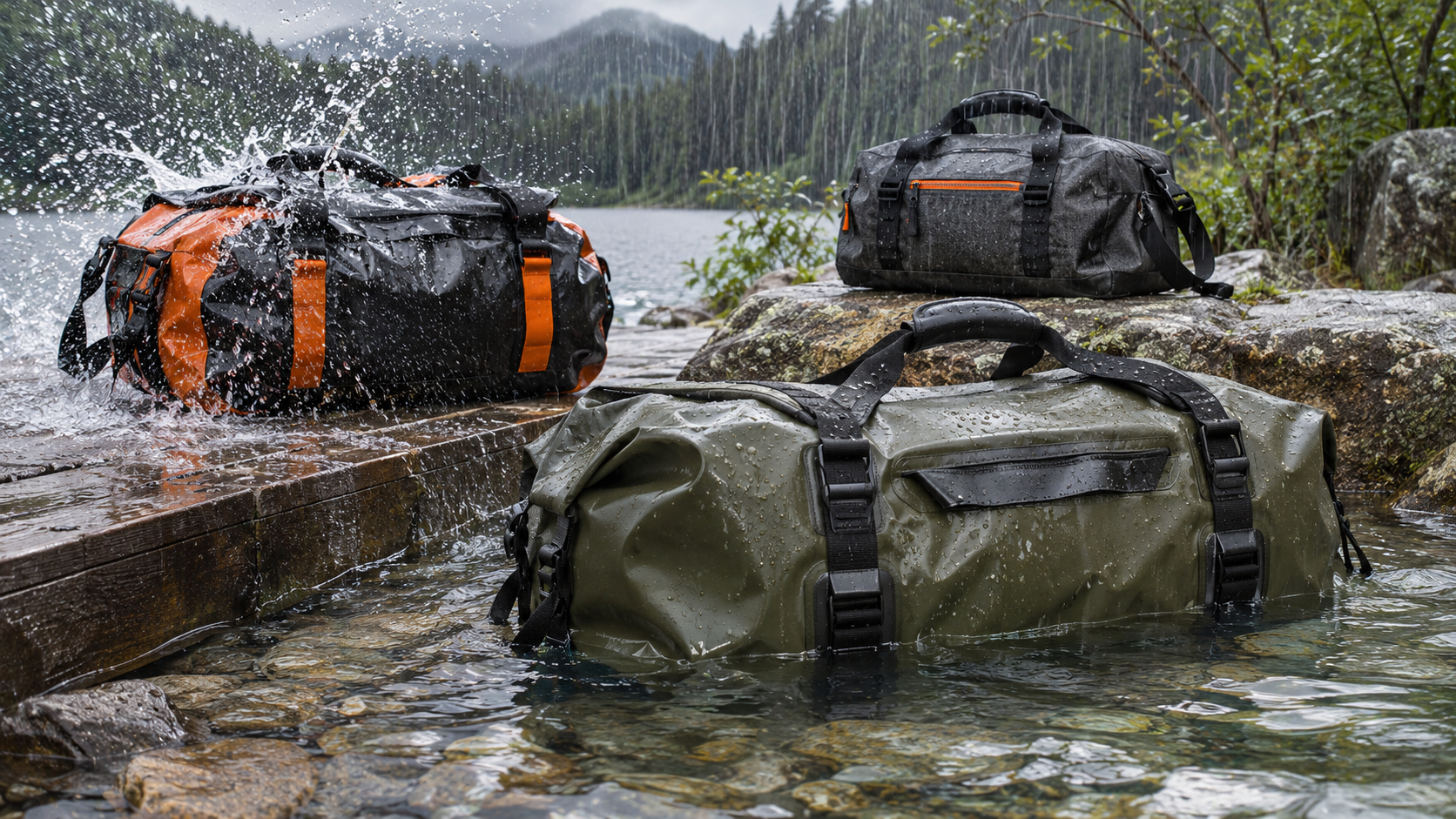
Base Camp, YETI Panga, Ortlieb, SealLine, Patagonia and Osprey: which duffel suits which trip, how durable is it, and which one keeps your gear dry even if it ends up underwater?
Weather-resistant and submersible designs
6 specific models with technical specifications
Paddling, travel, camping and transport
Weather-resistant or submersible? Decide this first
Water resistance describes the entire bag, not just its fabric.
Three substantially different products may all be advertised as “waterproof.” A coated fabric can repel water while the zipper and seams still allow leaks. A welded body offers more protection, but genuine immersion resistance also requires an appropriately designed and fully closed opening.
| Protection level | Suitable for | Where it falls short |
|---|---|---|
| Weather-resistant | Rain, snow, mud and brief splashes during transport | Underwater, water may enter through the zipper and seams |
| Welded, watertight body | Prolonged rain and frequent wet conditions; the closure is critical | A weak or incorrectly closed opening remains a potential leak point |
| Submersible construction | Temporary immersion under the manufacturer’s specified conditions | Not a guarantee for unlimited depth or duration |
In both ratings, the 7 indicates the level of water protection: under standardized conditions, typically immersion at a depth of 1 meter for 30 minutes. The 6 in IP67 also indicates dust-tight protection, whereas X means no dust-resistance rating is specified. Always follow the manufacturer’s instructions for the particular bag.
Base Camp Duffel: what can it actually withstand?
The Base Camp excels at repeated loading, tough exterior protection and easy access to your gear.
When a trip involves changing accommodation, off-road vehicle transfers or moving several days’ worth of equipment rather than simply carrying a daypack, the The North Face Base Camp Duffel comes into its own. The wide D-shaped opening makes it easy to reach boots, sleeping bags and cooking equipment. The handles, detachable backpack straps and compression straps are useful in different transport situations.
As luggage for car or air travel, a base-camp equipment bag or a duffel that is repeatedly loaded and unloaded. Its reinforced base and coated fabric stand up well to rough handling.
For long walks, it does not replace a properly fitted hiking backpack. Its conventional wide-opening zipper is not designed to keep water out when the bag is submerged.

Practical idea: If the bag also travels by boat, you can use the Base Camp as an easy-access outer duffel while placing electronics and your sleeping bag inside separate, sealed dry bags.
YETI, Ortlieb, SealLine: three approaches to waterproof duffels
All three are intended for use around water, but their weight, handling and closures differ.
A rugged ThickSkin shell, HydroLok zipper and U-Dock closure. Worth considering when loading is rough, the bag rides in a boat or raft, and the higher empty weight is acceptable.
A welded body, TIZIP zipper and reinforced base. Its relatively low weight for this protection level can be an advantage on paddling trips or journeys with multiple transfers.
Welded seams and an AquaSeal watertight zipper. Practical for canoeing, kayaking or camp equipment that is frequently loaded and unloaded on shore.
An alternative developed for whitewater use with a TRU Zip closure. Check the manufacturer’s immersion and handling requirements for the exact size you are considering.


Try opening the bag before you buy it. A watertight zipper usually requires more force than the zipper on a conventional travel bag. If you need to reach your equipment repeatedly throughout the day, that difference can matter as much as the stated capacity.
Patagonia Black Hole and Osprey Transporter: easier everyday handling
For many journeys, low weight, carrying comfort and quick packing matter more than submersibility.
Patagonia Black Hole Duffel 55: A soft, easily packable duffel with a wide opening. A convenient choice for clothes, sports equipment and weekend trips, especially when the bag travels in a vehicle or stays at accommodation rather than being carried on your back all day.
Osprey Transporter 65: Made with NanoTough-coated fabric, a covered zipper and backpack-style carry straps. The compromise is not carrying convenience but the lack of submersible protection. It can work well for transport exposed to rain, but it is not intended to go underwater.

If your bag travels in dry conditions most of the time but you occasionally pack in the rain, a few smaller internal dry bags may be enough. That way, only the items genuinely vulnerable to moisture need their own waterproof protection.
What matters beyond the fabric?
Damage is most likely where a bag is dragged, lifted or rubbed against the ground.
| Type of wear | Typical damage | Useful design feature |
|---|---|---|
| Dragging over concrete or rocks | Wear on bottom corners and the base coating | Separately reinforced base and a sufficiently thick abrasion layer |
| Lifting a fully packed bag | Stress on handles and strap attachment points | Reinforced stitching, broad load distribution and multiple grab points |
| Transport on boats or roof racks | Stress at tie-down points and abrasion beneath straps | Manufacturer-approved attachment points and protected contact surfaces |
| Long-term use | Cracking coatings, aging corners and closures | Repair and replacement-part availability, access to seals |
The Base Camp M’s 1000D coated fabric and 840D base are examples of a design focused on abrasion resistance, but denier is not a quality score. The fiber, coating, weave and structural reinforcements all affect durability. On waterproof duffels, the sealing zipper is a particularly vulnerable component: even minor damage can have serious consequences.
Six situations where different features matter
What could happen to your bag en route tells you more than how much rain is forecast.
During a capsize, the bag may be submerged temporarily. A duffel designed for immersion, secure attachment and secondary protection for valuables are sensible precautions.
Bags are repeatedly lifted, slid and stacked. Abrasion resistance on the base, comfortable handles and an easily accessible opening take priority.
If the bag is kept in a tent vestibule or on wet ground, protect your sleeping bag and dry clothes in separate inner dry bags. Pay for full submersible protection only when the conditions justify it.
Wind-driven rain can be harsher than rain falling vertically. Secure attachment, stable positioning and reducing abrasion against the vehicle matter most.
Empty weight, easy identification and manageable carrying matter. The extra protection of a heavy expedition-grade submersible duffel often goes unused here.
Impacts and crushing are risks as well as water. Put sensitive electronics in a separate padded case inside the duffel, adding a watertight inner case where needed.
Six specific models in one comparison table
Capacity, empty weight and the manufacturer’s water-protection rating need to be considered together.
| Model | Capacity | Empty weight | Water protection |
|---|---|---|---|
| The North Face Base Camp M | 71 L | approx. 1.62 kg | Weather-resistant |
| YETI Panga 75 | 75 L | approx. 2.77 kg | IPX7 |
| Ortlieb Duffle 60 | 60 L | approx. 1.18 kg | IP67 |
| SealLine Pro Zip 70 | 70 L | approx. 1.15 kg | Submersible under specified manufacturer conditions |
| Patagonia Black Hole 55 | 55 L | approx. 1.18 kg | Weather-resistant |
| Osprey Transporter 65 | 65 L | approx. 1.21 kg | Weather-resistant |
The figures are rounded values from previously published manufacturer specifications for the listed versions; they may change between model years. There is, for example, a substantial difference in empty weight between the YETI Panga and Ortlieb Duffle, even though both are designed for conditions where immersion is a possibility. For large duffels, look beyond capacity: you will also have to lift the total weight once the bag is packed.
How to keep your gear bag watertight and durable
The zipper, storage conditions and internal packing matter just as much as the original specifications.
- Close the zipper when it is clean. Sand and mud caught in a watertight zipper can damage the seal. Check that the slider has reached the fully closed position specified by the manufacturer.
- Do not force an overpacked bag shut. Overfilling puts strain on the closure. Pack items with hard edges and cooking equipment inside protective cases so they do not press against the bag’s walls.
- Separate wet and dry gear. A watertight shell can also trap moisture evaporating from wet clothing, so air out the interior after transport.
- Follow the care instructions after exposure to salt water or mud. Rinsing and drying as specified by the manufacturer can extend the life of the seals. Do not apply random lubricants.
- Do not rely on the handles alone when securing the bag. On boats, motorcycles and vehicle roofs, use attachment points suitable for the specific bag and correctly rated straps.
Check the lower corners, strap attachments and the end of the zipper. Separate protection for electronics and documents can still be worthwhile on wet trips, even with a submersible duffel.
What should you weigh up before buying?
Occasional rain and a capsize present very different demands
First, think about how your luggage will travel. Then consider the capacity you need and the weight you can comfortably carry. This helps you avoid paying for protection you will never use without underestimating genuine water exposure.


Manufacturer specifications and photo credits
Specifications checked: 13 November 2026. The specifications refer to the particular versions named here; they may vary with model revisions and sizes. Claims of submersibility apply only under the manufacturer’s specified conditions.
- The North Face – Base Camp Duffel M 71 L: materials, weight and water resistance
- The North Face – water-resistant versus waterproof
- YETI – Panga 75: IPX7, HydroLok, materials and weight
- YETI – Panga care and owner’s manual
- Ortlieb – Duffle: sizes, IP67 and closure requirements
- Ortlieb – Duffle technical data sheet
- SealLine – Pro Zip Duffel: sizes and submersible protection
- NRS – Expedition DriDuffel
- Patagonia – Black Hole Duffel 70 L: manufacturer’s water-resistance guidance
- Patagonia – 2026 equipment catalogue (55 L weight)
- Osprey – Transporter Duffel 65: NanoTough, weight and water protection
External images used: Product photographs and editorial images linked from the original providers’ websites; no Base64 image data is embedded in this article. Image usage rights should be checked with the original sources.
- SealLine Pro Zip Duffel – manufacturer’s product-only photograph on a white background
- The North Face Base Camp Duffel M – field-test photograph by Will Brendza / GearJunkie
- YETI Australia – manufacturer’s lifestyle photograph
- Live for the Outdoors – Ortlieb Duffle 60 test photograph
- Field Mag – Patagonia Black Hole Duffel photograph
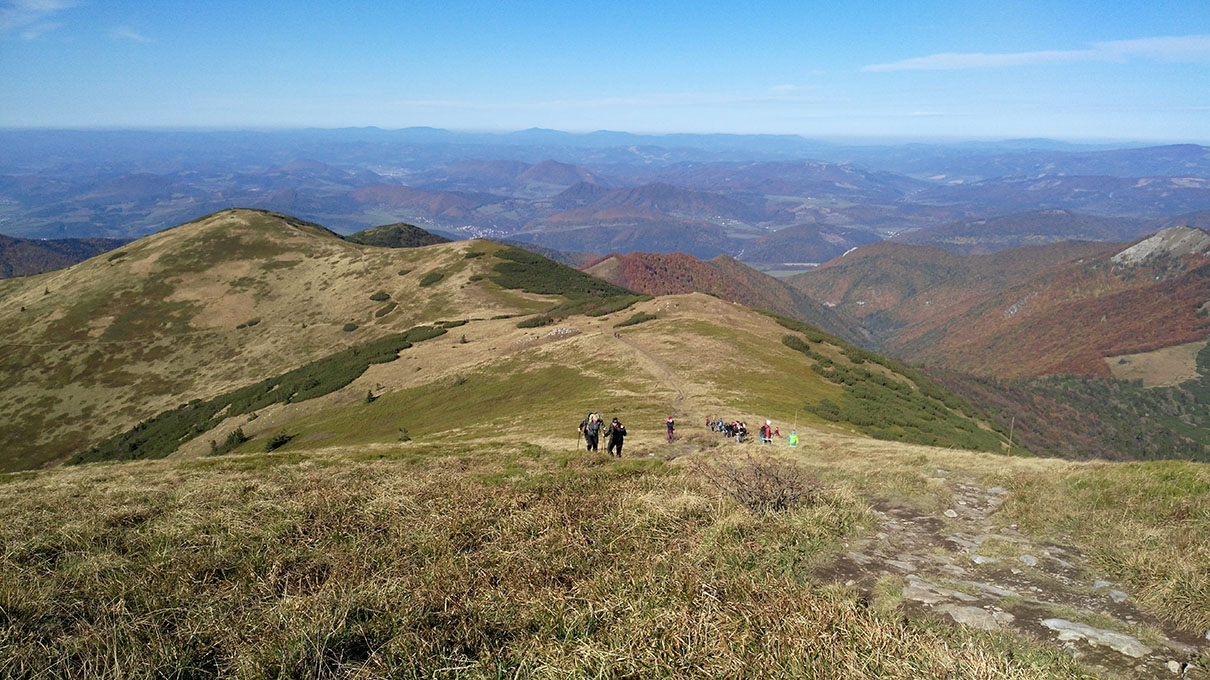
Images in the Túraprogramok recommendations illustrate the wider areas, not necessarily points along the exact routes. External image URLs may change, so check that the photographs load in WordPress before publishing.