Energy Gels, MagnaShot and Energy Shot for Hiking — What Are They For and Are They Worth Using?
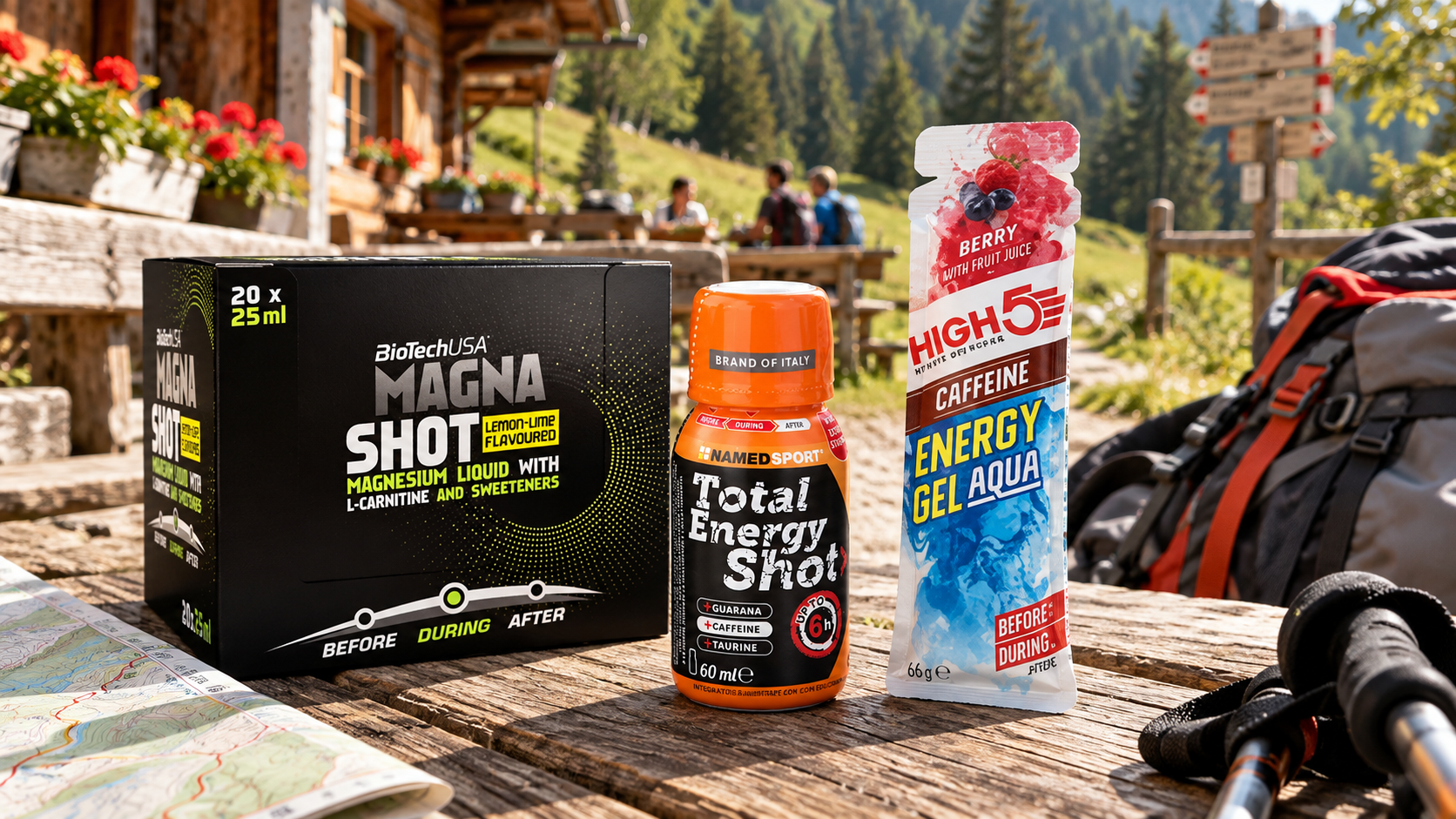
At the end of a long climb, it is easy to feel that you need something that will “give you energy immediately”. Shop shelves offer energy gels, energy shots, magnesium shots, isotonic drinks, electrolyte tablets and caffeinated products for exactly that purpose. But they do not all do the same thing. An energy gel primarily provides carbohydrate — in other words, actual fuel, while electrolytes are mainly used to replace minerals lost through sweat, and a magnesium shot does not replace energy intake. A caffeinated shot may improve alertness and reduce the perceived effort of exercise, but it does not refill depleted carbohydrate stores.
A typical sports gel contains around 20–30 grams of rapidly available carbohydrate in a small, lightweight package.
It mainly contains magnesium and other ingredients. Its calorie content is minimal, so it does not replace depleted carbohydrate.
There are carbohydrate-based, caffeinated and combined versions. The name alone does not tell you how much actual energy you are getting.
Sports nutrition products are most useful during longer, more intense efforts or hikes with substantial elevation gain.
- If you need quick energy, you need carbohydrate A gel, sports drink, chews, banana or another carbohydrate source provides actual fuel for your muscles.
- Magnesium is not quick energy Magnesium is an important nutrient, but a magnesium shot does not replace a gel containing 20–30 grams of carbohydrate.
- Caffeine affects how fatigue feels It may improve alertness and endurance performance, but it does not replace calories, fluids or rest.
- On a long hike, a combination works better Normal food + quick carbohydrate + fluids, with electrolytes when needed, is more practical than relying on a single “miracle” product.
You do not run out of one single “energy”: fuel, fluids and electrolytes are separate issues
First, know what you are trying to replace
Fatigue does not always have the same cause, so not every sports product solves the same problem.Labels such as “anti-fatigue”, “energy” or “performance” do not automatically mean that a product contains a significant amount of energy — meaning calories and carbohydrate . Always check the ingredients and nutrition information.
When you need carbohydrate quickly and in very little space, gels have a real purpose
A sports gel is essentially concentrated, easy-to-consume carbohydrate
It is not a magic solution: its main advantage is that it gives you portable fuel that is lightweight, quick to consume and easy to take while moving.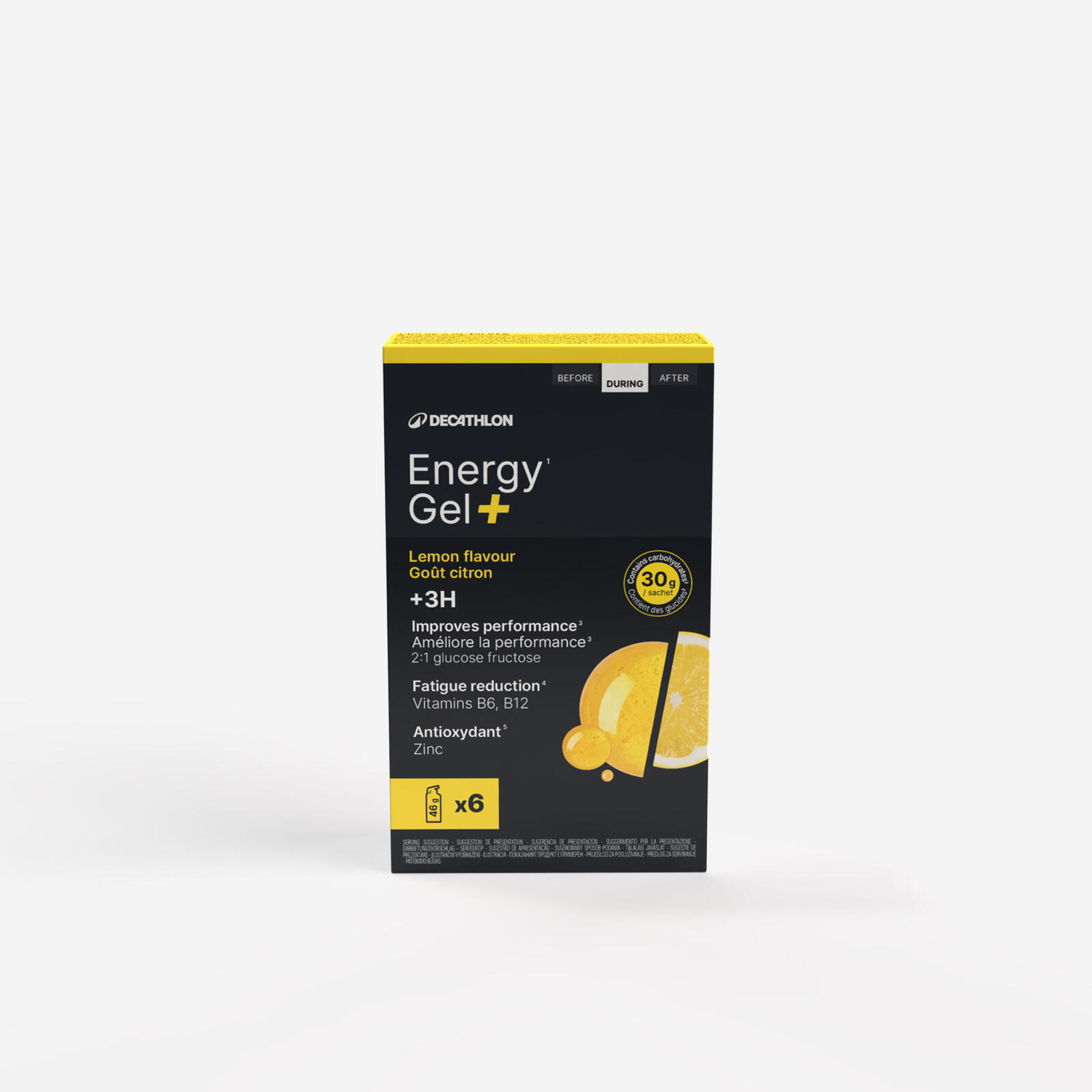
| Characteristic | Energy gel |
|---|---|
| Main ingredient | Rapidly available carbohydrate, often glucose, maltodextrin, fructose or a combination of these. |
| Typical carbohydrate content | Around 20–30 g per sachet, depending on the product. |
| What is it for? | For rapid carbohydrate intake during longer, more intense efforts. |
| When do you notice it? | It is not an on/off “energy boost”, but digestible carbohydrate that can become available within a relatively short time. |
| Do you need water with it? | Most concentrated gels are best taken with water. For isotonic or more diluted gels, follow the manufacturer’s instructions. |
| Can it contain caffeine? | Yes. With caffeinated versions, include it in your total daily caffeine intake. |
According to Australian Institute of Sport guidance, sports gels typically provide around 20–30 grams of carbohydrate per serving. The concentrated format is useful because it takes up little space, is relatively shelf-stable, and does not require a long food stop on a steep climb or while moving quickly.
During longer efforts, it is better to eat according to a plan than to reach for your first gel only when you are already dizzy, shaky or completely drained. Sports nutrition is more about preventing a major drop in performance than “rescuing” you after it happens.
One can provide fluid and energy at the same time; the other may contain little more than electrolytes
An “electrolyte” drink and an “isotonic” drink are not the same thing
The label tells you whether your drink provides only fluid and electrolytes, or carbohydrate as well.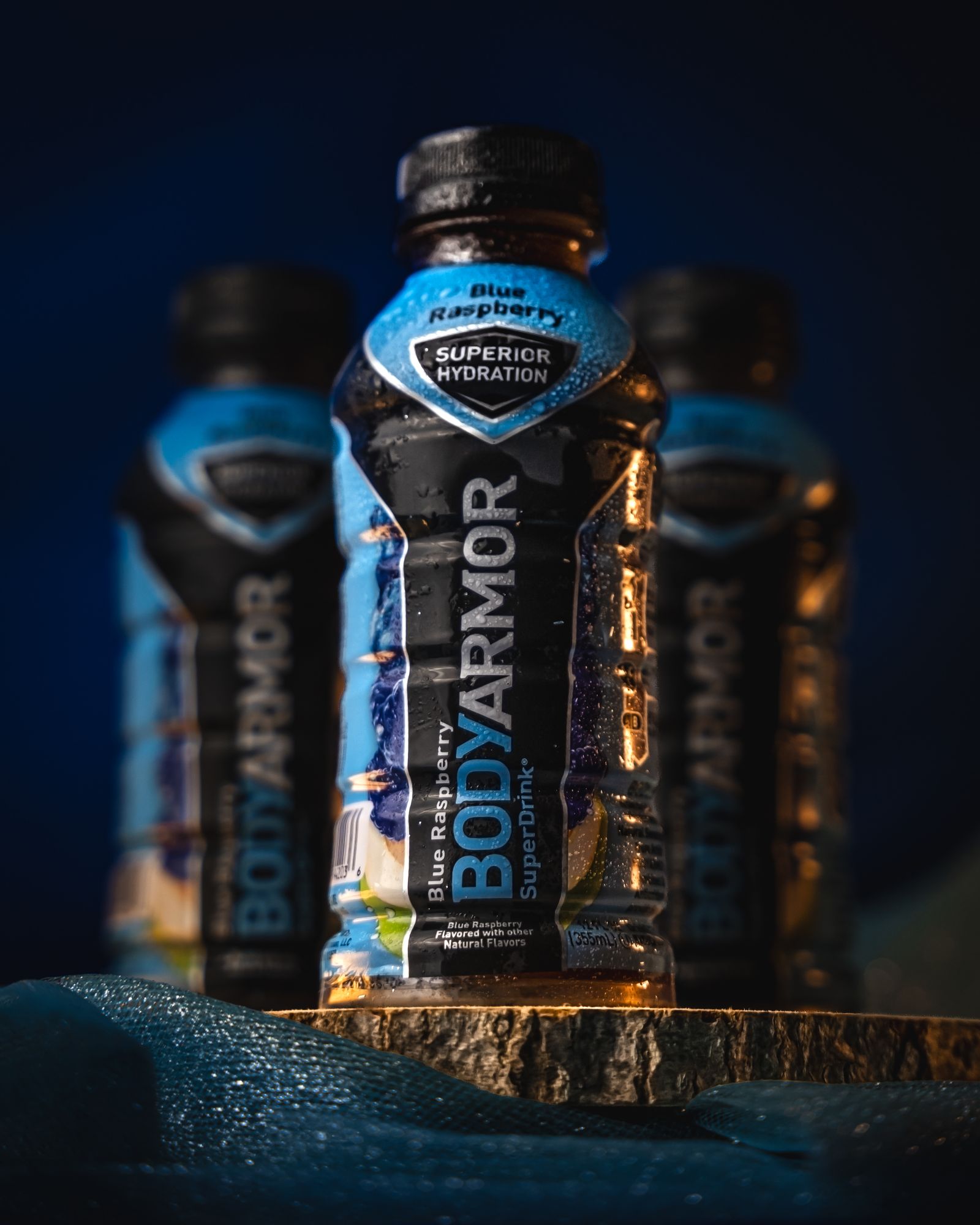
According to the AIS, conventional sports drinks are formulated to support fluid, carbohydrate and electrolyte intake. Their typical carbohydrate concentration is roughly 4–8%, and they also contain sodium.
How much sodium replacement you need depends on the length of the hike, the weather, how much you sweat and the sodium concentration of your sweat. An electrolyte tablet does not make excessive water intake safe: overdrinking can itself be dangerous.
It may be a useful supplement, but it does not do the same job as an energy gel
MagnaShot does not have “energy” in its name — and that distinction matters
The current product mainly provides magnesium, vitamin B6, L-carnitine and green coffee extract, rather than a large amount of carbohydrate.| MagnaShot — current manufacturer data | 12.5 ml recommended serving |
|---|---|
| Magnesium | 175 mg |
| L-carnitine | 500 mg |
| Green coffee extract | 50 mg |
| Of which caffeine | 5 mg |
| Vitamin B6 | 1.4 mg |
| Quick carbohydrate | This is not the product’s main function. It should not be counted as a substitute for an energy gel. |
According to the manufacturer’s current recommendation, one serving is half an ampoule, or 12.5 ml. This provides 175 mg of magnesium . A full 25 ml ampoule contains twice that amount: 350 mg of magnesium.
Exercise-associated muscle cramps cannot be explained simply by magnesium or electrolyte deficiency. Available research does not support the idea that an acute dose of magnesium will prevent or quickly stop exercise-associated muscle cramps in everyone.
Products sold as “energy shots” can have completely different formulations
Check carbohydrate and caffeine separately
An energy shot may be a high-caffeine stimulant, a carbohydrate drink, or a combination of the two.| Example | 25 ml BioTechUSA Energy Shot | What does this mean on a hike? |
|---|---|---|
| Glucose | 3.5 g | The three main declared carbohydrate sources total about 10.5 g. That is less than the 20–30 g found in a typical sports gel. |
| Fructose | 3.5 g | |
| Maltodextrin | 3.5 g | |
| Caffeine | 13 mg in total | That is much less than a serving of a highly caffeinated energy drink or caffeine shot. |
| Magnesium | 160 mg | Mineral supplementation, but this is not what provides the product’s calories. |
| Other | Taurine, L-arginine, citrulline, tyrosine, guarana, green tea and other ingredients. | Their presence alone does not mean that the product will be more effective than its carbohydrate and caffeine content would suggest. |
According to the ISSN position stand on energy drinks and energy shots, most of the well-supported performance effects of these products come mainly from caffeine and/or carbohydrate . A long ingredient list on its own does not prove a greater performance-enhancing effect.
You may feel fresher after a caffeinated product, but that does not mean dehydration, low energy availability or muscle fatigue has disappeared. On technical, exposed or long high-mountain routes, do not use the stimulant effect to push beyond what you can safely sustain.
They may sit on the same shelf, but they solve very different problems
Quick comparison for hikers
Do not ask which one is “strongest”; ask what you actually need.| Option | What does it provide? | When might it be useful? | What is it not for? |
|---|---|---|---|
| Energy gel | Typically 20–30 g of rapidly available carbohydrate. | Longer efforts, intense climbs, fast hiking, trail running or multi-hour activity. | It is not fluid replacement and not a complete meal. |
| Caffeinated gel | Carbohydrate + caffeine. | Later stages of a long hike, if you tolerate caffeine well. | Do not stack it with multiple caffeine sources without keeping track of the total. |
| Sports drink | Fluids + carbohydrate + usually sodium. | During longer, hot or continuous efforts. | It may not cover your full energy needs on its own. |
| Electrolyte tablet | Mainly sodium and other electrolytes, often with few or no calories. | Hot weather, heavy sweating or long-duration activity. | It is not an energy source. |
| MagnaShot / magnesium shot | Magnesium and other micronutrients or supplemental ingredients. | If you deliberately include it in your daily intake as a supplement. | It is not carbohydrate replacement and not a guaranteed anti-cramp remedy. |
| Energy shot | Depending on the product: caffeine, carbohydrate, magnesium and other ingredients. | If you know exactly what it contains and why you are taking it. | The name alone does not tell you how much actual energy it provides. |
| Banana / dried fruit / sandwich | Carbohydrate from normal food and, depending on the food, protein, fat and minerals. | For normal hiking, this can often be the foundation. | During a very intense climb, it may be slower and harder to eat. |
The main advantage of sports gels is convenience and rapid digestibility. If you can stop and eat regularly during a relaxed six-hour hike, a banana, sandwich, pastry, dried fruit or energy bar can all contribute to your carbohydrate intake.
Fueling a two-hour outing is not the same as fueling a ten-hour high-mountain hike
Duration alone is not enough: pace and elevation gain matter too
Four hours of relaxed walking create a very different metabolic demand from four hours of continuous steep climbing.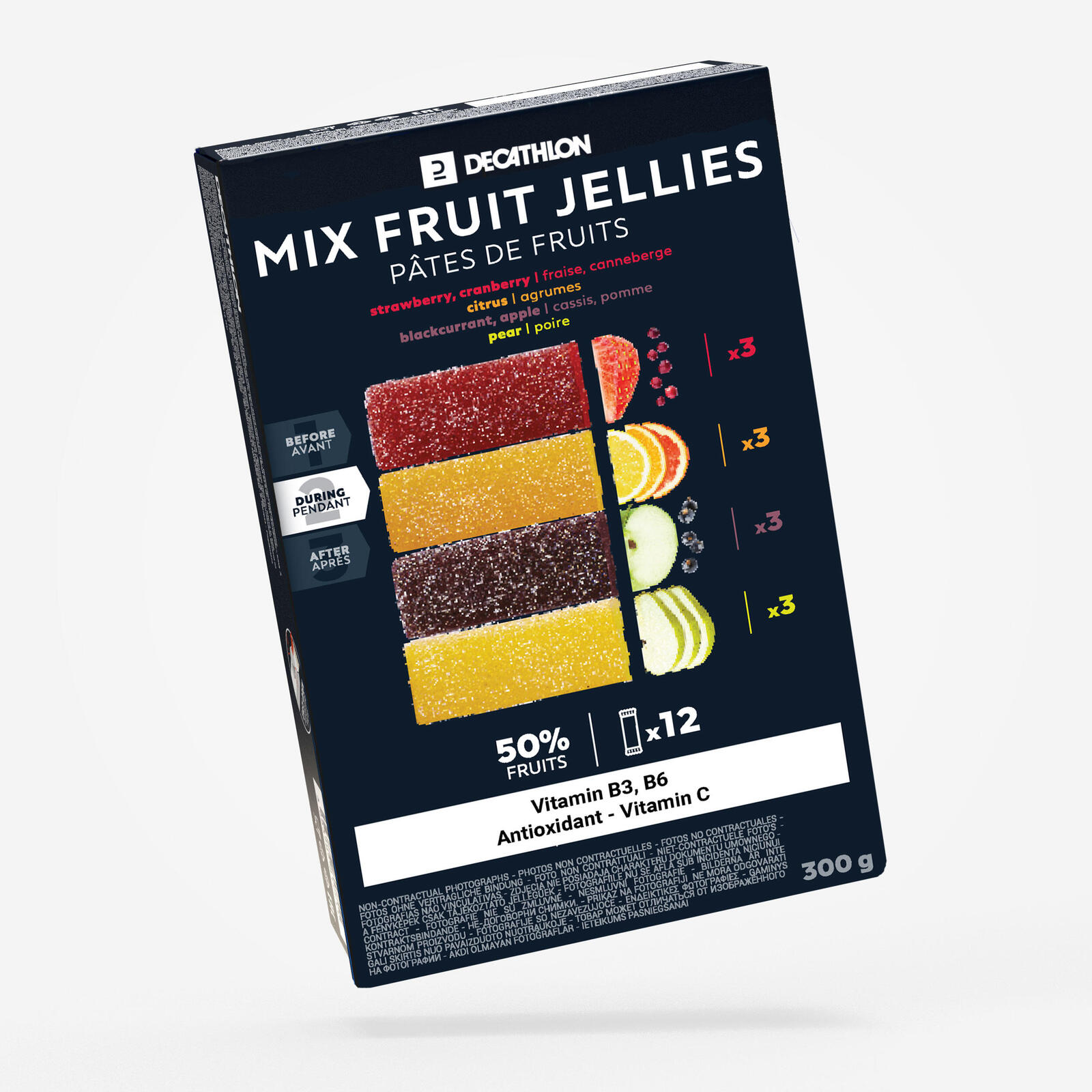
| Hike | Sensible baseline | Role of sports nutrition products |
|---|---|---|
| 1–2 hours, easy | Water, with a normal meal before or after. | An energy gel is usually unnecessary. At most, carry one as an emergency reserve. |
| 2–4 hours, moderate | Water + normal snacks such as a banana, sandwich or dried fruit. | A gel can be practical before or during a long steep climb, but it is not essential. |
| 4–8 hours, substantial elevation gain | A planned combination of carbohydrate intake, fluids, normal food and easily digestible quick energy. | Gels, sports drinks or chews can be especially practical. In hot conditions, electrolytes may also make sense. |
| 8+ hours / fast endurance hike | A fueling strategy tested in advance, with regular fluids and carbohydrate. | Sports nutrition products offer a much greater practical advantage here. |
| Hot weather, heavy sweating | Fluids and electrolyte intake adjusted to your individual sweat losses. | A sports drink or electrolyte product may be more useful than simply taking another gel. |
According to AIS guidance for endurance sport, efforts lasting 1–2.5 hours typically use a target of 30–60 g of carbohydrate per hour, while for high-intensity endurance efforts longer than 2.5–3 hours, intake may rise to 90 g/hour , particularly with glucose–fructose combinations that use multiple intestinal transport pathways.
However, this is guidance designed for sports performance, not a mandatory intake target for hikers. On a comfortably paced hike, there is usually no need to aim for the upper athlete range every hour. The goal is to avoid repeatedly running low on energy while keeping intake comfortable for your stomach.
If you have previously eaten only two sandwiches during an all-day hike, do not test three gels per hour for the first time on an important trip. The digestive system also needs to adapt to high carbohydrate intake, and too much concentrated sugar can cause abdominal cramps, bloating, nausea or diarrhoea.
Do not build a long mountain hike around a single product
The simplest system: normal food + quick-energy reserve + fluids
A sports product is useful when it solves a specific problem, not simply because the packaging looks athletic.-
Start properly fueled Have a normal meal before a longer hike. Do not try to build the entire day around gels.
-
Carry real food Make sandwiches, bananas, dried fruit, salty snacks, energy bars or other well-tolerated foods the foundation.
-
Carry a quick-carbohydrate reserve One or two energy gels are very practical when you do not want or cannot manage normal food during a long climb.
-
Do not treat a gel like a sweet Check how many grams of carbohydrate it contains and include that in your overall fueling plan.
-
Use caffeine deliberately Before taking a caffeinated gel or energy shot, count coffee, energy drinks and every other caffeine source as well.
-
Do not carry a magnesium shot as an energy replacement If you use one, treat it as a supplement rather than a substitute for a missed meal.
-
In hot weather, fluids and sodium become more important With heavy sweating, an electrolyte drink is often more practical than taking one concentrated gel after another.
-
Test it in advance Do not try a new gel, caffeinated shot, magnesium ampoule or sports drink for the first time on an all-day high-mountain hike.
According to EFSA, for healthy adults a single dose of up to around 200 mg of caffeine generally does not raise safety concerns, and total daily intake of up to 400 mg is also generally considered safe. Individual sensitivity still varies greatly: rapid heartbeat, tremor, anxiety, stomach problems or sleep disturbance can occur at much lower doses.
A typical hiker does not need to carry an athlete’s full fueling arsenal on every weekend outing. Gels and shots are tools, not basic requirements. They can be very practical on long, fast, steep or competitive-style hikes; on a relaxed outing, water, normal food and a well-planned snack are often the better solution.
“If I get tired, I need a MagnaShot or Energy Shot.”
Fatigue is not a single deficiency state. If you are slowing because carbohydrate availability is falling, you need carbohydrate. If you have lost a lot of fluid, you need to drink. Caffeine may make you feel fresher, but it does not replace food, fluids or rest.
Normal food → fluids → quick carbohydrate as needed → electrolytes when justified → optional caffeine
On a longer hike, this sequence makes far more sense than drinking different shots at random. Energy gels have a clear role: portable carbohydrate. An isotonic drink combines fluid, carbohydrate and electrolytes. MagnaShot is primarily a magnesium supplement, while an Energy Shot only makes sense once you check how much carbohydrate and caffeine it contains.
Sources and background
This article provides general information, not personalised nutrition or medical advice. Sports nutrition needs depend on exercise intensity and duration, weather, body mass, diet, individual digestive tolerance and any relevant health conditions.
- Australian Institute of Sport – Sports gels
- Australian Institute of Sport – Sports drinks
- Australian Institute of Sport – Electrolyte replacement supplements
- International Society of Sports Nutrition – Energy drinks and energy shots position stand
- EFSA – Caffeine: safe intake and exercise
- Cochrane – Magnesium for muscle cramps
- Muscle & Nerve – Exercise-associated muscle cramp risk factors, 2026 systematic review
- NIH Office of Dietary Supplements – Magnesium
- BioTechUSA — Magna Shot: current composition and dosage
- BioTechUSA — Energy Shot: current composition and dosage
- Decathlon — energy gel product image
- Pexels — A.J. Groomes: sports drink bottles
- Decathlon — energy bar product image