Vibram, Contagrip, Michelin — What Does a Hiking Shoe Sole Really Do?
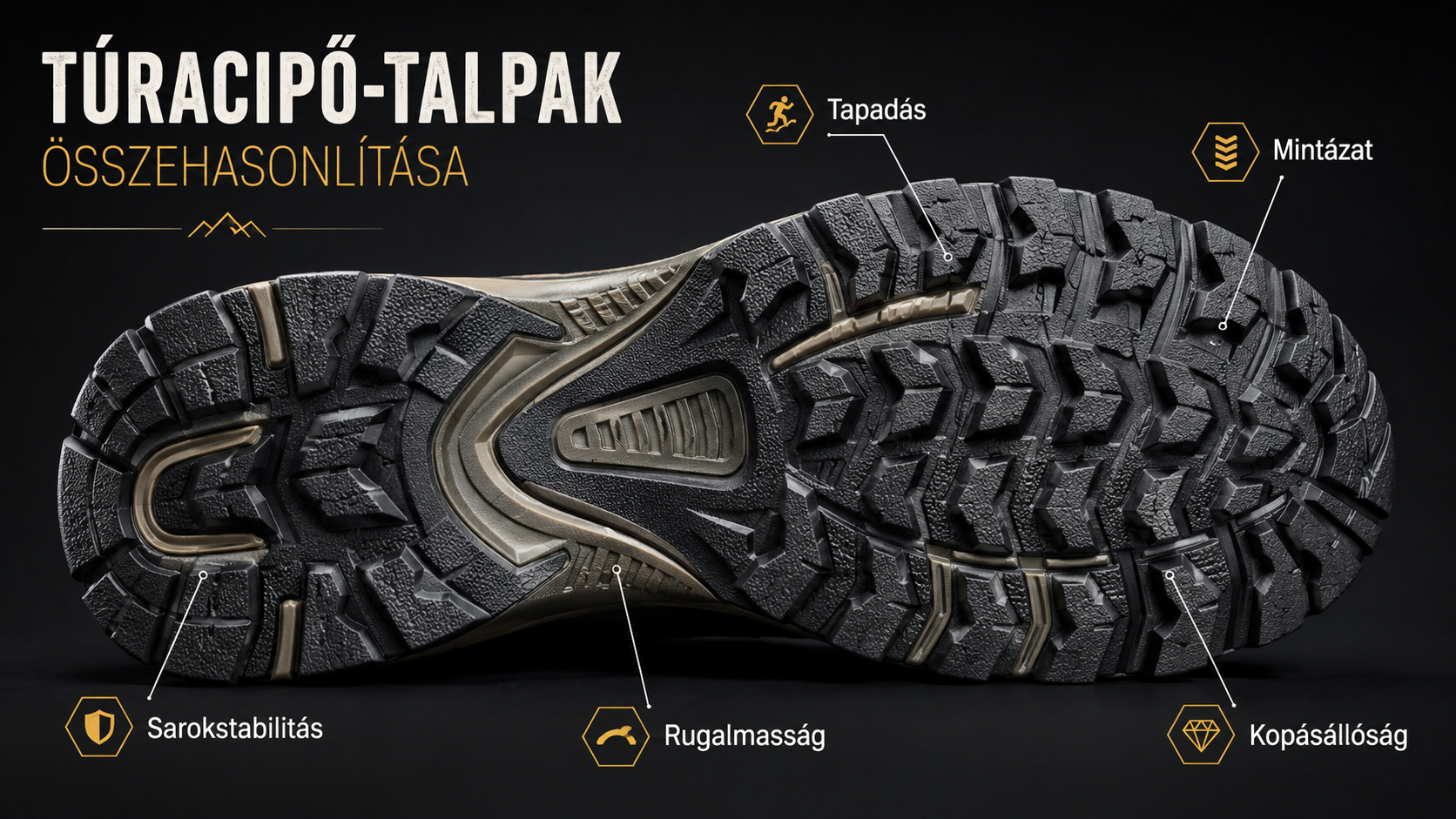
The logo tells you less about a hiking shoe outsole than how it meets the ground. On wet rock the rubber’s grip matters; in mud, lug bite and self-cleaning matter; on descents, the heel’s braking profile matters; and over longer hikes, the stiffness and stability of the whole shoe matter.
- On wet rock, the rubber mattersA tackier compound can matter more than an impressively deep tread.
- Mud needs space between the lugsA more open pattern clears mud more easily, so it keeps biting for longer.
- On descents, check the heelRear-facing edges can matter more for braking than the logo on the outsole.
- Mixed terrain needs a compromiseA very aggressive mud outsole can be unnecessary on tarmac and hard rock.
- A worn edge no longer bites the same wayYou do not need to wait until the outsole is completely smooth.
What actually makes a hiking shoe outsole grip?
Two kinds of traction work at the same time
Rubber grips hard surfaces, while the lugs bite into loose ground.That is why the same shoe can feel secure on dry rock but uncertain on wet roots, or grip well in mud yet feel clumsy on tarmac. There is no single “best” tread pattern: different parts of the outsole do the work on different surfaces.
Ask this first in the shop
Not which logo it carries, but which terrain it was designed for.“Is this model mainly designed for hard rocky ground, mixed trails or soft muddy terrain ?” If there is no clear answer, look at the lug shape, the heel braking profile and the name of the rubber compound.
What can the Vibram label actually tell you?
The specific technology name tells you more than the yellow octagon
The Vibram name covers several compounds and constructions designed for different jobs.One shoe can use several Vibram technologies
That is why it is worth looking for the full specification on the product page.A lightweight hiking shoe can use Megagrip rubber, Litebase construction and a Traction Lug pattern at the same time. They are not competing technologies; each describes a different part of the same outsole.
Contagrip, Continental, Michelin: what should you check beyond the name?
One product family can still contain very different outsoles
The exact version name and the tread pattern together give you useful information.Named compound + tread pattern
If the manufacturer names the rubber compound and outsole concept, you have something meaningful to compare with other models.
Just a large logo
If you only see the partner’s name, you still do not know whether the shoe is strongest in mud, on rock or on mixed trails.
How to read an outsole in five seconds
Five details to check when you turn the shoe over
These can already tell you in the shop what kind of terrain the outsole was tuned for.- Lug depthTaller, more pronounced lugs reach further into soft ground; a lower profile usually puts more rubber in contact with hard surfaces.
- Space between the lugsLarge gaps let mud fall out more easily. A very dense tread can quickly turn into one continuous layer of mud in wet clay.
- Directional edgesForward-biting lugs under the forefoot work on climbs, while heel edges facing the opposite way work on descents.
- Outsole stiffnessIf the shoe twists easily by hand, it may move more naturally; if it is stiffer, it can provide a more stable platform on rock and traverses.
- Rubber coverageCheck how much exposed midsole foam you can see. More rubber generally protects better on rocky terrain, but it can add weight.
Which outsole suits which terrain?
Do not just name the terrain; think about what is happening under your foot
Rock needs contact area, mud needs penetration, gravel needs stable edges, and descents need a braking profile.| Terrain | Look for | Why it helps |
|---|---|---|
| Dry rock | More rubber contact, usable edges and a stable platform | More rubber touches the rock, while a precise edge gives support on small footholds. |
| Wet rock, roots | Tackier rubber and a contact surface that is not excessively rigid | On smooth wet surfaces, lug depth matters less than the rubber itself and how well the outsole sits on the surface. |
| Mud, soft ground | Deeper, more widely spaced lugs | The tread bites into the ground, while larger gaps help it shed mud. |
| Loose gravel, scree | Medium, multidirectional lugs and a stable heel | Multiple edges catch moving particles from different directions. |
| Mixed forest trail | Medium tread, a more durable compound and a well-defined heel | It is not overly aggressive on tarmac, yet remains useful on roots, soil and smaller rocks. |
| Winter, icy trail | Cold-weather rubber + a traction device suited to the route | A winter compound can help, but on hard or steep ice it does not replace the appropriate traction equipment. |
Mud is often not the trickiest surface
Wet roots, smooth timber and mossy rock offer very little for the lugs to bite into.In mud, a lug can bite into the ground. On a wet, smooth root , however, there is nothing for it to bite into, so even an aggressive outsole can slip easily. On this kind of surface, shorter steps and precise foot placement also make a real difference.
Three typical outsoles, three completely different jobs
Outsole for rocky terrain
Precise edges, good contact and a stable platform.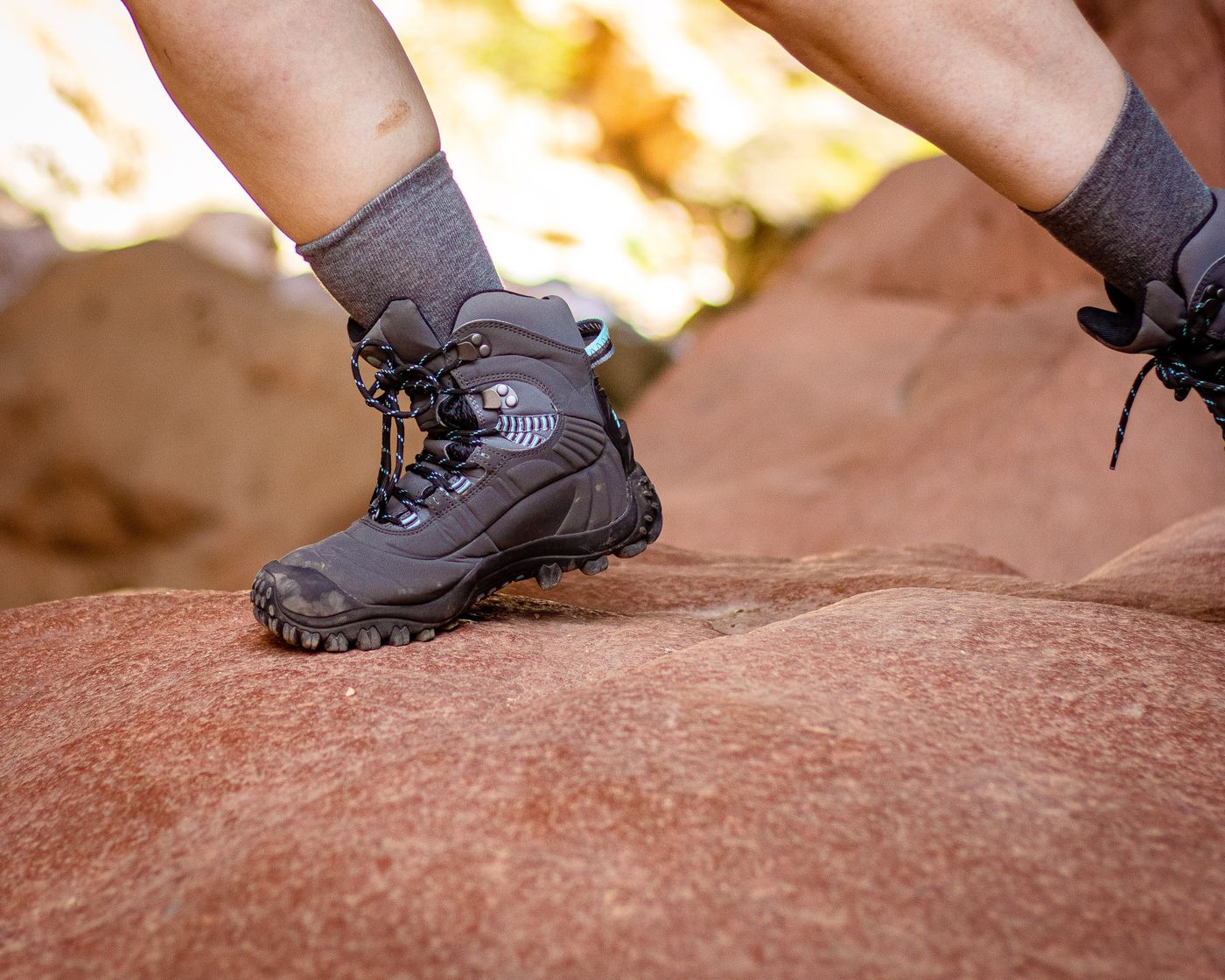
On rock, the outsole works best when it does not stand only on the tips of a few lugs, but places a useful area of rubber on the stone. A cleaner, flatter zone under the forefoot can give more precise footing on small rock steps, while a stiffer platform reduces wobble.
If most of your hikes are on limestone, granite or rocky ridges, prioritise a good rubber compound, useful edges and stability rather than very deep mud lugs.
Versatile outsole for mixed terrain
Medium tread, multidirectional lugs and sensible durability.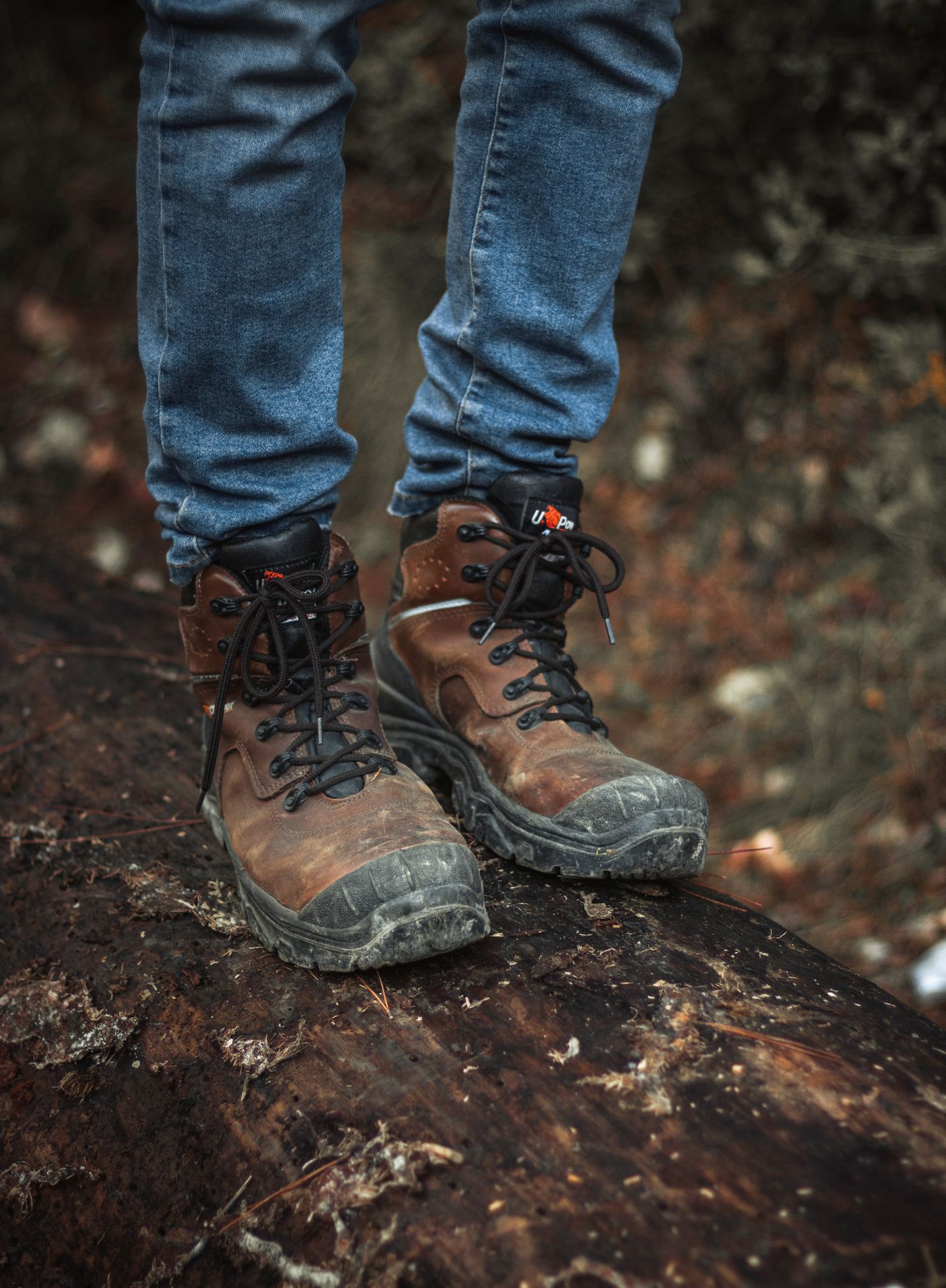
For most low- and mid-mountain hikes, this is the practical choice: forest tracks, roots, gravel, short rocky sections and some tarmac on the same route. Here, balance matters more than extreme grip.
Medium-depth lugs working in several directions and a clearly defined heel are good signs. If the tread is not excessively tall, it will feel less tractor-like on hard ground and will usually wear more slowly.
Outsole for soft, muddy ground
The tread should look noticeably more open and aggressive.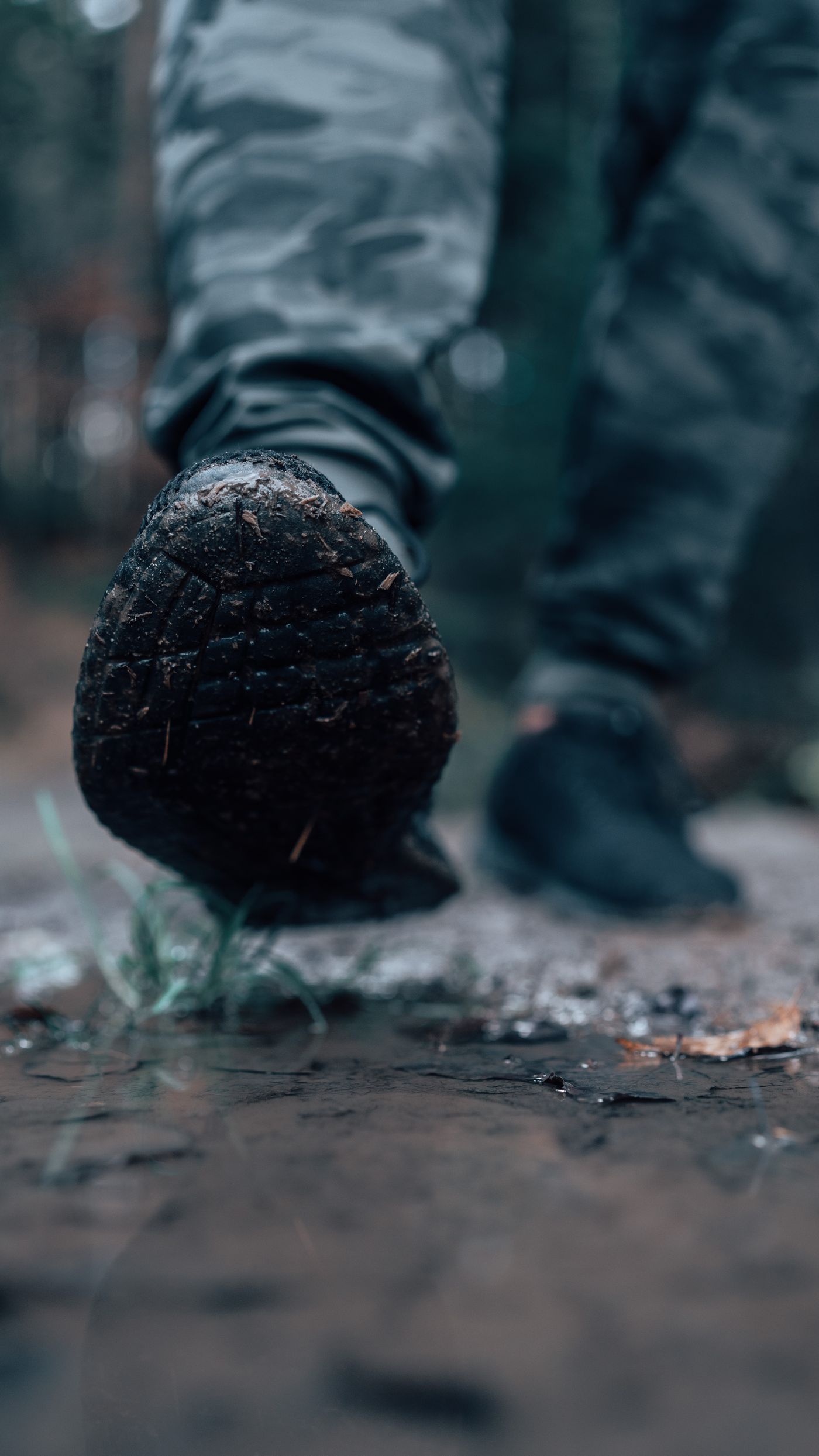
In mud, the outsole must do two things at once: bite into the soft ground, then clear the mud from its own tread. That is why deeper, more widely spaced lugs work better. Once the gaps clog, the tread effectively disappears beneath a smooth layer of mud.
Check the heel separately as well. On a steep, slippery descent, rear-facing edges can help a lot. If you only encounter mud occasionally, however, do not choose an excessively aggressive model: on hard ground it can be a less comfortable, faster-wearing compromise.
Five misconceptions that can easily lead to the wrong shoe
What you notice first is not always what matters most
Tread depth and the brand badge are only part of the story.When has the outsole deteriorated enough to deserve attention?
Four signs to check the next time you clean the shoe
The condition of the outsole is much easier to judge when it is clean.- Rounded lug edges. If a once-sharp profile wears into rounded bumps, traction weakens on soft ground and descents.
- Smoothed heel. Heel wear is most noticeable on steep descents, where the braking edges should be doing the work.
- Uneven wear. If one side is visibly lower, the shoe’s stability can change even if there is still tread in the centre.
- Hardening or separating rubber. If you see cracking, separation or an outsole that has become noticeably rigid, do not judge it by lug depth alone.
Quick shop check
Five questions worth more than twenty minutes of staring at brand logos.- Where will you use it?Are most of your routes muddy, rocky, mixed forest terrain or heavy on tarmac?
- What does the heel do?Does it have a distinct braking profile, or is the tread almost the same at the front and rear?
- How well can it self-clean?Is there enough space between the lugs to prevent immediate clogging on wet ground?
- How stable is it?Does it support you laterally, or does it twist too easily for the terrain where you will use it?
- Does it fit your foot properly?An excellent outsole will not help if your heel lifts, your toes slide forwards or the shoe creates pressure points.
Can hiking footwear be resoled?
More often with traditional boots, less often with lightweight trail shoes.Resoling can make sense for many traditional hiking boots if the upper, stitching and midsole are still in good condition. It is less common with lightweight, heavily moulded trail and hiking shoes because the outsole is more tightly integrated into the whole construction.
For more expensive boots, leather uppers or models designed to be repairable, check with the manufacturer’s official service centre or a cobbler experienced in resoling hiking boots.
Common questions that also come up after you buy
Short, practical answers
For situations the outsole label does not explain.Why can a shoe feel more slippery on wet roots than in mud?
In mud, the lugs can bite into soft ground. A smooth wet root is a hard surface, so the rubber compound, contact area and precise foot placement matter more.
Should I remove mud from the outsole after every hike?
Yes, especially if clay-rich mud has clogged the tread. A clean outsole also makes it easier to check wear, trapped stones and any separation. Lukewarm water and a brush are usually enough.
Do I need separate shoes for mud and rock?
Not necessarily. If you mostly hike on mixed terrain, a moderately aggressive all-round outsole is more practical. A dedicated mud or rock model makes sense when you regularly hike on that specific type of terrain.
What should I check on an online shop’s product page?
Look for the exact outsole name, rubber compound, lug pattern, heel design and the terrain the manufacturer says the model is intended for. A simple “Vibram outsole” label tells you very little.
Why can one of two shoes with similar outsoles feel more stable?
Because the midsole, platform width, stiffness and support from the upper all affect how the outsole meets the terrain.
Which matters more: the outsole or the fit?
Both are fundamental, but a grippy outsole cannot compensate for a poorly fitting shoe. First get the size and foot hold right, then choose an outsole suited to your terrain.
Name your terrain first, then think about the outsole brand.
If you mostly walk mixed forest trails, you need something different from a shoe for regular alpine rock or soft muddy ground. Once you know that, comparing rubber compounds and tread patterns becomes useful.
Terrain → tread pattern → rubber compound → stiffness → fit.
Following this order makes it far less likely that a flashy technology name will steer you towards a shoe that was not actually designed for the terrain where you use it most.