Satellite phones in the mountains: how they work, what they can do, and which one to choose
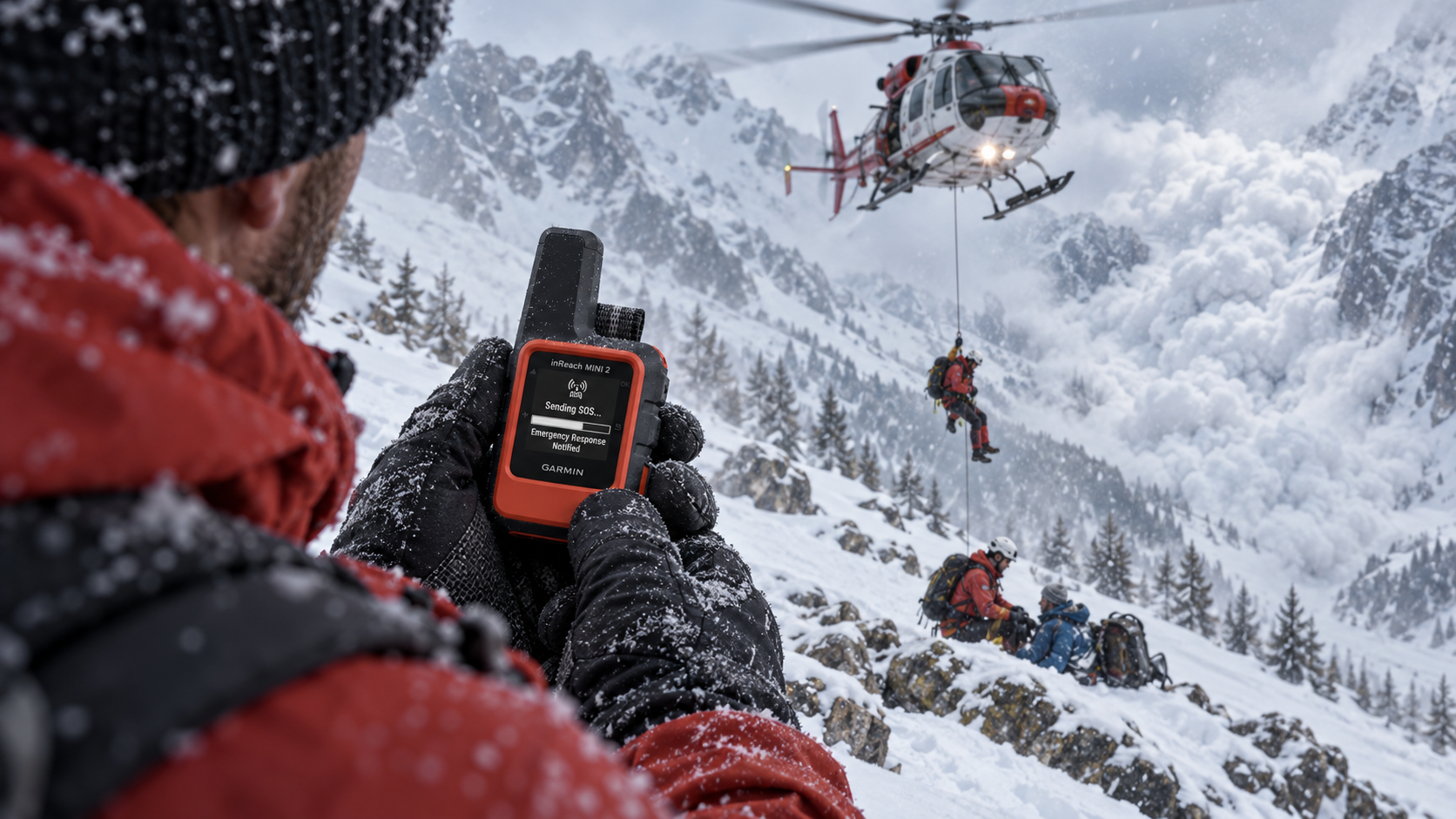
A satellite device becomes most valuable when mobile coverage disappears in the mountains. A satellite phone lets you make a real phone call, while smaller communicators such as Garmin inReach devices are mainly designed for messaging, location sharing and SOS. They do not need a mobile tower, but they do need a usable view of the sky, and an active service plan or subscription is usually required.
The device communicates via satellite, so it can work even where there is no mobile signal.
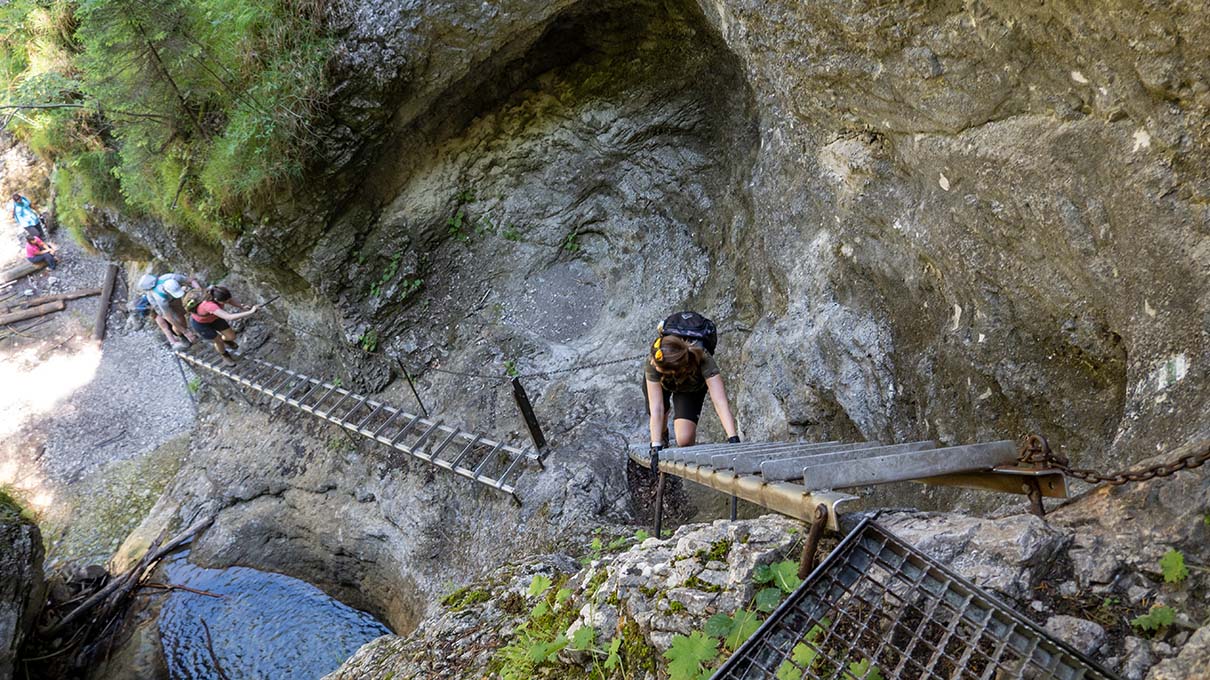
Cliffs, deep gorges, caves and buildings can block or weaken the connection.
A satellite phone can make calls. Smaller communicators are mainly for messages, location sharing and SOS.
The device alone is not enough: service, coverage and the plan all matter.
- Decide what you actually needIf you want to talk to someone, you need a satellite phone. If messaging and SOS are enough, a communicator may be more practical.
- Check coverageNot every satellite system works everywhere. Check coverage for your destination before you leave.
- Use it in an open areaIf there is no connection, move away from cliffs or heavy cover and give the device time to find a satellite.
- Test it before the tripSend a test message or make a test call, and check the battery and active subscription.
Making calls where the mobile network no longer reaches
It is not a stronger mobile phone — it uses a different system
A normal phone looks for a nearby mobile tower, while a satellite phone connects to the network through satellites.
In practice, this means you may still be able to communicate in remote mountains, on a plateau or in a sparsely populated area even when a normal phone cannot find a network. The main advantage of a satellite phone is that it can be used for real, two-way voice calls.
In the mountains, a more open location usually means a better connection
What stands between the device and the sky matters
Satellite communication does not need a mobile tower, but a mountainside, cliff or building can still block the signal.| Situation | What to expect |
|---|---|
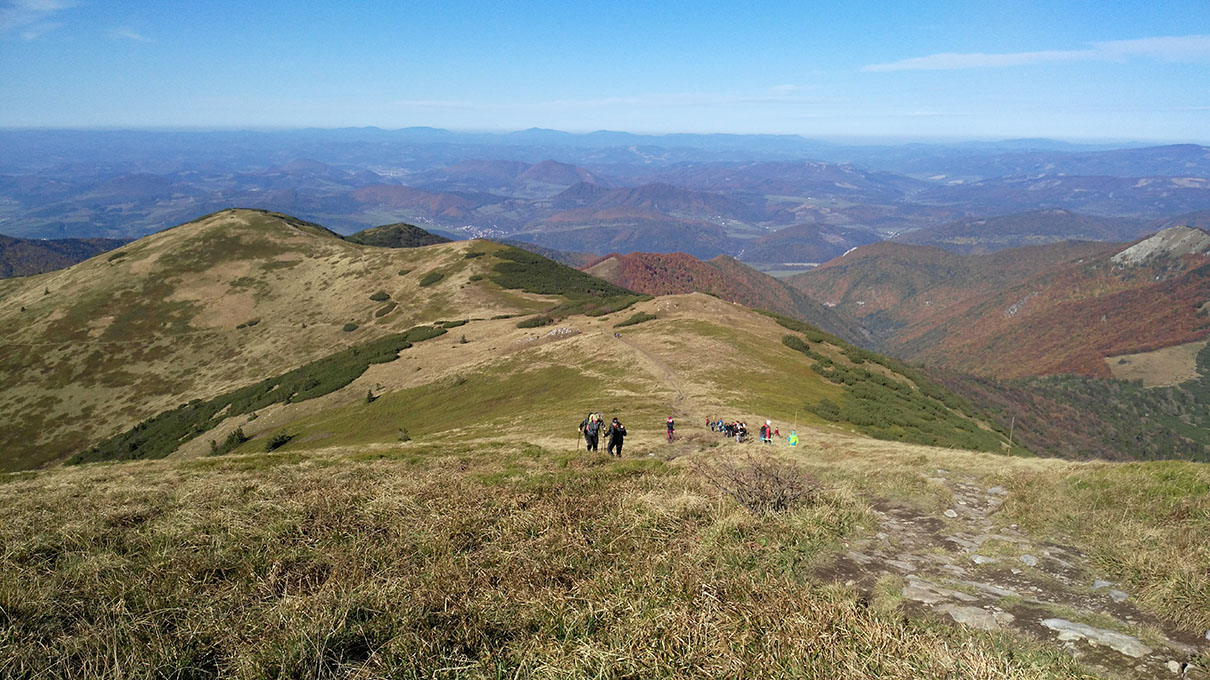
| Open ridge, plateau or clearing | These are usually the easiest places to establish a connection. |
| Deep gorge | High walls can make the signal less reliable. |
| Right next to a cliff | Moving a few dozen metres to a more open spot can help. |
| Dense forest | It may still work, but the canopy and terrain can weaken the connection. |
| Inside a cave or building | In most cases, go outside before making a call or sending a message. |
You will mainly come across two types of system. Iridium and Globalstar use multiple moving satellites, while with Thuraya and Inmarsat the satellite appears in roughly the same part of the sky. For hikers, the main takeaway is simple: in a narrow valley or between high rock walls, the position of the device can make a big difference.
A satellite phone and a Garmin inReach-style communicator are not the same thing
There are four main types of solution
The key question is whether you want to talk, send messages, or simply have an emergency backup.SOS does not work in exactly the same way on every device. Some connect you to an emergency response centre, while other systems use a different process. Before setting off, check who your device alerts and whether an active subscription is required.
Not every device uses the same satellite network
Always check coverage for your destination
More important than the brand name is whether the network is available where you are actually going.| Network | Which devices use it? | What you should know |
|---|---|---|
| Iridium | Iridium phones, many Garmin inReach devices and ZOLEO | A network with very broad coverage. It is a common choice for remote mountain areas, but a clear view of the sky still matters. |
| Thuraya | Thuraya satellite phones | Available across much of Europe, Africa and Asia; always check the exact destination before buying. |
| Viasat / Inmarsat | For example, IsatPhone 2 | Used for voice calls and messaging. In mountainous terrain, having a clear view in the right direction can be especially important. |
| Globalstar | Globalstar phones and SPOT devices | Coverage varies by region, so the provider’s current coverage map is especially important. |
Practical rule: do not assume that “satellite” means “works everywhere”. Choose your destination first, then check which network and device are suitable for that area.
The more expensive device is not necessarily the better choice
8 questions worth asking
For most hikers, the length of the feature list matters less than whether the device works where and how it is actually needed.- Do you want to call or message?You need a satellite phone for voice calls. For messages, location sharing and SOS, a smaller communicator is often enough.
- Where will you use it?Check the destination country and mountain area on the provider’s latest coverage map.
- How does SOS work?Check who the device alerts, whether you can receive a reply, and what happens after the alert is sent.
- How much does the service cost?In addition to the device price, account for activation, monthly fees, messages and, with satellite phones, call charges.
- Does it work without a phone?Some communicators can be operated on their own, while others are much easier to use with a smartphone app.
- How long does the battery last?Battery life can be shorter in cold weather and with frequent use. Plan backup power for multi-day trips.
- Can it handle outdoor use?Rain, dust, cold and knocks mean water resistance and durability may matter more than a few extra features.
- Should you buy or rent?If you would only use it for one major trip a year, renting may be cheaper and simpler. Whichever option you choose, test it before departure.
Satellite phones and smaller communicators are built for different jobs
First decide whether you want to talk or send messages
The main advantage of larger satellite phones is voice calling. Garmin, ZOLEO and SPOT-type communicators are smaller and lighter, and are mainly designed for messaging, location sharing and SOS.
If you need real phone calls
| Brand / system | Examples | In brief |
|---|---|---|
| Iridium | 9555, Extreme | Standalone satellite phones with voice calling and SMS. The Extreme also includes an SOS function. |
| Thuraya | XT-LITE, XT-PRO, XT-PRO DUAL | Models designed for voice calls and SMS; the DUAL can also use mobile networks. |
| Viasat / Inmarsat | IsatPhone 2 | A rugged handheld satellite phone, mainly for calling and messaging. |
| Globalstar | GSP-1700 | A handheld satellite phone; always check coverage for the area where you plan to use it. |
If messaging, location sharing and SOS matter most
| Brand / family | What can it do? | Who might it suit? |
|---|---|---|
| Garmin inReach | Two-way messaging, location sharing, tracking and SOS. Some models can also send photo and voice messages. | Useful for multi-day hikes and remote routes where regular contact matters but live voice calling is not necessary. |
| ZOLEO | Messaging, location sharing and SOS, typically used together with a smartphone app. | For hikers who want a simple, lightweight communication backup. |
| SPOT X | Two-way messaging, its own keyboard and SOS. | An interesting option if you want to write short messages without relying on a phone. |
The Garmin inReach Messenger Plus, for example, can send voice messages, but that is not the same as a live phone conversation. If you need to call someone directly, you need a true satellite phone.
It can still do a lot without mobile coverage, but it may not be able to call for help
GPS is not the same as a mobile network
Your phone may still show your position on a map even when it cannot make a call or send a normal message.Put simply: your phone may know exactly where you are while still being unable to call anyone. On remote hikes without mobile coverage, navigation and communication are two separate issues.
A day hike may need a very different setup from a multi-day route without mobile coverage
Quick guide to choosing
Not everyone needs a satellite phone. In many situations, a smaller communicator is the more practical choice.| Hiking situation | What may be enough? | Why? |
|---|---|---|
| Popular day hike | Charged phone + offline map + power bank | If most of the route has mobile coverage, a separate satellite device may not be necessary. |
| Multi-day hike with long sections without coverage | Satellite communicator | Lightweight and power-efficient, and useful for messages, location sharing, tracking and SOS. |
| Remote solo mountain hike | Communicator or satellite phone | If messaging and SOS are enough, a communicator is more practical. If you also need voice calls, choose a satellite phone. |
| Expedition, group leadership or field work | Satellite phone, with a communicator if needed | In more complex situations, a live conversation can be faster and clearer than exchanging messages. |
Do not wait for an emergency to use the device for the first time. Send a test message or make a test call, check the subscription, fully charge the battery, and learn how to start and cancel an SOS alert.
“If it uses satellites, it must work everywhere.”
The connection depends on the network, terrain, visibility of the sky and an active service plan together.
Where are you going? → Do you need calls or messages? → Which network works there? → Which device fits that need?
This makes it much easier to decide whether you need a satellite phone, a Garmin inReach-type communicator, or simply a well-prepared smartphone backup.
Sources and background
Device features, coverage and service plans may change. Always check current manufacturer and provider information before buying or renting.
- Iridium — Iridium Extreme satellite phone
- Iridium — satellite voice services and handheld devices
- Thuraya — XT-LITE
- Thuraya — XT-PRO
- Thuraya — XT-PRO DUAL
- Viasat — IsatPhone 2 support and test calls
- Globalstar — GSP-1700 and current product range
- Garmin — inReach Messenger Plus: text, photo and voice messages, SOS
- Garmin — inReach messaging over the Iridium network
- ZOLEO — two-way satellite communicator
- SPOT — SPOT X two-way satellite messenger
- U.S. Air Force / Staff Sgt. Robert Tingle — Iridium phone in use, Wikimedia Commons, public domain
- Tony Webster — Iridium 9575 Extreme and Garmin GPSMAP 64st, Wikimedia Commons, CC BY 2.0
- Tony Webster — Garmin GPSMAP 64st on a mountain trail, Wikimedia Commons, CC BY-SA 2.0