Hiking First Aid Kit – What Should You Carry?
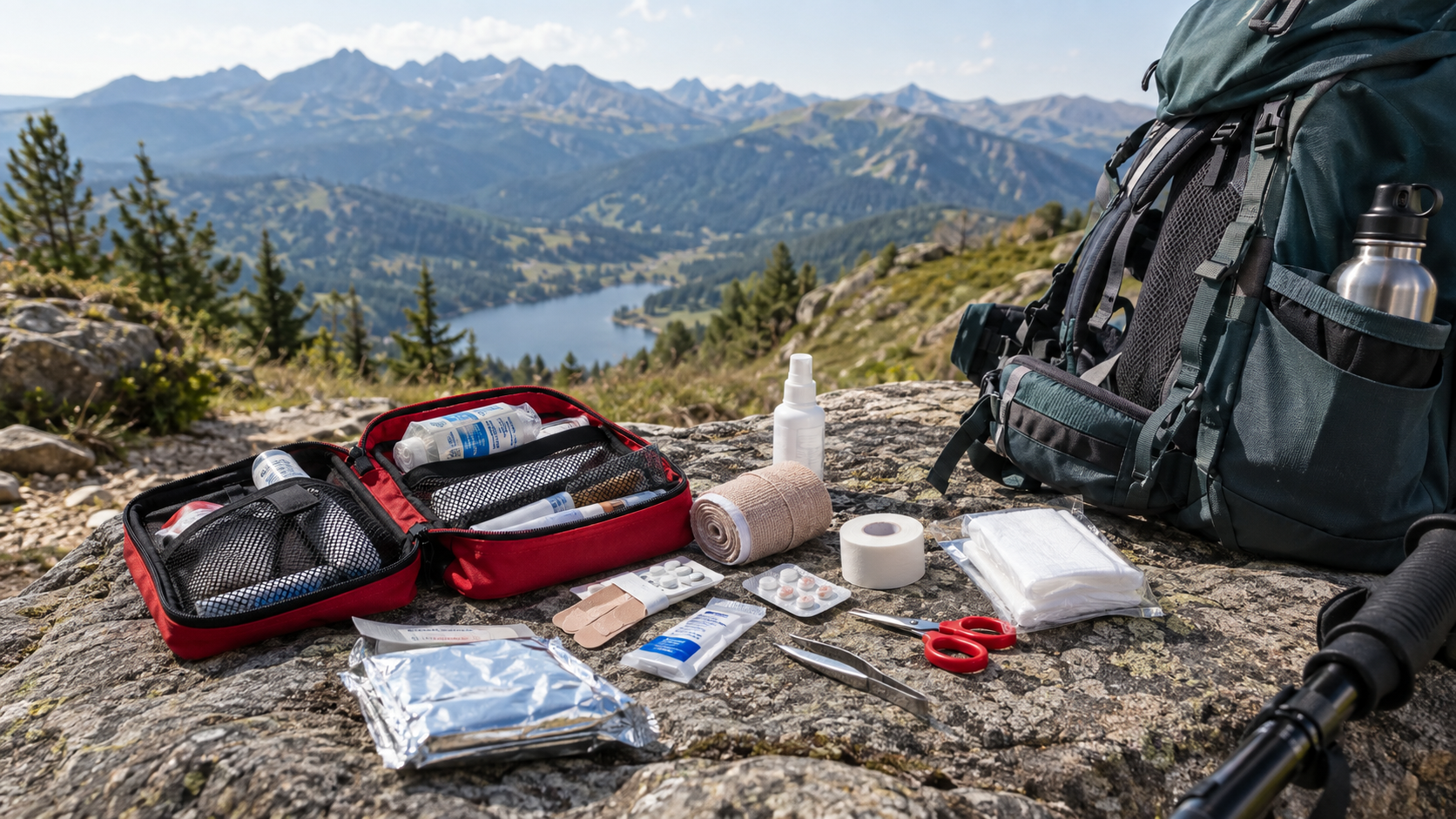
The purpose of a hiking first aid kit is not to solve every medical problem in the mountains. It is to make a minor problem manageable and buy time in a serious situation until professional help arrives. The right size depends on the length of the hike, terrain, weather, group size, and how far you will be from help.
If it is so heavy that you leave it at home, it is useless when something happens.
Equipment does not replace first aid knowledge.
Regular or emergency prescription medicine matters more than any generic extra.
Expired medicine, wet dressings, or empty antiseptic are only false reassurance.
- Wound careSterile gauze, plasters, rolled bandage, antiseptic wipes and gloves.
- BlistersHydrocolloid blister dressings or padded dressing plus sports tape should be easy to reach.
- Sprains and injuriesAn elastic bandage and triangular bandage are useful in far more situations than they first appear.
- Your own medicinesRegular or emergency medication must be in your pack, not back in the car.
Do not build a “covers everything” kit – match it to the hike
Five questions decide the size of the kit
The same kit is not ideal for a two-hour nature trail and a full-day alpine hike.Your kit should be familiar, usable and easy to reach. A complicated tool you have never practised with is less valuable than a simple dressing you know how to use correctly.
This compact core is a good starting point for most day hikes
You do not need 40 different items – just a few useful ones
For a 1–2 person day hike, a compact pouch can cover most minor problems.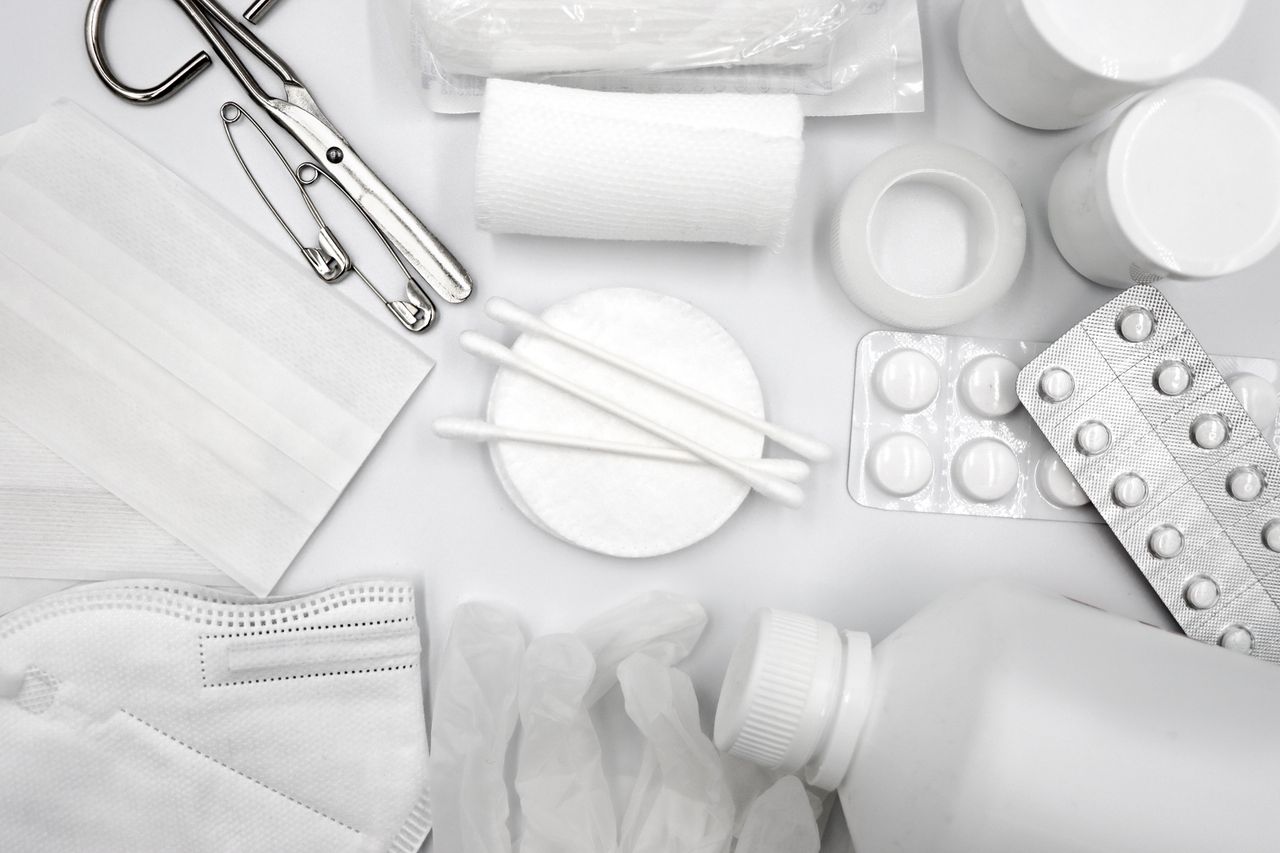
| What to carry | Why it is useful | Practical amount for 1–2 people |
|---|---|---|
| Sterile gauze pads | Covering wounds and helping control bleeding. | 4–6 pieces in mixed sizes. |
| Adhesive plasters | Small cuts and scrapes. | 6–10 pieces in mixed sizes. |
| Medical tape | Securing gauze and dressings. | 1 small roll. |
| Rolled gauze / bandage | Larger wound coverage and securing dressings. | 1–2 rolls. |
| Elastic bandage | Support for sprains. | 1 piece. |
| Triangular bandage | Arm sling or improvised support. | 1 piece. |
| Non-latex gloves | For dealing with blood and wounds. | 2 pairs. |
| Antiseptic wipes / hand sanitiser | Cleaning hands and intact skin. | Several wipes + a small bottle. |
| Hydrocolloid blister dressings | Protecting friction points and blisters. | 2–4 pieces. |
| Tweezers | Removing superficial splinters or easy-to-remove debris. | 1 pair. |
| Small scissors | Cutting dressings, tape or clothing. | 1 pair. |
| Emergency blanket | Backup protection against heat loss while waiting. | Ideally 1 per person. |
One thing matters even more than the checklist
Know exactly where everything is.A bleeding hand or darkness is not the time to empty the entire backpack. Keep the first aid kit in one clearly identifiable pouch, preferably near the top or in an accessible outer compartment.
For most trail injuries, cleaning, covering and controlling bleeding are the priorities
Minor wound: keep it simple
Clean hands, clean water, sterile cover – that is the basic formula.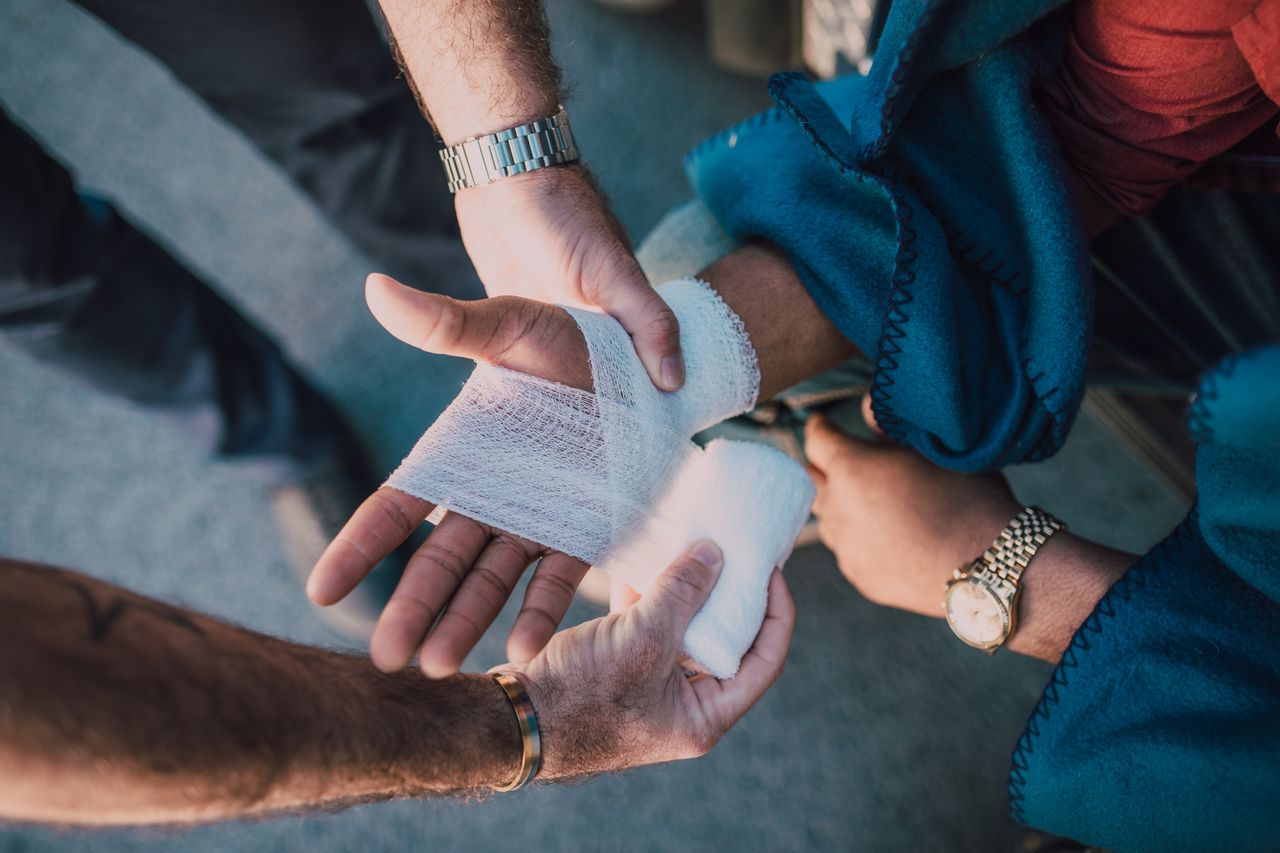
- Put on gloves if you are treating someone else.
- Control bleeding with direct pressure.
- Rinse a minor cut or scrape with clean water.
- Remove easy-to-reach superficial debris with clean tweezers.
- Cover it with sterile gauze or a suitable plaster.
For minor cuts and scrapes, the Mayo Clinic recommends rinsing with clean water and notes that hydrogen peroxide or iodine can irritate the wound.
Severe bleeding is a different category
Here, rapid bleeding control matters more than making the dressing look neat.For life-threatening bleeding, start with continuous direct pressure and call for help. A commercial tourniquet can be used for life-threatening bleeding from a limb, but it is worth learning the technique in a proper first aid course.
If bleeding will not stop, the wound is deep or heavily contaminated, an animal bite occurred, or serious injury is suspected, do not try to simply hike it out.
The best time to deal with a blister is when it is still only a hot spot
Stop at the first burning sensation
Five minutes adjusting socks and shoes can save hours of pain.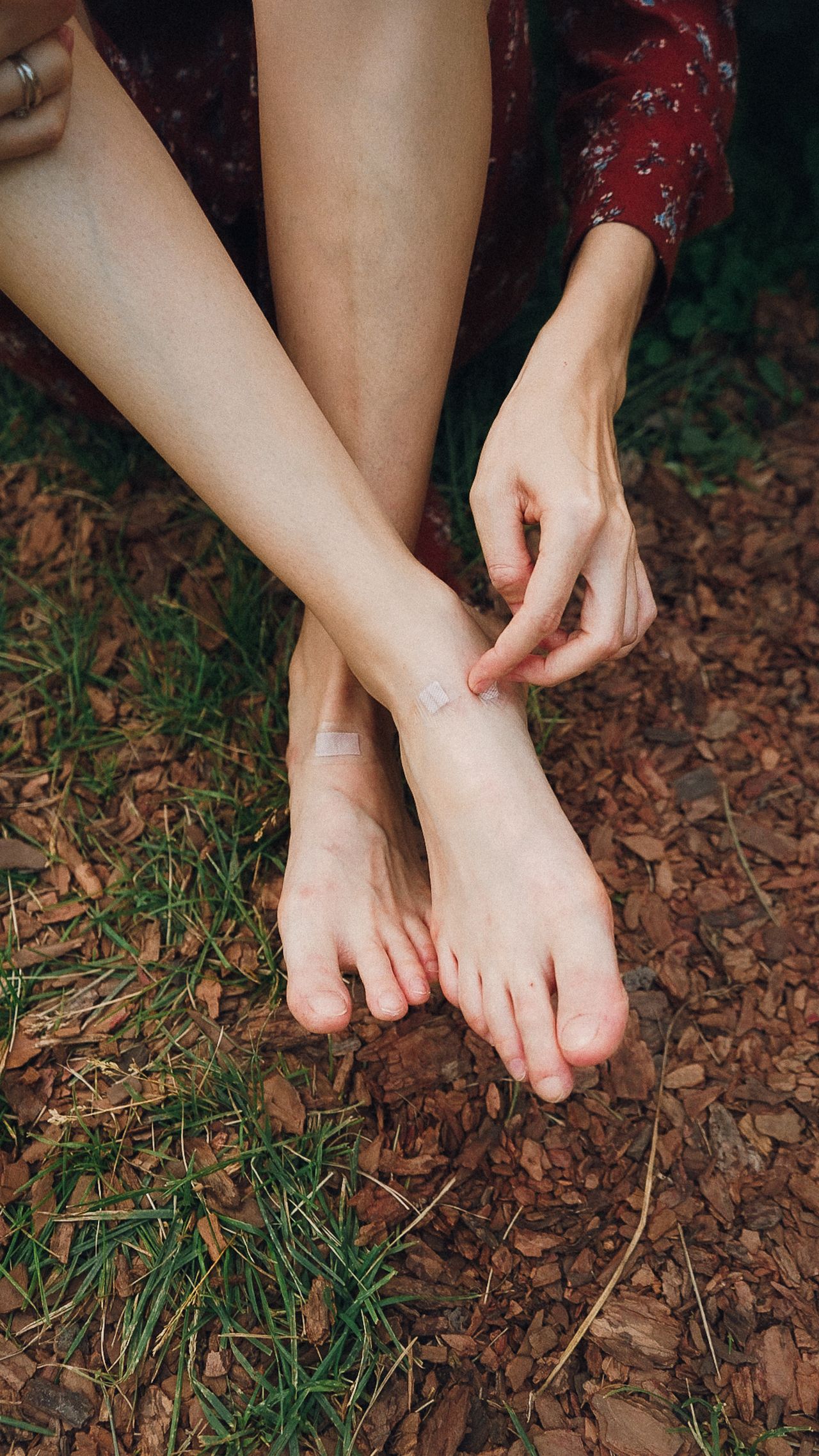
- Adjust your sock and shoe; remove folds, grit or small stones.
- Dry the skin if it is very wet.
- Protect the rubbing point with sports tape or appropriate padding.
- A hydrocolloid dressing can be practical for an intact blister.
- If your feet stay wet, a dry spare pair of socks is extremely useful.
The NHS advises against routinely bursting an intact blister or peeling away the skin. Keep it clean and protect it with a soft or hydrocolloid dressing.
With an ankle injury, the real question is whether it is safe to continue
An elastic bandage helps, but it is not magic
It can support an injury, but it does not make a fracture or major ligament injury safe to walk on.Severe pain, deformity, numbness, circulation problems, or inability to bear weight are reasons not to “walk it off”. A serious injury may require rescue or medical evaluation.
Do not carry lots of medicines – carry the ones you actually know and can use safely
Think in four categories
Your own medicine is not the same thing as a generic “just in case” selection.| Category | What may belong here? | Important |
|---|---|---|
| Your regular medication | Your normal dose plus a reasonable reserve. | Keep it with you in original or clearly labelled packaging. |
| Your emergency medication | For example a prescribed adrenaline auto-injector or inhaler. | Use only as prescribed, and make sure companions know where it is. |
| General over-the-counter medicine | A painkiller or antihistamine you have used safely before. | Consider contraindications and interactions. |
| Fluid and energy replacement | Oral rehydration salts or glucose if appropriate. | This does not replace carrying enough food and water. |
Do not carry loose, unidentified tablets. In an emergency you need to know what the medicine is, what it contains, and whether it is in date. Giving medicine to someone else also carries risks because allergies, contraindications, and interactions differ.
Do not pack antibiotics “just in case”
Prescription medicines should only be carried and used for a clear medical reason.For remote or multi-day expeditions, a doctor may prepare a specific medication plan. That is very different from throwing leftover antibiotics into the kit.
The core kit can stay the same, while a few extras depend on the route
Add these because of the trip, not by default
A good kit is modular: the core stays the same, the extras change.A good first aid kit works because it is organised, dry and up to date
Pack it so it still works under stress
Your first aid kit should not live at the very bottom of the backpack.- Use a waterproof pouch or an inner waterproof bag.
- Keep dressings, medicines and personal emergency items grouped separately.
- Check expiry dates at least once each season.
- Replace anything used before the next trip.
- At least one other person in the group should know where the kit is.
- For multi-day or group trips, increase quantities rather than only adding more product types.
Four things not worth carrying just for the sake of it
An overloaded first aid kit is more likely to be left behind.- Equipment you do not know how to use.
- Expired or unidentified medicine.
- Several products that do exactly the same job.
- Large containers when a few sterile single-use or mini items are enough.
Frequently asked questions
Short answers to the most common hiking first aid kit questions.Is a small shop-bought first aid kit enough?
It can be a good starting point, but check the contents. Many compact kits lack blister care, personal medicine, an emergency blanket, or enough dressings for your type of hike.
Do I need a first aid kit on every hike?
Yes, but not the same size everywhere. Even on a short route close to civilisation, a compact core kit is worth carrying.
Do I need a tourniquet on an average hike?
Not necessarily as part of the simplest day-hike kit. For life-threatening limb bleeding it can be an important tool, but it is most valuable when it is a proper commercial device and you have learned how to use it.
What is most often forgotten?
Personal medication and blister care. They are not dramatic pieces of gear, but they solve common problems far more often than specialised trauma equipment.
What makes a first aid kit good?
It is matched to the trip, you know what is inside, you can reach it quickly, and you keep it replenished. More items do not automatically mean a better kit.
The best first aid kit is the one that is actually with you.
Keep it compact, organised, matched to the trip, and filled with items you know how to use.
Personal medication → wound care → blisters → support → route-specific extras.
Remote or technical trips may justify more serious trauma gear, but only with appropriate first aid knowledge.
Sources and background
This article is intended as general preparation guidance for hiking first aid. Severe bleeding, breathing difficulty, altered consciousness, major trauma, or rapidly worsening symptoms require professional help alongside first aid; 112 is the general emergency number in Hungary and across the EU.
- American Red Cross — Hiking & Backpacking First Aid Kit: Contents & Checklist
- American Red Cross — Make a First Aid Kit: What to Include
- American Red Cross — life-threatening external bleeding
- Mayo Clinic — Cuts and scrapes: First aid
- NHS — Blisters
- Jan Bouken / Pexels — hero photo, hiking first aid kit
- Marta Branco / Pexels — first aid supplies
- RDNE Stock project / Pexels — outdoor wound care
- Vasiliy Skuratov / Pexels — foot bandaging