What to Do If Darkness Falls in the Mountains
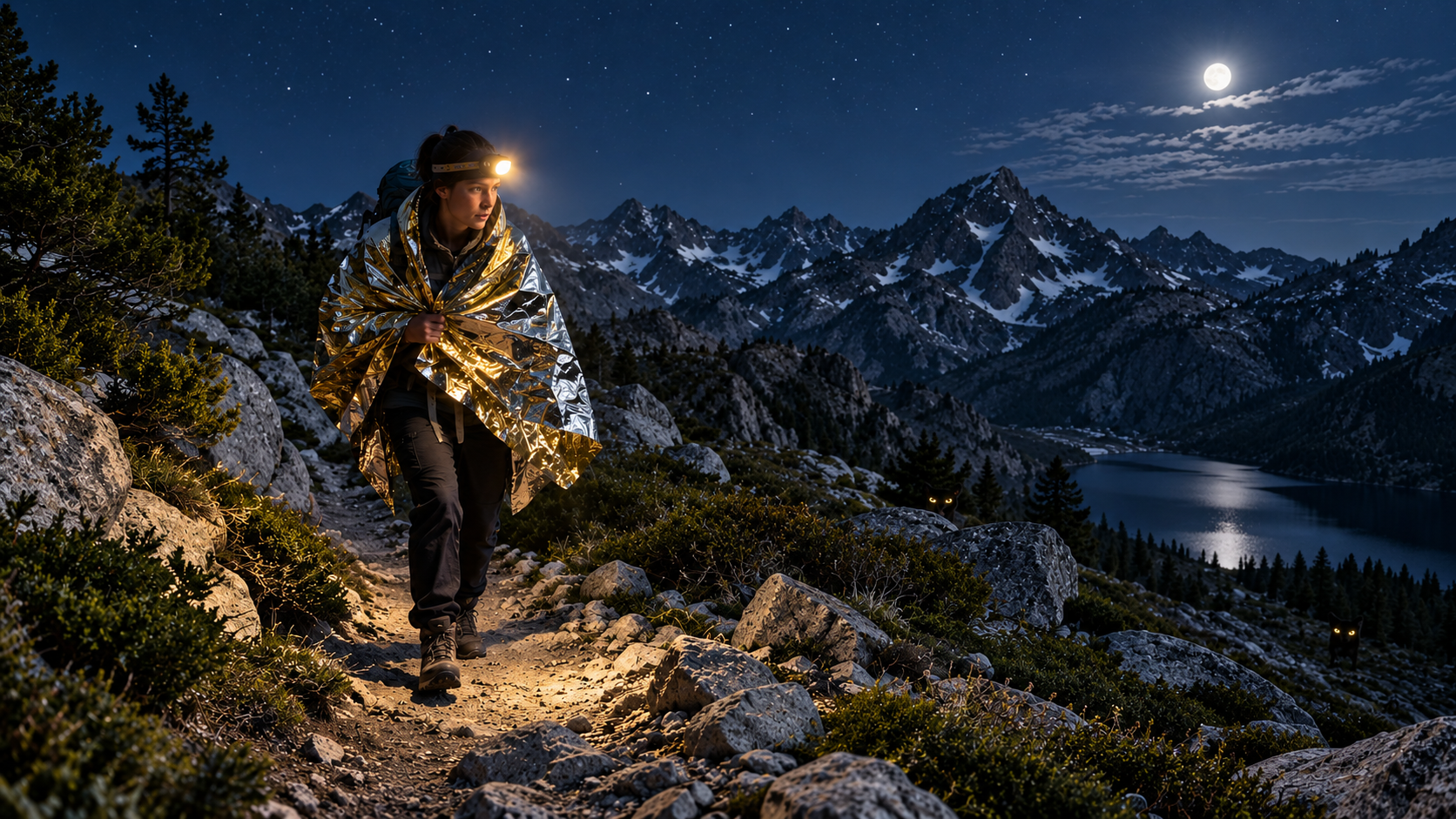
Darkness is not dangerous on its own. What makes it serious is that your safety margin shrinks fast: you move more slowly, the trail is harder to read, your light and battery matter more, and poor decisions become more expensive. The solution is not speed — it is getting the situation under control quickly.
An extra 10 minutes in the wrong direction can do more harm than a calm 2-minute assessment.
A headlamp is basic safety gear, not a luxury extra.
Your real goal is not the final destination, but the nearest predictable point.
Once you slow down and stop more often, heat loss increases quickly.
Your first job is not moving — it is taking control of the situation
Do these six things immediately
Once they are done, you are no longer drifting — you are deciding.Only start moving again when you can say in one sentence: what the next safe point is, and why you are heading there.
You really have only three choices — and the shortest is not always the safest
Make the next safe point your target
You do not have to reach the parking area or accommodation in one step.| Decision | When it makes sense |
|---|---|
| Continue | If the trail is marked, easy, known, and you have reliable light. |
| Turn back | If the last confirmed point is close and the terrain ahead is worse. |
| Stay put | If moving on would be guesswork or clearly more risky. |
Do not shortcut. In the dark, an unmarked shortcut may be steeper, wetter, more exposed, or simply impossible to follow. A predictable trail is always worth more than a route that looks shorter on paper.
The worst decision is to start walking “somewhere”
Uncertainty is not solved by moving faster.If you do not know where you are going, extra movement usually creates a bigger mistake. The key question is not where the final destination is, but which option keeps the situation most under control.
Your light is for movement — your phone is for the map and for communication
Treat your phone flashlight as backup only
Your headlamp should remain the main source of light.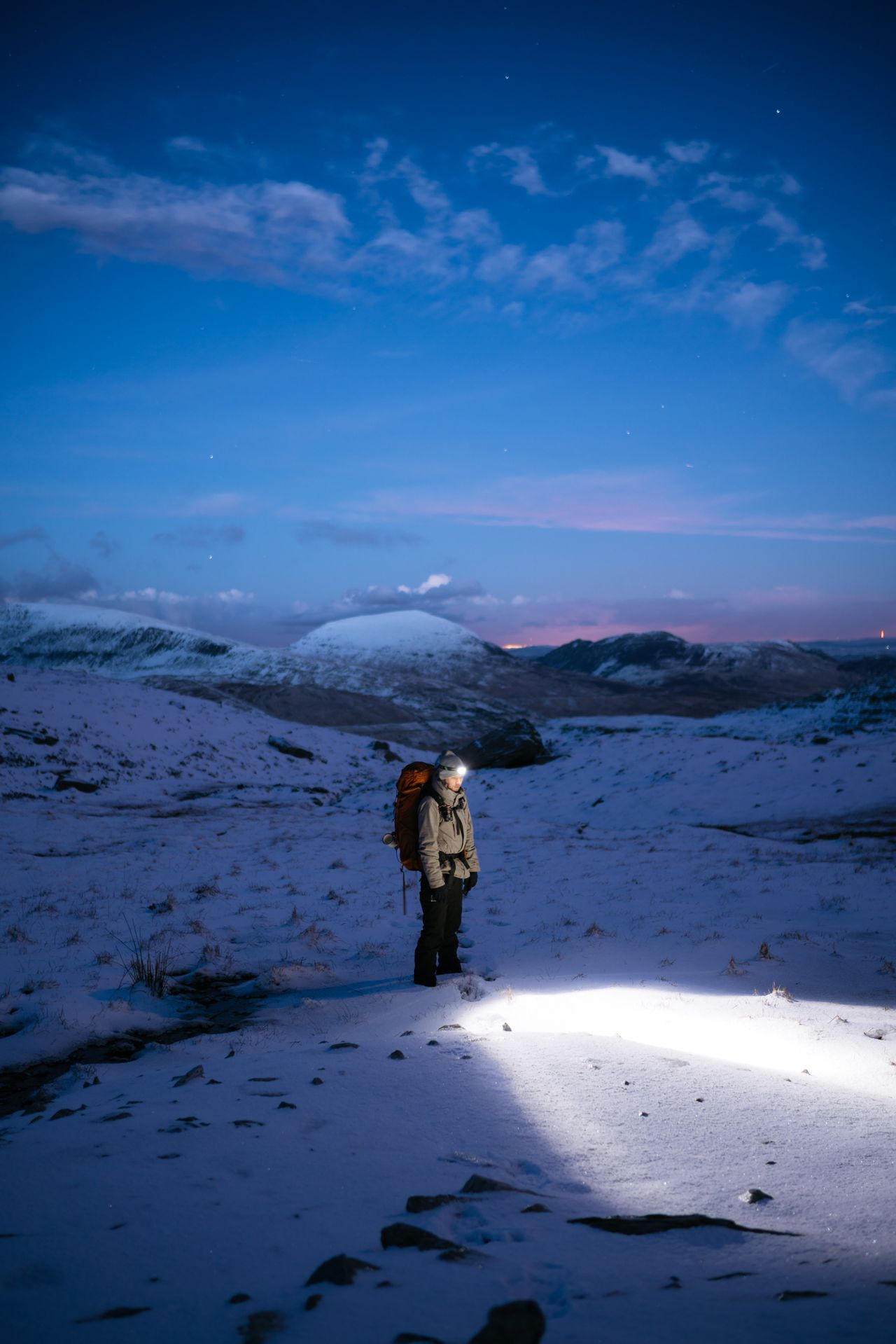
A headlamp keeps both hands free, points where you look, and lets you manage battery more sensibly. Your phone flashlight is best kept for short checks or temporary backup.
How to stretch your battery
The goal is simple: keep the important functions alive until the end.- Turn on power-saving mode.
- Lower the screen brightness.
- Use an offline map.
- Keep the phone in an inner pocket in cold weather.
- If you have a power bank, connect it in time.
- If you have already called for help, stay reachable.
If you are lost, your first win is not getting even more lost
Work backwards from the last confirmed point
The map and the real terrain need to make sense together.A GPS point is not perfect. In dense forest or a deep valley it can be less accurate, so do not build every decision on one jumping blue dot.
When should you stop searching?
There is a point where more movement only makes things worse.- If you do not know where you left the route.
- If the terrain is steep, slippery, snowy, or loose.
- If fog or worsening weather is making navigation harder.
- If someone in the group is injured or very tired.
- If even the “way back” is now guesswork.
Very often, darkness is not the main problem — heat loss is
The risky combination is wind, wet clothes, and slowing down
As soon as you stop more often, you cool down faster.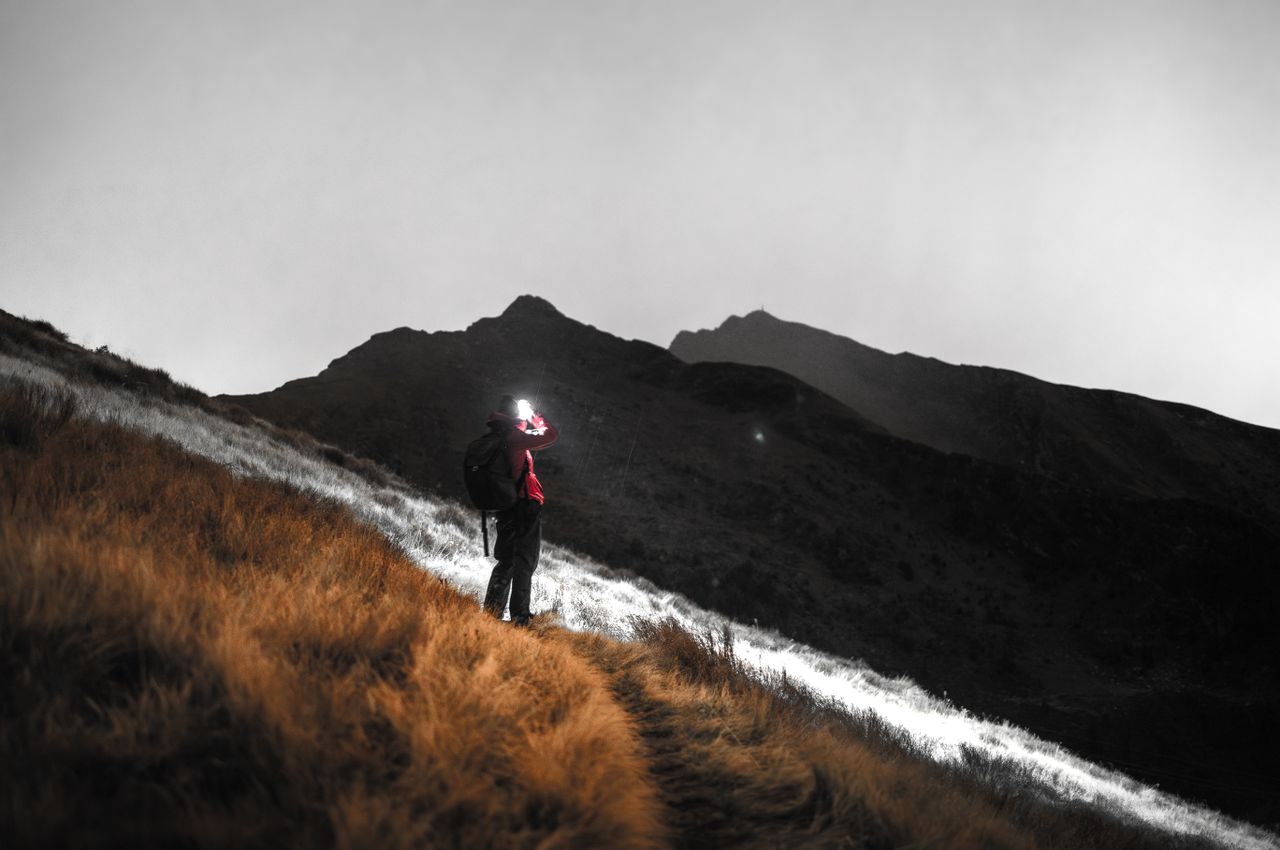
If your pace drops, add a layer early. Wet clothing and wind can cool you far faster than most people expect from a daytime hike.
What should you watch for?
Bad decisions often start once mild cold stress has already begun.| Sign | What to do |
|---|---|
| Shivering, feeling very cold | Add insulation, block the wind, and reduce unnecessary stops. |
| Clumsy movement, poor coordination | Reassess the plan immediately; do not push onto harder terrain. |
| Confusion, unusual sleepiness | Treat it as urgent and ask for help. |
Alcohol may create a warm feeling, but it does not solve cold stress safely.
Call when safe self-rescue is no longer realistic
Do not wait too long in these situations
Calling early often makes rescue simpler and safer.- An injury means you cannot move safely.
- You are lost and no longer have a reliable route.
- You have no usable light on dangerous terrain.
- Signs of cold stress are already appearing.
- Fog, storm, snow, or strong wind is worsening the situation.
- You are in exposed, rocky, or otherwise high-consequence terrain.
What should you tell 112?
Short, clear, and useful information is best.| Data | What to give |
|---|---|
| Location | Coordinates, trail marking, last confirmed point. |
| Problem | Lost, injury, no light, bad weather, cold stress. |
| Group size | How many people, and whether anyone is injured. |
| Condition | Can you still walk, and is anyone worsening? |
| Contact | How much battery remains, and whether you can be reached on that number. |
If there is no signal, only move for reception if the nearby point is clearly safe to reach. Do not climb unknown steep ground just for a chance of service.
A good waiting place is not comfortable — it is safe
What kind of place should you choose?
The goal is to avoid creating a second problem on top of the first.- Stable ground, ideally reasonably flat.
- No fall risk, washout, or loose debris.
- Some shelter from the wind.
- Insulate yourself from the ground.
- Keep the group together.
Keep this in mind while waiting
Managing your reserves still matters.- If you have called for help, do not change location without coordination.
- Keep your phone warm and reachable.
- Save your highest lamp setting for when you really need it.
- Check the condition of the others regularly.
- Do not start moving again in the dark just because you are impatient.
Most “late into darkness” problems can be prevented before you start
Carry a darkness buffer even on a daytime hike
A small amount of extra gear can solve a surprisingly big problem.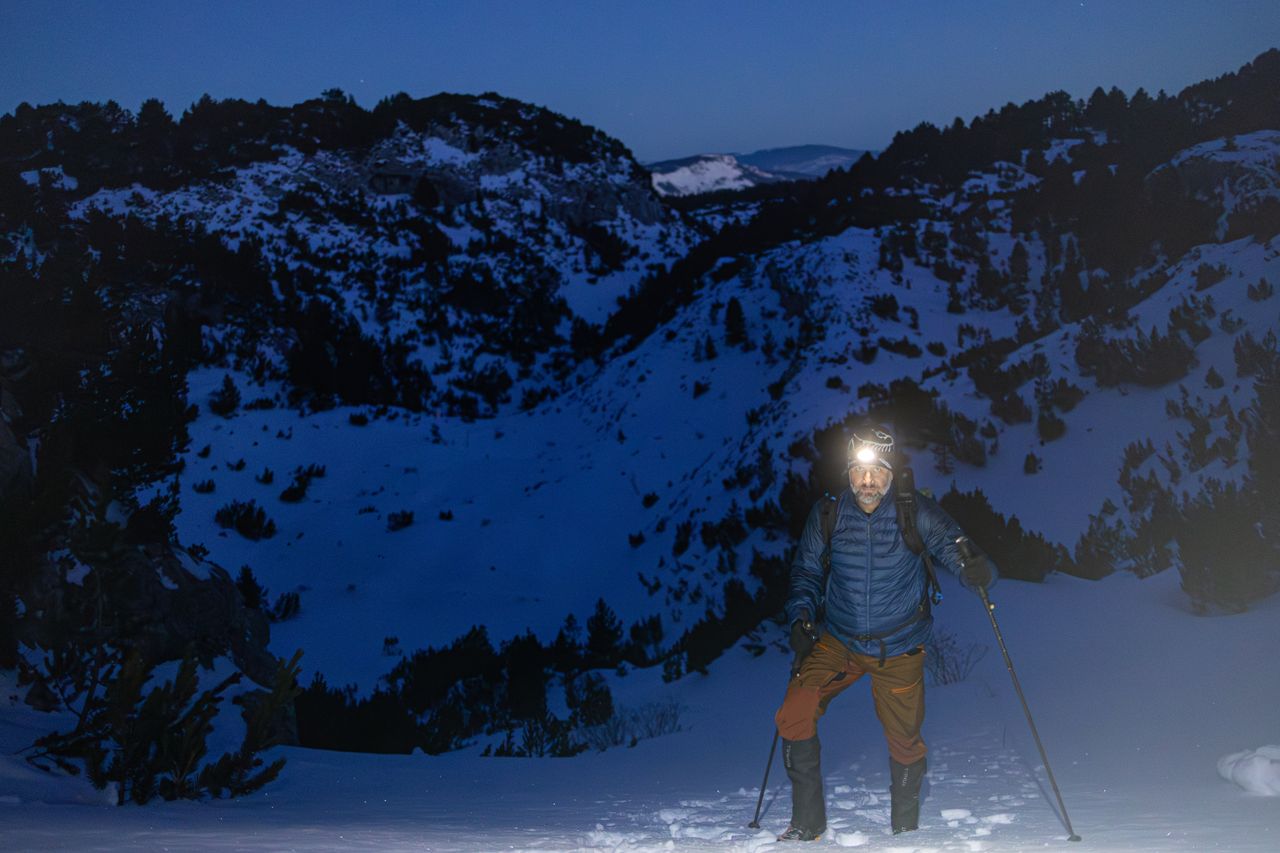
A headlamp, offline map, power bank, one extra warm layer, and a pre-set turn-around time are often enough to stop a simple delay from turning into a real problem.
Five simple prevention rules
Easy, but effective.Frequently asked questions
Short answers to the key situations.Is a phone flashlight enough?
No. Use it as backup only. For movement in the mountains, a headlamp is the better primary solution.
Is it always dangerous to continue in the dark?
No. On an easy marked trail, with good light and stable conditions, it may be manageable. The real risk comes from uncertainty and difficult terrain.
When should I call 112?
When you can no longer move safely on your own: injury, getting lost, cold stress, no usable light, or bad weather are typical reasons.
How much time buffer should I plan?
On unfamiliar or technical hikes, around 60–90 minutes of real buffer is a reasonable starting point, and sometimes more is better.
Do not try to solve uncertainty with speed.
Extra minutes in the wrong direction can grow into a much bigger problem once it is dark.
Light, location, condition, terrain — and only then the route.
If any of these is weak, reduce the risk first and only then decide whether moving on still makes sense.
Sources and background
The practical advice in this article was compiled using mountain rescue and night-hiking guidance. In a real emergency, instructions from the local emergency service always take priority.
- Börzsönyi Mountain Rescue Service — calling for help, GPS coordinates, headlamps, offline maps, and cold-related risk
- REI Expert Advice — night hiking, lighting, and moving safely after dark
- European Commission — the 112 European emergency number
- Willy Méndez / Pexels — hero photo
- Simon Migaj / Pexels — headlamp hiker photo
- Marek Piwnicki / Pexels — headlamp hiker in a dark rainy mountain setting
- Amel Uzunovic / Pexels — headlamp hiker in a night mountain setting