How much does mountain rescue cost in each country?
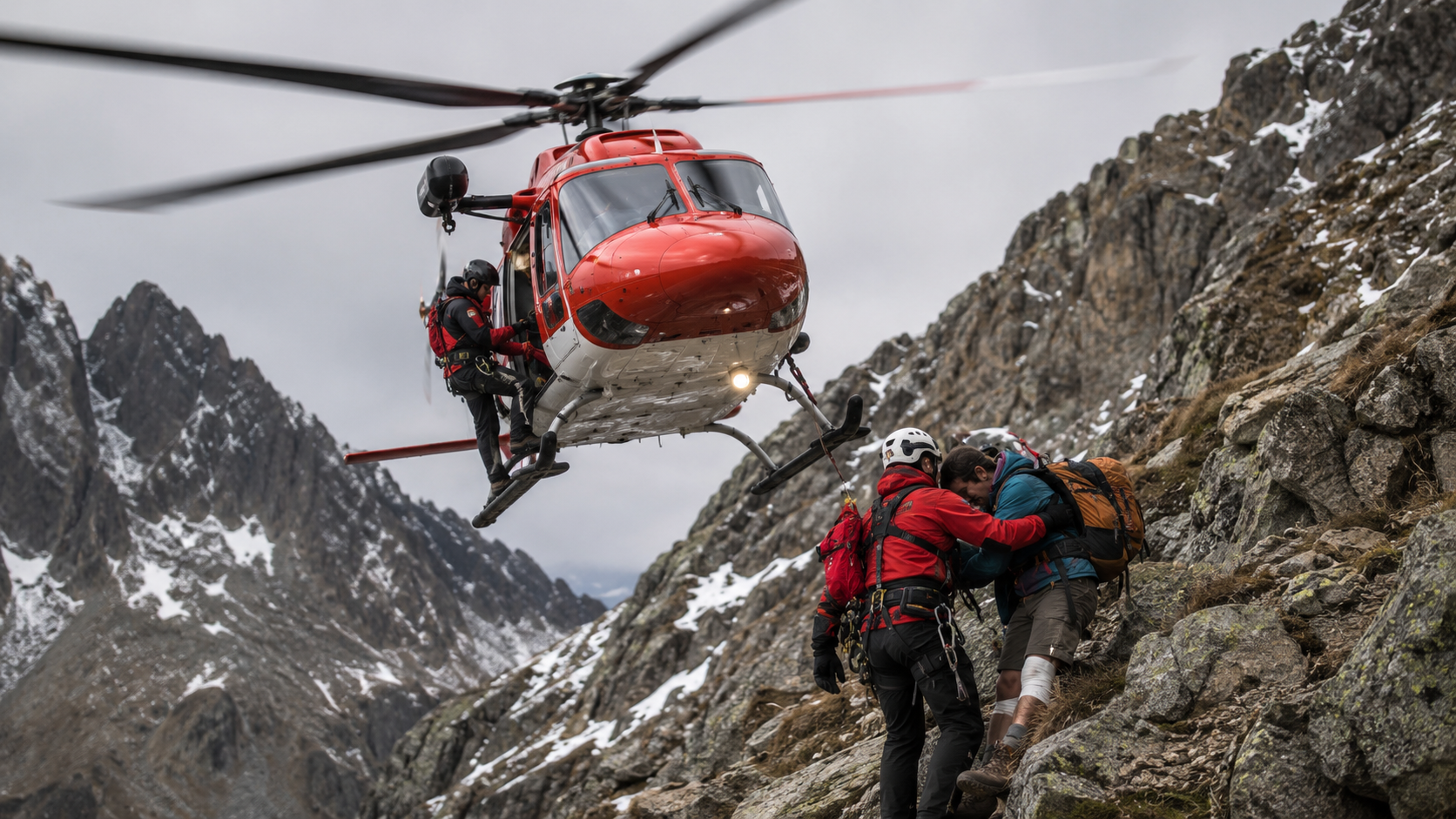
Two questions determine the financial risk of a mountain rescue: whether the country charges for the search or rescue, and whether your own insurance actually covers that specific type of rescue. In Poland, Slovenia and Croatia, official mountain rescue is free of charge for the person in distress. In Slovakia, Austria, Switzerland and Czechia, however, an uninsured rescue can leave you with a bill of several hundred or even several thousand euros or Swiss francs.
In Poland, Slovenia and Croatia, official mountain rescue is not billed to the person being rescued.
In Slovakia, Austria, Switzerland and Czechia, mountain rescue can create a substantial bill.
Air rescue is among the most expensive interventions, so dedicated rescue coverage is worth checking.
The terms for search, rescue and helicopter assistance determine what your insurer will reimburse.
- Check the country first Section 02 shows in one place where rescue is free and where you may face a significant bill.
- Then check your insurance Sections 04–05 explain when an insurer may reimburse the rescue and when the cost may remain with you.
- Injury and getting lost are not the same Many policies treat rescue after an injury differently from searching for an uninjured but stranded hiker.
- Helicopter rescue is especially expensive In countries that charge, helicopter and complex search operations can quickly reach several thousand euros or Swiss francs.
Search, mountain rescue and medical treatment are not the same thing
The financial side of a mountain rescue may involve four separate services
Insurers also use these distinctions when deciding which costs fall under your policy.| Item | What does it mean? | Why does it matter? |
|---|---|---|
| Search | Locating someone who is missing, lost or cannot be contacted. | Often a separate benefit in insurance policies; without injury it may not be included in basic rescue cover. |
| Mountain rescue | Ground team, stretcher evacuation, rope techniques or another technical rescue. | The country may charge for it; if it does, your rescue-cost limit becomes important. |
| Helicopter rescue | Air extraction or urgent transport from mountain terrain. | This is usually one of the most expensive items and many policies attach separate conditions to it. |
| Medical treatment | Emergency treatment or hospital care after the rescue. | It is not the same as the rescue fee; it matters here because some policies link rescue reimbursement to subsequent emergency treatment. |
If you are uninjured but lost, caught by darkness or unable to descend safely, it is still a genuine rescue operation — but insurers often treat it differently from an evacuation caused by injury.
A helicopter is not a “free ambulance in the mountains”
Flight time, crew, winching and ground support may all be part of the final cost.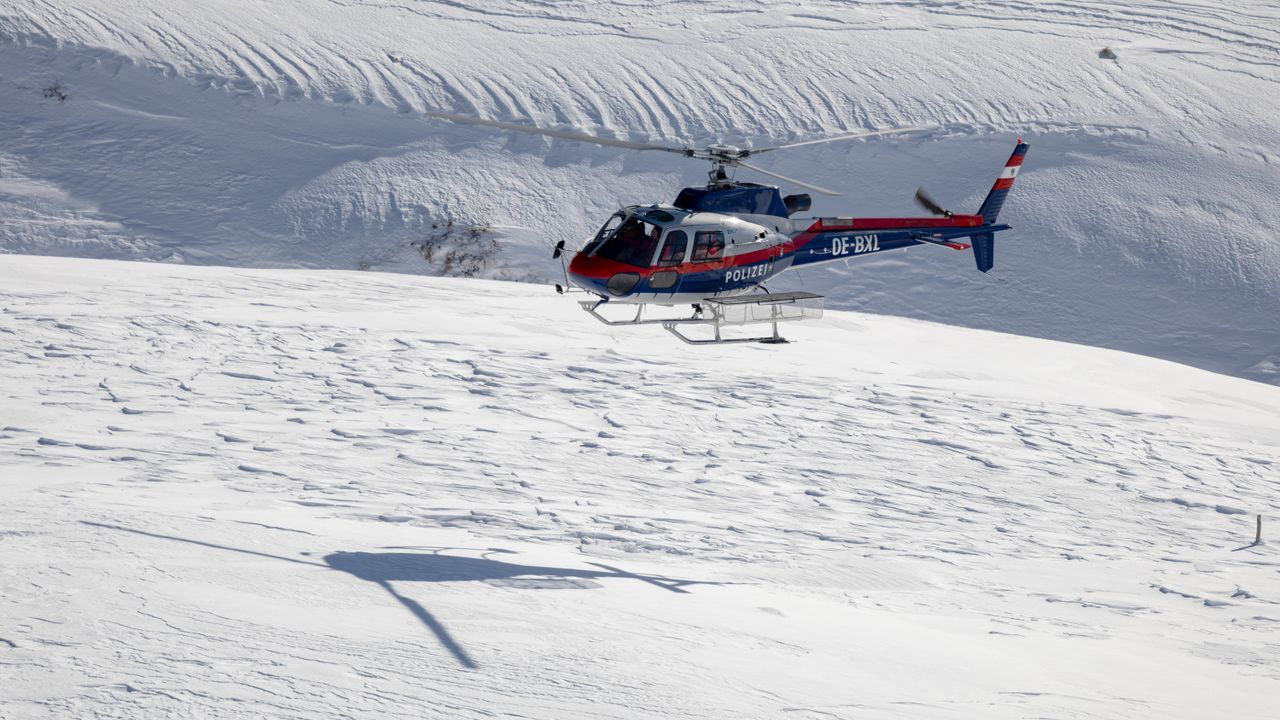
In a chargeable system, flight time is not necessarily the only cost. In Austria, for example, a ground mountain-rescue unit may prepare for the operation even if the helicopter ultimately performs the extraction, so ground and air costs can appear together.
Where is mountain rescue free, and where can it cost you money?
FREE MOUNTAIN RESCUE
According to the official rescue services, the person in distress is not billed a mountain-rescue fee in these countries.| Country | Mountain-rescue charge | What does it mean in practice? |
|---|---|---|
| Poland | Free of charge | According to TOPR, justified mountain rescue in the Polish Tatras and other Polish mountains is free of charge. |
| Slovenia | Free of charge | GRZS states that people are rescued free of charge regardless of whether they have separate mountain-rescue insurance. |
| Croatia | Free of charge | HGSS states that search-and-rescue operations are not billed to the person being rescued. |
| Hungary | No separate Alpine-style mountain-rescue tariff | Emergency assistance via 112 can be requested in Hungary regardless of nationality or insurance status. |
Salvamont is a public mountain-rescue system, but among the official sources we checked we did not find a single nationwide tariff page aimed at tourists that would justify describing every Romanian rescue categorically as free of charge. For that reason, Romania is not placed in the confirmed free-rescue list here.
PAID OR PARTLY PAID MOUNTAIN RESCUE
Here the rescue bill may be charged partly or fully to the person in distress.| Country | Price / realistic scale | Main rule |
|---|---|---|
| Slovakia | Several hundred to several thousand euros | Mountain rescue and transport costs are not automatically part of publicly funded healthcare; HZS may issue an invoice. |
| Austria | €306 / €612 / €1,224 per hour under the 2026 NÖ/W ground-rescue tariff | Helicopter costs may be added separately; the rescued person receives the bill and may then seek reimbursement from their insurer. |
| Switzerland | Rega helicopter: about CHF 4,500 on average | Complex searches or avalanche rescues can reach several tens of thousands of Swiss francs. |
| Czechia | €60 / €230 / €460 base charges | The official mountain-rescue tariff depends on location, distance and team size; above 10 rescuers there is an additional €25 per person per started hour. |
| Italy | Region-dependent | There is no single nationwide price. Some Alpine regions or autonomous provinces apply co-payments or cost recovery. |
| France | Situation-dependent | Public mountain rescue and local ski-area rescue can be financed differently. |
This table is the article’s central price overview. The following sections do not repeat these prices; they explain how the bill reaches the hiker and when insurance may reimburse it.
In countries that charge, insurance often reimburses you afterwards
Slovakia — the HZS invoice may be issued in your name
Having insurance does not mean the rescue service simply does not bill you.Official Tatra information explains that after an intervention the Mountain Rescue Service may issue an invoice in the rescued person’s name. That invoice, together with the policy documents and required evidence, is then submitted to the insurer. In other words, HZS and your insurer are two separate parties: HZS performs and bills the rescue, while the insurer decides what it will reimburse under your policy.
Austria — the rescued person pays, then claims reimbursement
The official 2026 NÖ/W mountain-rescue information explains this process clearly.The rescued person receives a cost statement that must be settled with the mountain-rescue organisation. If they have insurance or Alpine-club coverage that includes rescue costs, they submit the bill afterwards for reimbursement. The Austrian mountain-rescue information also notes that Austrian statutory health insurance does not take over the mountain-rescue bill.
Switzerland — rescue first, payment responsibility afterwards
Rega says responsibility for the costs is clarified with insurers after the mission.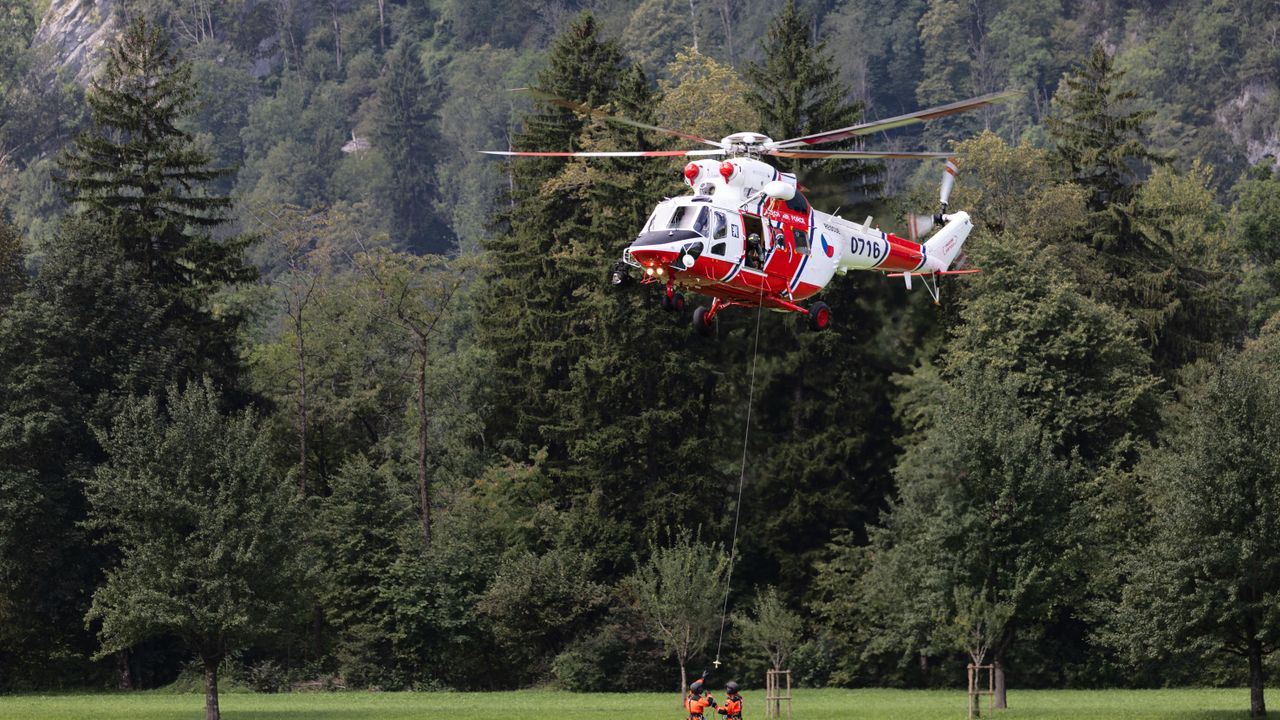
Rega explicitly states that payment responsibility is not checked before a rescue begins. The financing is clarified afterwards. Rega patronage is also not insurance: under certain conditions Rega may waive its own costs for patrons, but this is not a legally enforceable insurance entitlement.
What “mountain-rescue cover” actually needs to include
An insurer pays only what the policy specifically covers
There is no general rule that every travel-insurance policy automatically pays every mountain-rescue bill.| Situation | What may the policy cover? | What should you check? |
|---|---|---|
| Mountain rescue required because of injury or acute illness | A good hiking or sports travel policy will typically cover this. | Mountain rescue and helicopter rescue should be named explicitly; check the benefit limit. |
| Helicopter evacuation | May be covered if the policy includes air/mountain rescue and the intervention meets its conditions. | Check for a separate helicopter limit, emergency requirement or assistance-notification rule. |
| Lost, exhausted or stranded without injury | Often not included in basic medical-rescue cover. | Look for separate wording such as “search”, “search and rescue” or rescue without injury. |
| Technical hiking, via ferrata or high-altitude terrain | Only if the activity is not excluded by the policy. | Check whether the activity is classified as an extreme or higher-risk sport. |
| The bill exceeds the rescue limit | The insurer normally pays only up to the contractual maximum. | The limit should be realistic for a multi-thousand-euro helicopter or complex rescue. |
Mountain rescue and search are not necessarily the same benefit. If you are lost but uninjured, you may be in exactly the situation that a basic policy does not cover.
This is where mountain-rescue reimbursement is usually decided in the policy wording
Five common pitfalls
Insurers do not all use the same rules, so these points must be checked in your own policy.- No emergency treatment after the rescue: some policies reimburse mountain or helicopter rescue only if the rescued person receives emergency medical treatment afterwards.
- It was only a search: locating a lost or uninjured hiker may be a separate benefit with a separate — and often lower — limit.
- Your activity falls into another sports category: ordinary hiking, high-altitude hiking and via ferrata are not necessarily treated the same way by insurers.
- The rescue limit is too low: the insurer is not obliged to pay the part above the contractual maximum.
- Excluded activity or area: a closed route, excluded extreme sport or another contractual exclusion may lead to a rejected claim.
A concrete Hungarian example: why the sports definition matters
This is not a universal market rule; it is an example from a currently available Hungarian travel-insurance wording.The same policy may reimburse necessary mountain and helicopter rescue with a high limit or even without a specific limit in certain sports packages, but only if emergency medical treatment follows the rescue. This is a good example of why “I have travel insurance” is not enough to know whether a specific mountain rescue will be paid.
The same insurance policy plays a different role in a free-rescue country and a chargeable one
What does this mean in practice?
The insurer’s role depends first on whether a mountain-rescue bill exists at all.| Situation | What would insurance need to reimburse? |
|---|---|
| Poland / Slovenia / Croatia | Official mountain rescue itself is free of charge, so there is no rescue-service bill for your insurer to reimburse. |
| Slovakia | Whether the HZS rescue or search invoice is reimbursed depends on the rescue coverage in your own policy. |
| Austria | The rescued person receives the cost statement and can then claim reimbursement through rescue-cost insurance or eligible Alpine-club insurance. |
| Switzerland | After the rescue it is determined what an insurer pays and what remains with the rescued person; uninjured search or extraction cases can be particularly problematic. |
| Czechia / chargeable Italian regions | A local tariff or co-payment can only be shifted to the insurer if your policy actually covers that type of rescue and that activity. |
What may the insurer ask for before reimbursing mountain-rescue costs?
Do not throw these away after the rescue
Both Austrian mountain-rescue information and Slovak guidance assume an after-the-event insurance claim process.- The mountain-rescue or helicopter invoice / cost statement.
- Proof of payment if you had to settle the bill first.
- Rescue or incident documentation if it was issued.
- Medical documentation if the policy links rescue reimbursement to emergency treatment.
- Your policy number and claim reference.
- Details of other rescue coverage if you also have Alpine-club, bank-card or another relevant insurance.
Save your insurer’s assistance phone number. In a genuine emergency you should never delay the rescue just to ask for permission first, but as soon as reasonably possible report the incident and follow the insurer’s claims instructions.
If there is real danger, call for help early
An accurate location shortens the rescue
Rescuers need immediately usable information rather than a long story.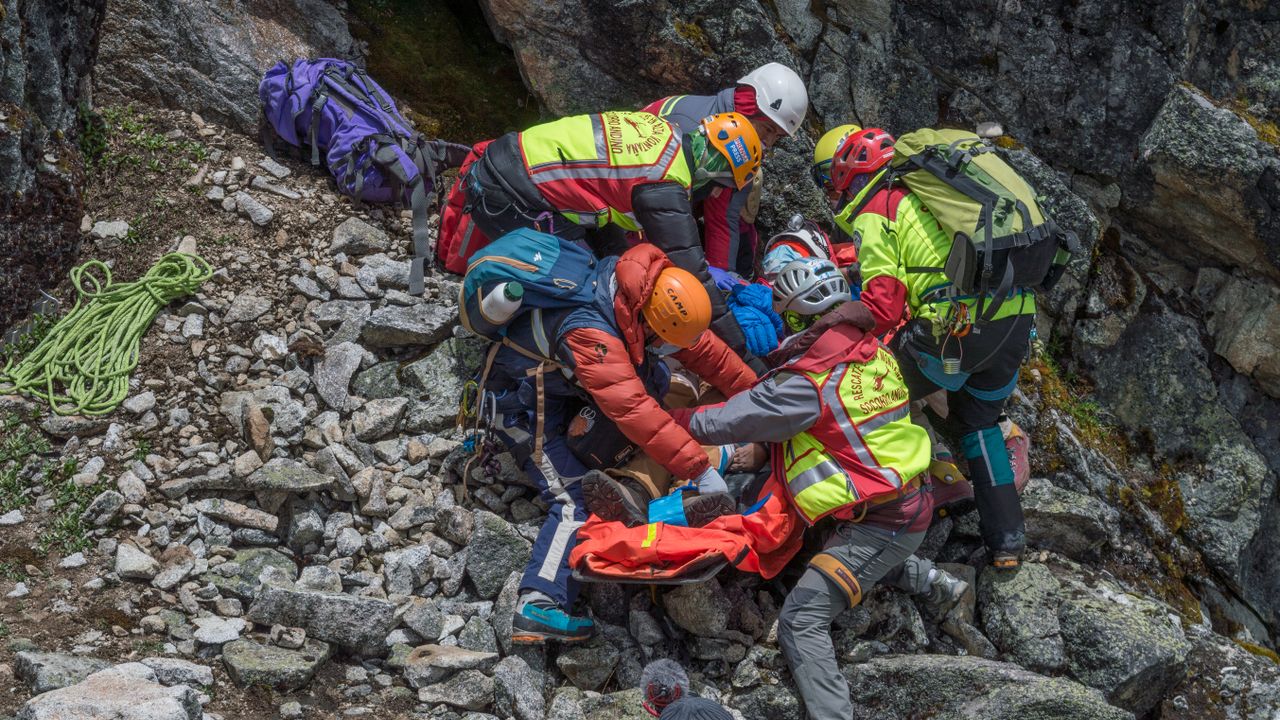
- Your exact location or GPS coordinates.
- What happened and how many people are involved.
- Whether there is an injury and whether the person can walk.
- Terrain, weather and visibility.
- Stay reachable and move only if the rescue dispatcher tells you to.
Frequently asked questions
Focused only on mountain-rescue costs and insurance.If I am not injured but cannot get down, can insurance still pay?
Only if the policy covers search or technical rescue without injury. In many policies, standard mountain or helicopter rescue cover is linked to an emergency medical event.
If the authorities send a rescue helicopter, does that mean my insurer must pay?
No. Whether the rescue was professionally justified and whether your insurance covers it are two different questions. The insurer reimburses according to the policy wording.
Why is the Polish–Slovak border ridge risky without rescue insurance?
Because TOPR rescue is free on the Polish side, while an HZS operation on the Slovak side can create a bill. The rescue-cost system can change during the same hike simply because you cross the border.
How high should my rescue-cost limit be?
Do not assume a helicopter or complex mountain rescue will cost only a small amount. The Swiss and Austrian examples show that multi-thousand-euro or multi-thousand-franc costs are realistic, while a complex search can cost much more.
Does the country charge for the rescue, and does your policy cover that exact type of rescue?
If you know the answer to those two questions before you start, the financial side of mountain rescue is far less likely to surprise you.
Search the policy for four terms: mountain rescue, helicopter, search, sports exclusions.
The name of the insurance product matters less than the actual coverage and limits for those risks.
Sources and background
The rescue charges and insurance statements in this article were checked against official rescue-service, government and current insurance sources. Tariffs and policy conditions may change, so always verify the latest local rules and your own policy before travelling.
- Hungarian National Ambulance Service — who can request emergency assistance in Hungary
- TOPR — free mountain rescue in Poland
- GRZS — mountain rescue in Slovenia
- HGSS — mountain rescue in Croatia
- EU-healthcare.fi — Slovakia: mountain-rescue costs
- Slovakia.travel — HZS, technical rescue and insurance
- Visit Tatry — HZS invoice and insurance claim process
- Austrian Mountain Rescue NÖ/W — 2026 tariffs and billing
- Bergrettung Vorarlberg — who pays for rescue in Austria
- Rega — Swiss rescue costs and insurance reimbursement
- Swiss Federal Office of Public Health — rescue-cost reimbursement
- Horská služba ČR — official mountain-rescue tariff
- CNSAS — mountain-rescue costs and regional rules in Italy
- South Tyrol — helicopter rescue charges and co-payments
- Current Hungarian travel-insurance wording — example of mountain/helicopter rescue, search and sports classification
- Alan Kabeš / Pexels — free-to-use photo
- Marco De Luca / Pexels — free-to-use photo
- Roman Apaza / Pexels — free-to-use photo