What to do if you encounter a bear while hiking
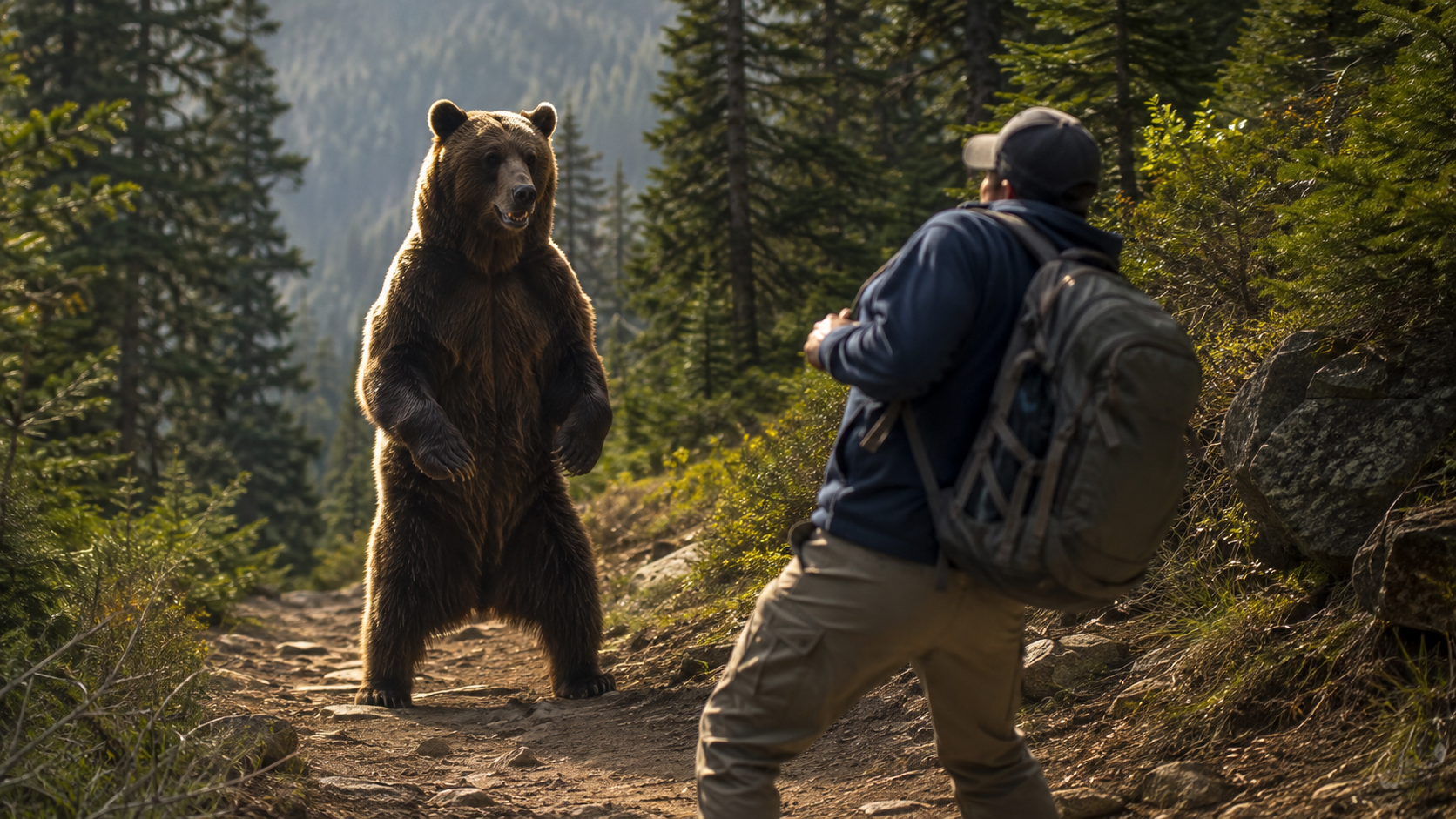
Most bears do not seek out human company. The risk rises mainly when you surprise the animal, get too close, there is a cub nearby, it is guarding food, or it has no clear escape route. The goal of a good response is not to “scare the bear away”, but to reduce tension and increase the distance safely.
A sudden attempt to flee can escalate the situation. Stay controlled and increase the distance slowly.
A normal human voice can help the animal recognise that you are a person and avoid another surprise.
Do not corner it, and do not stand between the bear and its cubs, food or retreat route.
If you carry bear spray, it can only help if you can reach it within seconds.
- Do not run awayStay calm, do not approach, and do not start making sudden movements.
- Make it clear you are humanSpeak in a normal voice without sudden shouting or waving your arms.
- Back away slowlyMove back in the direction you came from and leave the animal a clear route.
- Be prepared, do not improviseSpray only helps if it is accessible; call 112 in case of injury or immediate danger.
In bear country, prevention comes first
Brown bears live in several mountain regions of Central and Southeastern Europe
When hiking in the Carpathians, the Dinarides and parts of the Alps, you should be aware that brown bears may be present.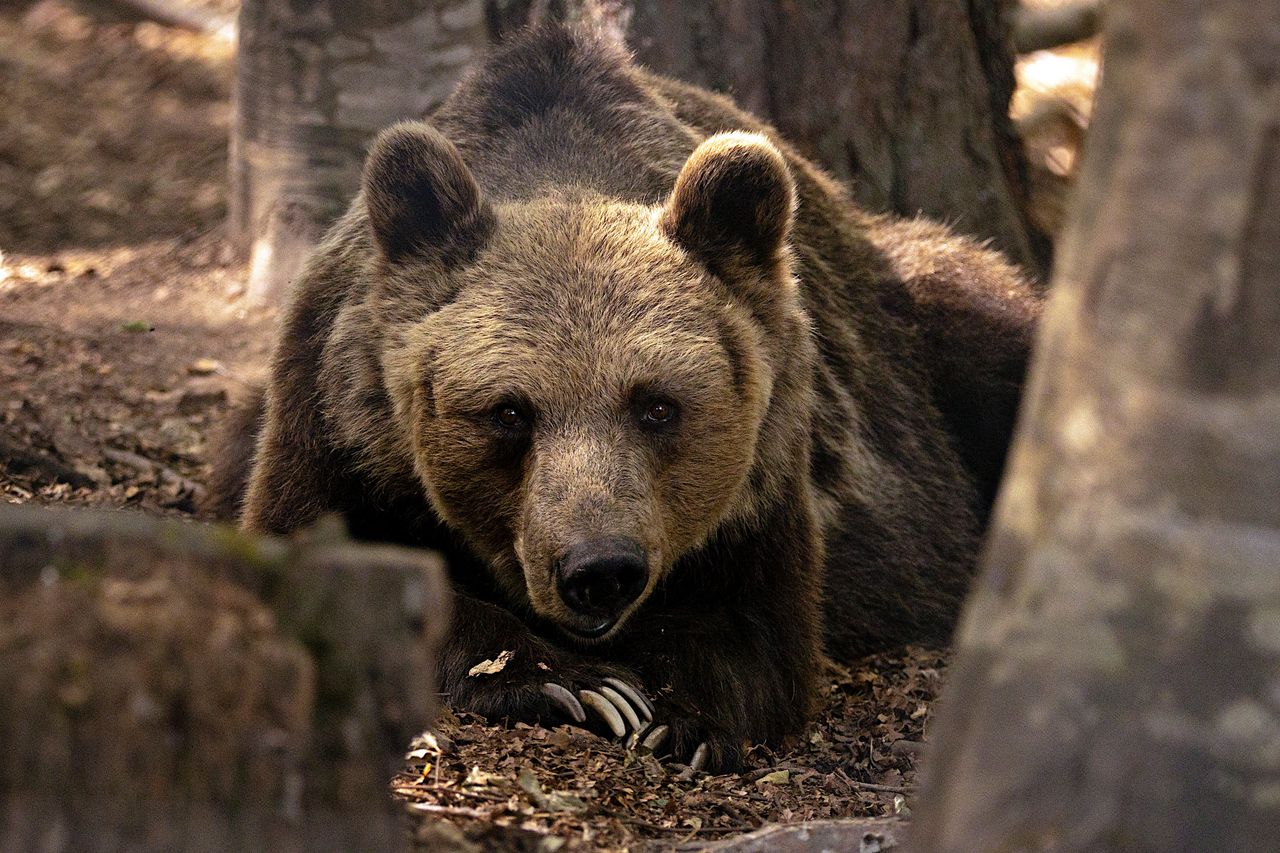
Brown bears are part of the natural fauna in many mountain regions of Slovakia, Romania, Slovenia, Croatia, Bosnia and Herzegovina, and Montenegro. According to the European Commission, attacks on people are rare, and many conflicts are linked to defensive situations such as cubs, food or sudden surprise.
- Make your presence known where visibility is poor. Conversation, whistling or clapping can help a bear notice you in time.
- Stay on marked trails and, where possible, hike in a group. Slovak nature conservation authorities explicitly recommend this.
- Keep your dog on a leash. A loose dog may disturb a bear and then run back to you.
- Do not leave food or rubbish behind. A bear conditioned to human food poses a greater conflict risk.
- Be especially alert at dawn, at dusk and in dense vegetation.
Fresh tracks, carcass smell or a cub: this is a good reason to turn back
The surroundings often warn you before you actually see the bear.You have seen a bear: the goal is to increase distance, not show dominance
Do this in order
The basic logic of official Slovenian and Slovak guidance is very similar.- Stop and do not approachGive yourself a moment to assess the distance and the terrain.
- Speak calmlyMake your presence known in a normal human voice; do not scream or wave your arms.
- Back away slowlyPreferably retreat the way you came. Do not turn the situation into a race.
- Leave a clear escape routeDo not stand between the animal and its cubs, food or exit route.
- Do not insist on continuing the routeIf the bear does not move away, change your route or turn back.
What not to do
The biggest mistakes are usually instinctive rather than technical.Further practical reading
It can also be useful to review the topic from a more personal hiker’s perspective.The Climbers.hu bear-safety article (Hungarian) also contains useful practical tips, including keeping dogs on a leash, carrying bear spray where it is easy to reach, and not making your phone your first reaction during an encounter. In an actual emergency, however, the current official guidance of the relevant country or national park should always take priority.
Curiosity, stress and persistent approach are not the same thing
Do not judge the situation from a single movement
A bear may stand on its hind legs simply to see or smell better.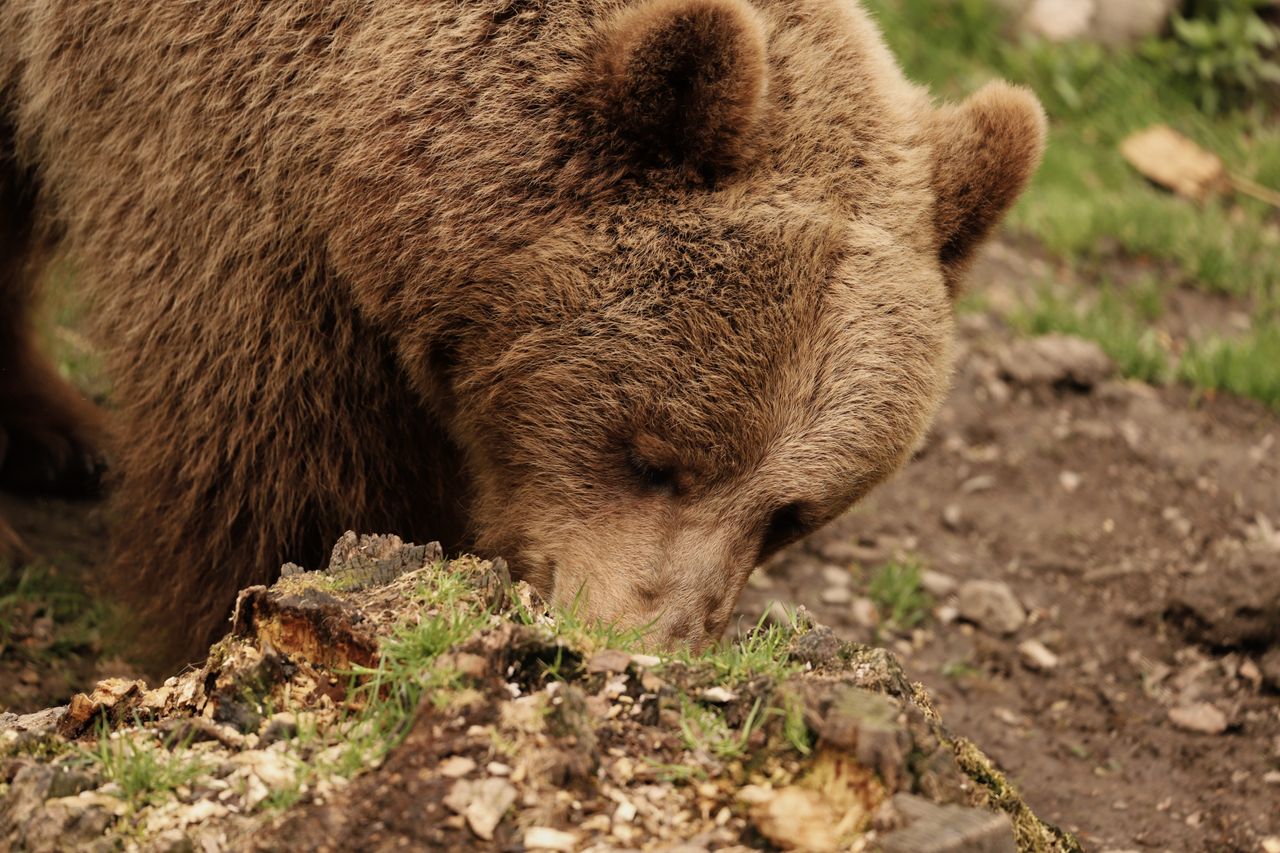
Watching, sniffing, possibly standing on its hind legs
This alone does not prove an intent to attack. Stay calm, speak and increase the distance.
Huffing, jaw-popping, ground-slapping or charging
These can be warning signs. Do not run; prepare to use the spray and do not move closer.
If the bear does not try to avoid you but keeps following, deliberately approaches or comes into camp, take it more seriously than a brief defensive warning.
Bear spray is an emergency defence tool, not a general repellent
Accessibility matters more than simply carrying it
A canister at the bottom of your backpack is practically useless in a fast-developing situation.- Keep it reachable within seconds. A hip-belt holster or external carrier is practical.
- Know the safety mechanism and grip. Do not learn how it works for the first time during an emergency.
- Pay attention to wind direction. In a strong headwind, the spray can blow back towards you.
- Do not spray it on a tent, clothing or equipment. It is not a preventive “repellent scent”; it is a defence tool for an attacking or charging animal.
- Follow the manufacturer’s instructions. Range, spray duration and operating method vary by product.
- Check local laws and transport rules. This is especially important when flying.
Do not confuse it with personal-defence pepper spray
Bear spray is designed specifically for bear emergencies and creates a larger spray cloud.Use only a product whose operation you understand and that can legally be carried and transported in the country concerned.
A defensive brown-bear attack and a persistent predatory attack require different responses
If a brown bear makes physical contact during a defensive attack
Guidance from LIFE DINALP BEAR and the National Park Service describes a similar basic response.- Lie face down. Protect the back of your neck and your head with your hands.
- Spread your legs. This makes it harder for the bear to roll you over.
- Keep your backpack on. It may provide additional protection for your back.
- Remain passive and quiet. Only get up when you are sure the animal has moved away.
If the attack continues or the bear had been persistently following you
This is no longer the same situation as a sudden defensive reaction.If a brown-bear attack does not stop, or the situation clearly developed from persistent pursuit, deliberate approach to a camp or predatory-style following, NPS guidance says you should fight back actively using whatever means are available.
This is the most critical part of the topic. Guidance may differ depending on the local bear population, the exact situation and the authorities; always check the current advice for the relevant park or country before setting out.
In bear country, managing food odours is at least as important as choosing your campsite
Your tent should not be your sleeping area, kitchen and food store at the same time
Park rules differ, but the principle is the same: do not teach bears that human camps are a source of food.
- Do not keep food, rubbish or scented toiletries in the tent.
- Follow local food-storage rules. This may mean a bear-resistant container, a secure locker or another designated system.
- Do not leave food-smelling cookware, packaging or rubbish outside.
- Where local rules allow it, keep your cooking and sleeping areas separate.
- Do not feed wildlife. This creates risk not only for you, but also for the next hiker.
After an injury or immediate danger, do not simply “carry on”
112 and the local authorities
Dealing with immediate danger and reporting the incident afterwards are two separate tasks.Seek medical care even if the injury initially seems minor. Also report the attack or dangerous behaviour to the local authorities.
The most common questions about bear encounters
Quick answers
The basic principles are simple, but the specific situation can always override a general rule.Should I run if I see a bear?
No. Stay calm, speak in a normal voice and slowly increase the distance.
What should I do if I see a cub?
Do not approach. Back away and never place yourself between the cub and its mother.
If the bear stands on its hind legs, is it about to attack?
Not necessarily. A bear often stands up to see or smell better. Judge the full pattern of behaviour.
Can I spray bear spray on my tent as a preventive measure?
No. Bear spray is an emergency defence tool, not a repellent to apply to equipment.
What if the bear charges me?
Do not run. Prepare to use bear spray. A short warning charge does not always end in physical contact.
What should I do if the bear physically attacks me?
During a defensive brown-bear attack, lie face down, protect your head and neck, and remain passive. If the attack continues or is clearly predatory, active resistance may become necessary.
Running, approaching, taking photos or trying to “chase it away”.
During an unexpected bear encounter, controlled retreat is a safer goal than trying to change the animal’s behaviour.
Notice the bear → stay calm → use a human voice → retreat slowly → leave a clear route → use spray if necessary.
Much of bear safety is decided before an encounter: route choice, awareness, a leashed dog, a well-managed camp and knowledge of local rules.
Sources and further reading
This article was revised from the previous Túranavigátor version, and the critical safety sections were checked against European and official sources. At the actual location, the current guidance of the relevant country or national park always takes priority.
- Štátna ochrana prírody SR — safety in areas inhabited by brown bears
- Slovak bear intervention team — prevention, making noise, dogs on a leash
- Slovenian Ministry of Natural Resources — how to behave during a bear encounter
- GOV.SI — prevention and response during encounters with large carnivores
- LIFE DINALP BEAR — How to behave in bear areas
- European Commission — large carnivores: facts and common misconceptions
- U.S. National Park Service — brown bear defensive and predatory attacks
- Climbers.hu — practical bear-safety advice (Hungarian article)
- Denitsa Kireva / Pexels — brown bear in a forest
- Christina & Peter / Pexels — brown bear in a forest environment
- Lorenzo Boldorini / Pexels — brown bear on a forest trail