Hohe Wand Via Ferratas — Which Route Should You Choose?
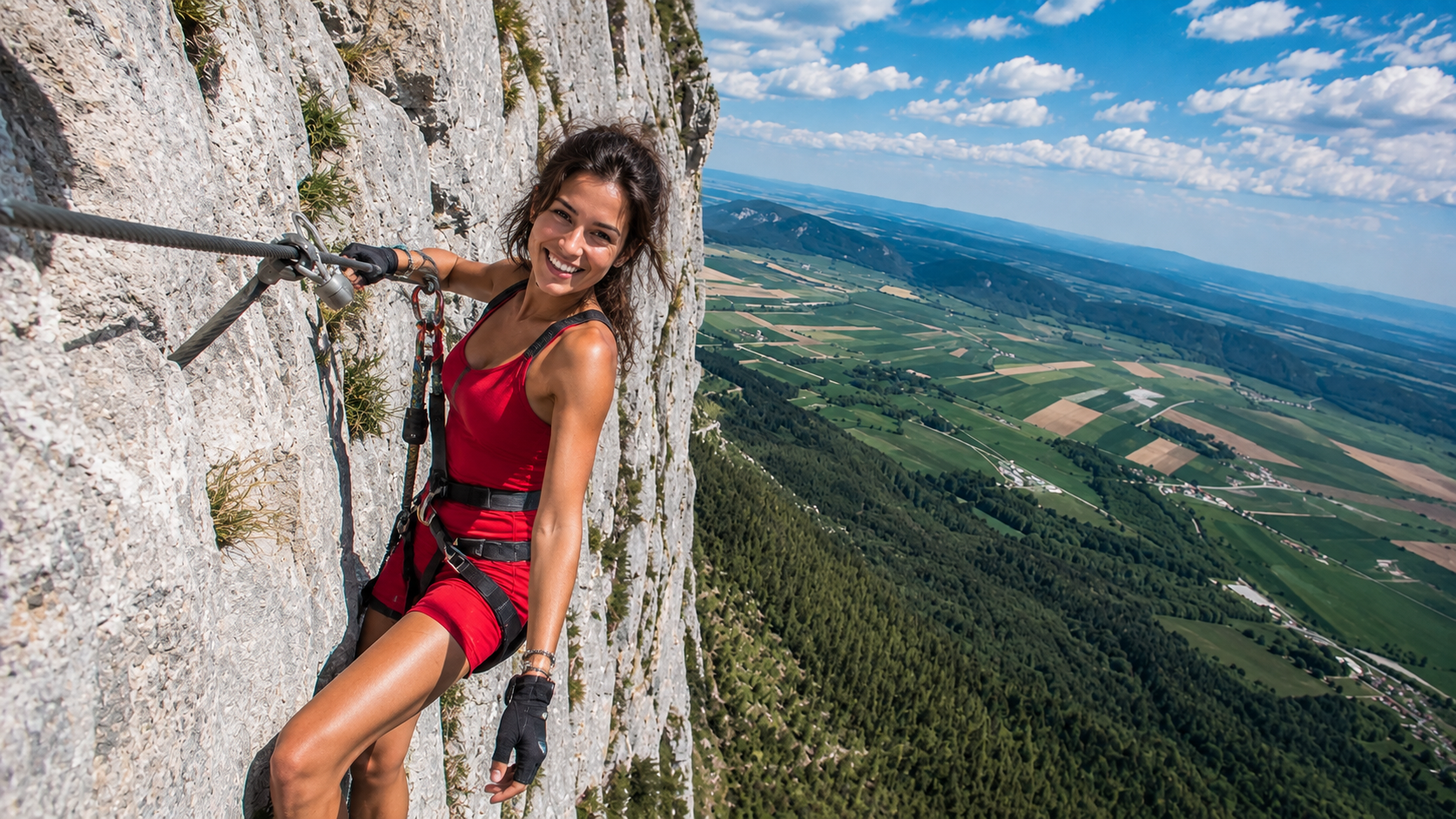
What makes Hohe Wand special is the sheer amount of variety packed into one compact limestone escarpment: easy protected paths, traditional iron routes and genuinely demanding sport ferratas. The real question is not whether there is a route for you, but which one makes sense as your next step.
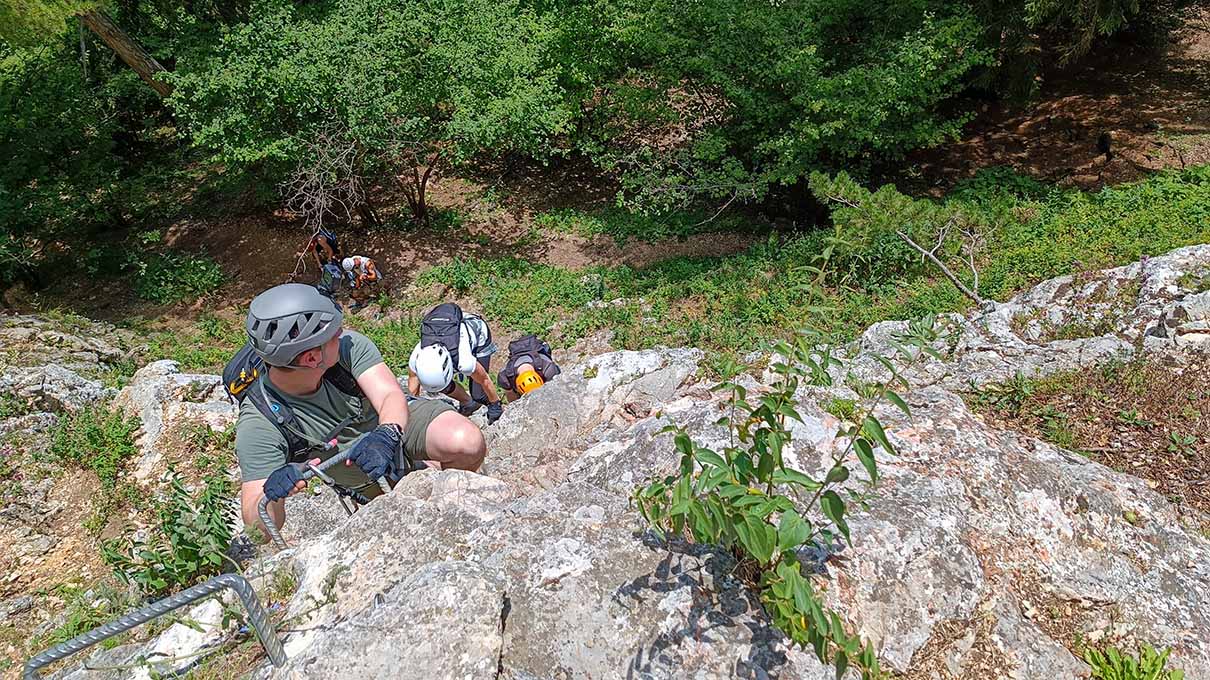
- Start with A–BWagnersteig, Völlerinsteig or Hanselsteig are realistic entry routes.
- Use Steirerspur to practiseA short, controlled place to get comfortable with the via ferrata set.
- Move to C/D–D with experienceGebirgsvereinssteig and Wildenauer are a serious step up.
- Save ÖTK for laterD/E is a different level of physical demand.
- Start early in summerThe south-facing limestone heats up quickly and storms often arrive later in the day.
Hohe Wand: a compact via ferrata area in Lower Austria
Most routes run on the southern and eastern cliffs
The plateau sits at roughly 1,000 metres, with several approaches from the valley below.Hohe Wand is a limestone plateau in Lower Austria, south of Vienna. Its southern and eastern edges are formed by several kilometres of cliff, and many of the area’s via ferratas are built into this wall system.
The most common misunderstanding
Starting from the valley and driving onto the plateau are two different things.According to the supplied source, many ferratas start from the valley below, so reaching them does not necessarily mean driving onto the plateau itself. Plateau road access and park entry are separate issues.
You can get there by car or train
The railway access is one of the more unusual advantages of the area.- By car. The source material points to the A2 motorway, the Wiener Neustadt area and the direction of Grünbach am Schneeberg.
- By train. From Grünbach am Schneeberg station, several southern approaches can be reached on foot.
- Driving onto the plateau. The source mentions paid entry and daily opening hours; check the current prices and times before travelling.
What does the A–E grading mean here?
Hohe Wand covers almost the full grading scale
From easy protected paths to D/E sport ferratas.| Grade | Character | What to expect |
|---|---|---|
| A | Protected path | Low technical difficulty, mainly exposed walking with cable protection. |
| B | Easy via ferrata | More ironwork, steps and protected sections. |
| C | Moderate | Steeper and more exposed ground where technique and strength begin to matter. |
| D | Hard | Vertical, arm-intensive sections with limited recovery. |
| E / D-E | Very hard | Overhanging or sustained sport-ferrata terrain. |
The source specifically notes that grade C can already demand serious arm endurance. Do not judge a route from the letter alone: length, vertical sections and the availability of rest positions matter as well.
A–C: from first ferrata to practice route
These are the most realistic starting points
Routes from the supplied source that make sense for a first or second visit.C/D–D/E: where experience and strength become essential
Gebirgsvereinssteig
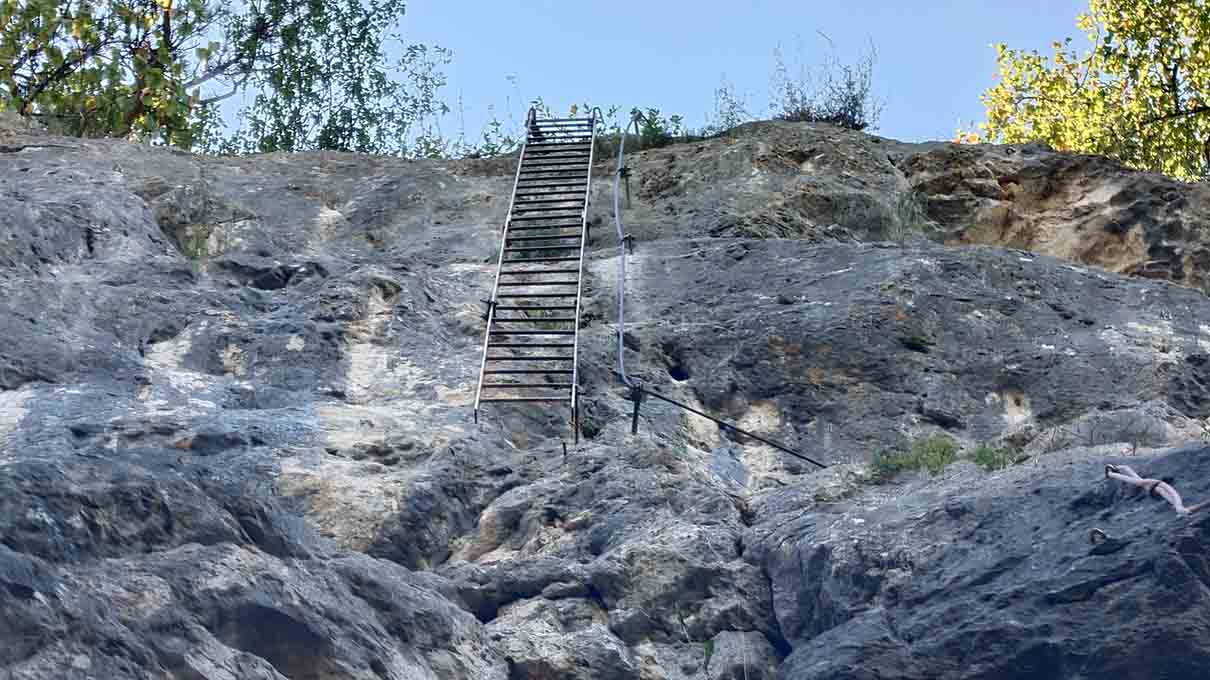
C/D–D · modern, varied and often regarded as one of the most enjoyable lines on the wall.The source material highlights exposed traverses, a suspended ladder, a cable bridge and a D crux close to the top. This is already a route where secure movement and decent arm endurance are essential.
Wildenauersteig
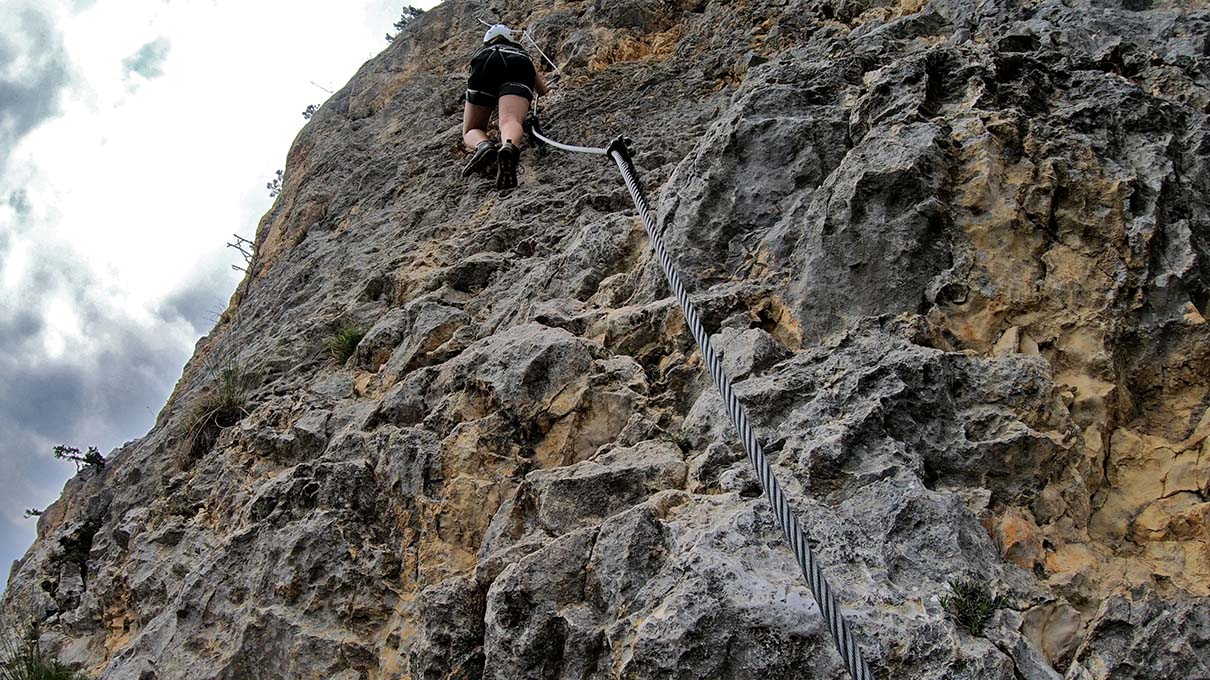
C/D–D · a traditional, old-school line rather than a modern sport route.According to the source, the cable is not continuous in every section. Progress relies heavily on iron steps and natural rock, with a narrow vertical chimney exit near the top.
ÖTK-Klettersteig
D/E · for experienced via ferrata climbers only.The former HTL-Steig is described in the source as sustained around grade D, with an overhanging D/E section immediately after the start. This is not merely “one grade harder”; it is a physically demanding sport-ferrata-style route.
Turmsteig: do not confuse the name
According to the source, this is not a via ferrata.Despite its name, the source describes Turmsteig as a rock-climbing route from which the former cable protection has been removed. A via ferrata set alone is not sufficient.
How to build up the difficulty sensibly
A sensible progression for early visits
Based on the sequence suggested in the supplied source.- Be honest about your arm enduranceIf you have no via ferrata experience, do not start at grade D.
- Begin with SteirerspurA short practice route where you can get comfortable with the equipment in a controlled setting.
- Move on to Frauenlucken or VöllerinOne gives you steeper technique, the other a gentler protected ascent.
- Make Gebirgsvereinssteig the next stepOnce grade C feels comfortable, this can be a logical progression.
- Leave ÖTK until laterAt D/E, you need both fitness and solid ferrata technique.
Five mistakes that are especially easy to make at Hohe Wand
Easy access can create false confidence
The wall is close to the city, but the difficulty is still real.The same letter grade can feel very different in two styles
Traditional and sport ferratas
One of Hohe Wand’s strengths is that it offers both.Wildenauer, Völlerin
Older, more natural lines where protection appears mainly where it is genuinely needed. There is more movement on natural rock and a stronger mountain-route feel.
ÖTK, Gebirgsvereins
More modern lines with dense ironwork and a deliberate preference for steeper terrain. They can be shorter, but much more intense on the arms.
Season, heat and thunderstorm risk
The south-facing aspect extends the season
The supplied source highlights a typical April–October season.- April–October. The south-facing cliffs often dry earlier and remain usable later than higher Alpine terrain.
- Start early in summer. The sunlit limestone becomes very hot and there is little shade.
- Wait after rain. Limestone and polished iron steps can become very slippery when wet.
- Do not start with storms approaching. Being clipped to a steel cable is an extremely poor place to be in lightning risk.
For equipment, helmet and set requirements, see the Túraprogramok via ferrata equipment guide.
If something goes wrong
The supplied source highlights two emergency numbers in Austria.The source warns that mountain rescue can be expensive and that via ferrata may not be included automatically in basic travel insurance. Check your cover before you go.
Frequently asked questions about Hohe Wand via ferratas
Quick answers before you set off
These answers are based on the source material you supplied.Which Hohe Wand route is suitable for a first via ferrata?
The source suggests Wagnersteig, Völlerinsteig and Hanselsteig as realistic entry routes, with Steirerspur useful for practising equipment handling.
What is a good next step around grade C?
Frauenluckensteig can work as a useful bridge between the easier routes and the harder D-level ferratas.
When should I try Gebirgsvereinssteig?
Once grade C feels comfortable and controlled, the source treats it as a logical next step.
What makes Wildenauersteig different?
It is a traditional old-school ferrata with more natural rock movement and less continuous protection.
Is ÖTK suitable as a second ferrata?
No. Its D/E difficulty and physical demands make it appropriate only for experienced ferrata climbers.
When is the best time to go?
The source highlights an April–October season and recommends early starts in summer because of heat and afternoon thunderstorms.
Hohe Wand is easy to reach, but D and D/E are still serious grades.
Do not let the short drive tempt you into jumping too quickly through the grades. Difficulty, length, route style and current weather all matter.
Technique first, difficulty second.
Start on an easier protected route or practice ferrata, build confidence with the equipment, then move on to C/D, D or D/E.