
Rock Cairns in the Mountains: What Are They, What Are They For, and Should You Build Them?
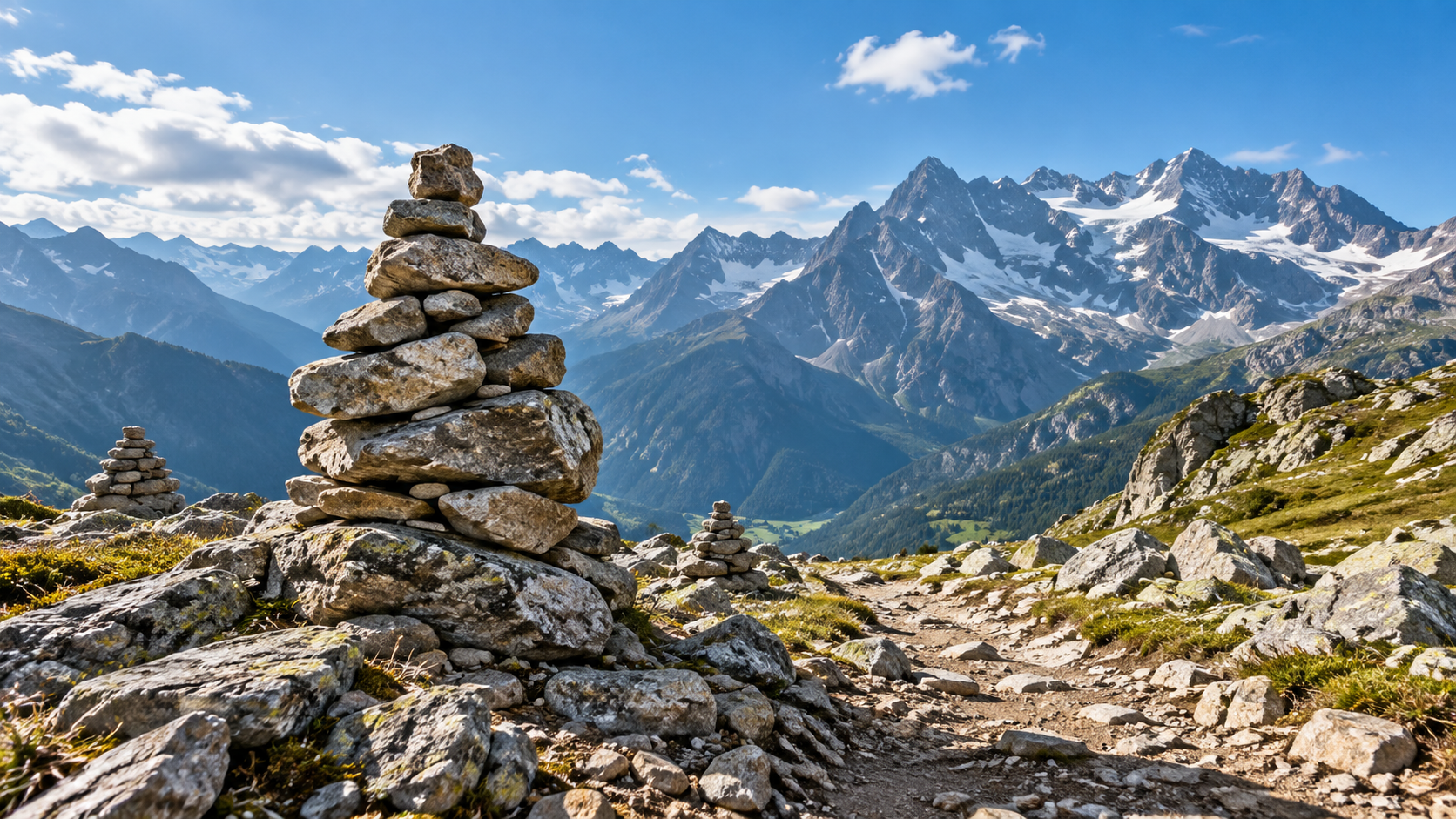
In the mountains, on rocky plateaus and along high-altitude hiking trails, you will often see small towers or piles made from stones stacked on top of one another. Internationally, these structures are most commonly known as cairns. In the Alps, you may also encounter the German terms Steinmann or Steinmännchen, while in everyday language they may simply be called stone piles, rock stacks or stone towers. A cairn, however, is not necessarily decorative: on some mountain routes it can serve as an official or traditional navigation marker that helps hikers follow the correct route. Other stone towers are built by visitors as souvenirs, for photographs, for meditation or simply for fun. These two types may look very similar, but their purposes can be completely different. For that reason, an existing stone pile should not be rearranged, dismantled or made taller, and new structures that may resemble route markers should generally not be built.
The word comes from the Scottish Gaelic càrn, meaning a heap or pile of stones.
In rocky, treeless or difficult-to-mark terrain, a cairn can help hikers follow the route.
You may not know whether a particular stone pile is a route marker, a historic structure or something else of significance.
A newly built stone tower can mislead the next hiker, and moving rocks can also disturb the surrounding environment.
- The stone pile is called a cairn It is a deliberately stacked pile of rocks that can serve as a marker or memorial, with a history stretching back centuries.
- In the mountains it often marks a route In treeless, rocky high-altitude terrain, a cairn may be visible where conventional painted trail markings are difficult to place.
- Not every stone tower is a trail marker Visitors also build decorative or playful rock stacks that have no navigational meaning.
- Do not build a new cairn A false route marker can lead the next hiker in the wrong direction.
- Do not alter an existing one Do not remove stones, add stones or knock it down. It may be an official route marker or a historic structure.
A deliberately built pile of stones that can serve several different purposes
A cairn does not have one fixed shape
It may be a low, broad pile, a cone-shaped tower, or a deliberate marker made from only a few larger stones.The word cairn entered English from the Scottish Gaelic càrn, meaning roughly a heap or pile of stones. However, the history of similar stone structures is far older than the English term itself.
Stone piles have long been used in different parts of the world to mark routes, boundaries, prominent locations, memorial sites or even burial places. Therefore, simply seeing a pile of stones in the mountains does not automatically tell you what its purpose is.
If you see an old, large or unusually constructed stone pile, do not start rearranging it. It may be much older and serve a completely different purpose from the nearby hiking trail.
It is particularly useful where the trail itself is difficult to recognise
Across boulder fields, plateaus and high mountain terrain, the next stone pile may indicate the route ahead
Officially or traditionally maintained cairns can form a sequence of navigation points.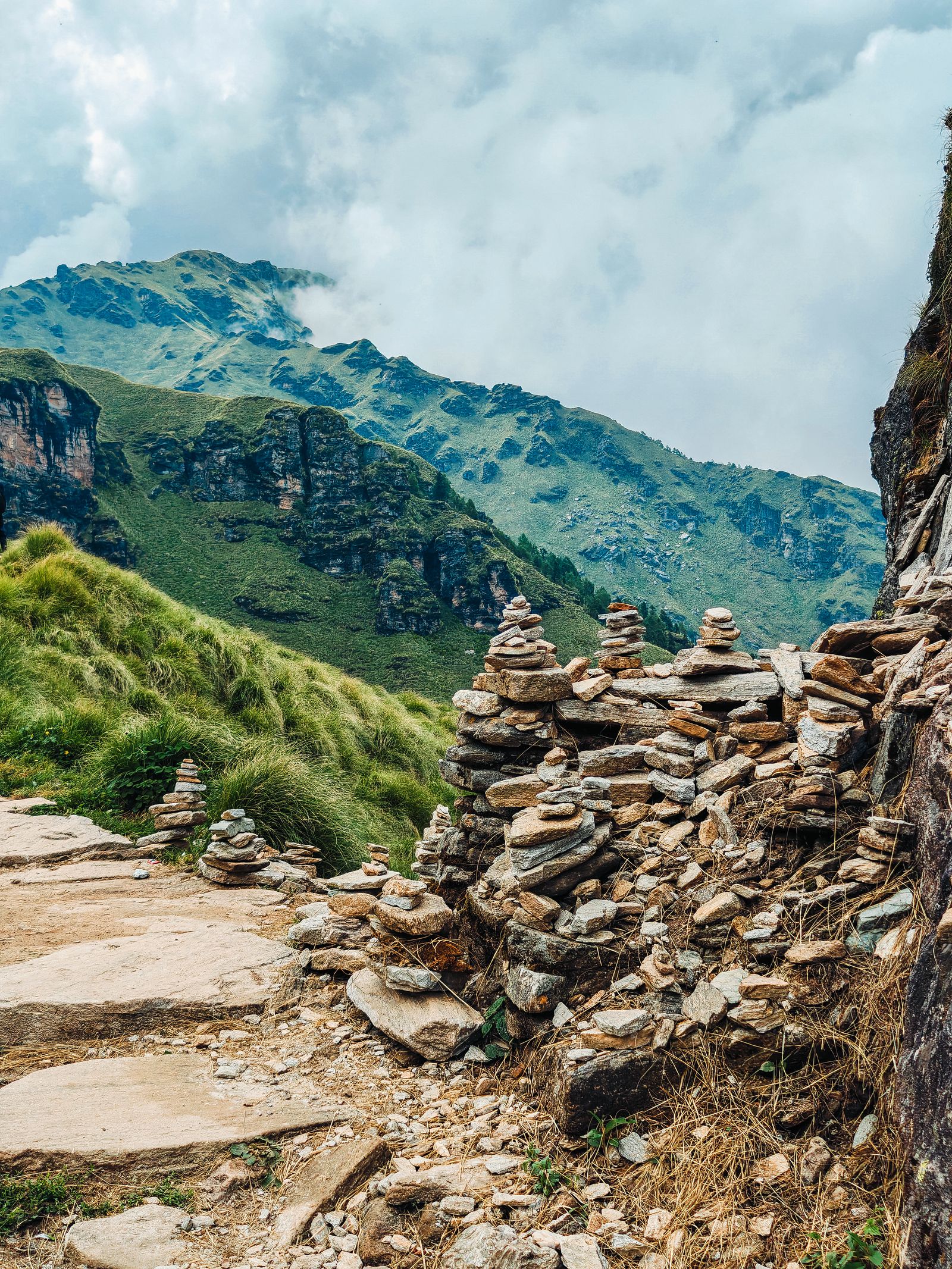
In a forest, a well-worn trail, painted trail blaze on a tree or signpost is usually easy to follow. In high mountains, however, the situation can be very different.
Vegetation may disappear, and the ground may become continuous bedrock, loose scree or a broad plateau, so that the trail itself almost blends into the surrounding landscape. In these conditions, a correctly positioned cairn can remain visible from a distance and provide a useful reference point.
The Austrian Alpine Club’s trail-marking handbook also refers to Steinmänner, or stone men. On unclear high-altitude routes and in poor visibility, these markers can sometimes be more useful than painted markings placed close to the ground.
They may look similar, but they do not necessarily mean the same thing
A stone tower built by visitors for fun is not automatically a navigational cairn
Rock balancing is primarily a creative activity, not a route-marking system.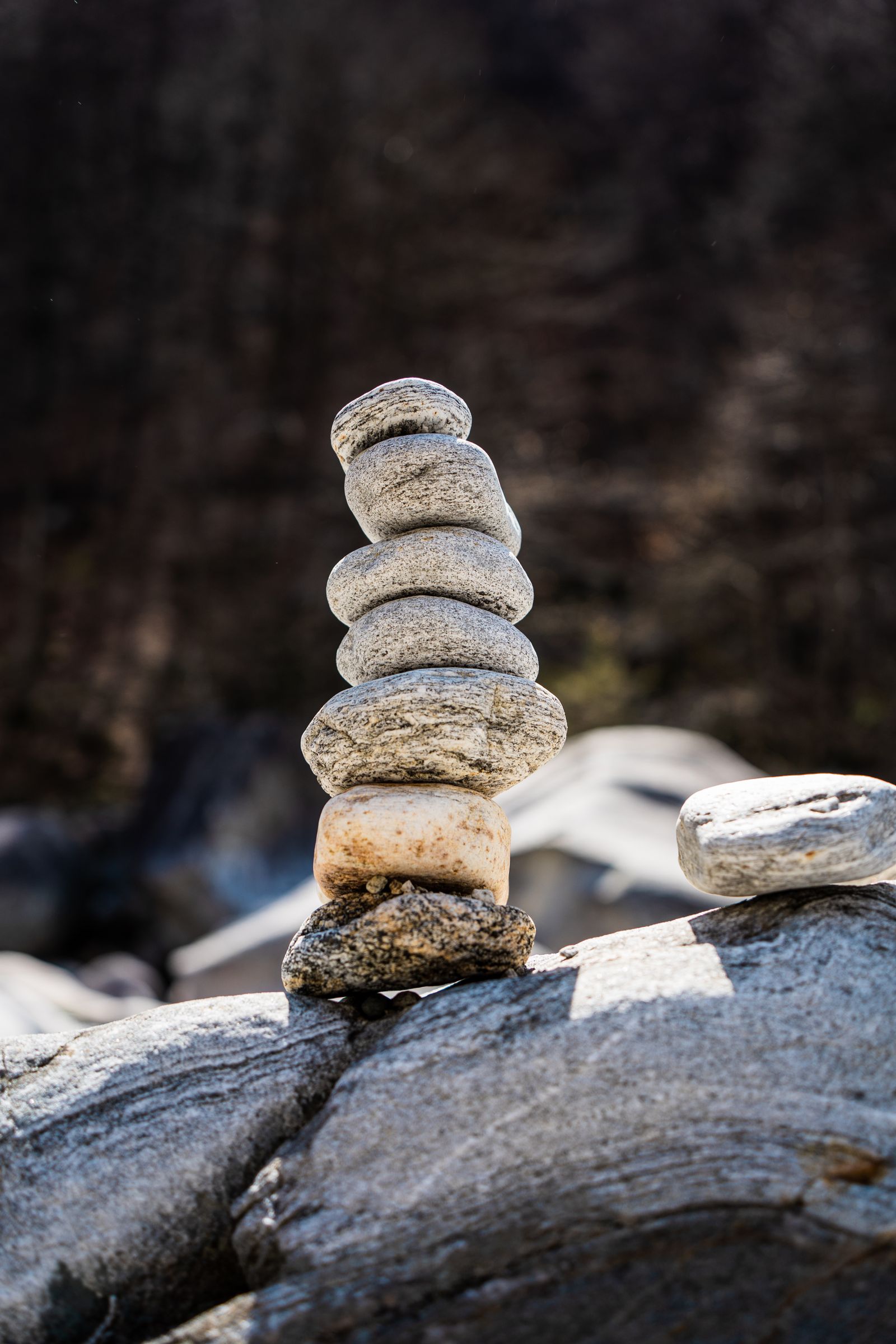
| Route-marking cairn | Decorative rock stack | |
|---|---|---|
| Purpose | Marking a route or important location | Play, photography, art or balancing |
| Placement | Positioned according to the logic of the route | Built wherever someone decides to create one |
| Maintained by | May be maintained by a trail authority, park, mountain organisation or local tradition | Usually an individual visitor |
| Navigational value | May have an official role on a particular route | Has no reliable navigational meaning |
| Can you alter it? | No | In protected areas or where its origin is unknown, it should not automatically be treated as something free to rearrange either |
If visitors build several new stone towers beside an official cairn, it may eventually become unclear which structure indicates the real route. The U.S. National Park Service also describes this problem as “cairn clutter”.
In high mountain terrain, they solve navigation problems that may not exist in forests
In rocky terrain, stone is often the most obvious and durable local material for marking a route
Cairns are particularly common in treeless, open, rocky and exposed mountain environments.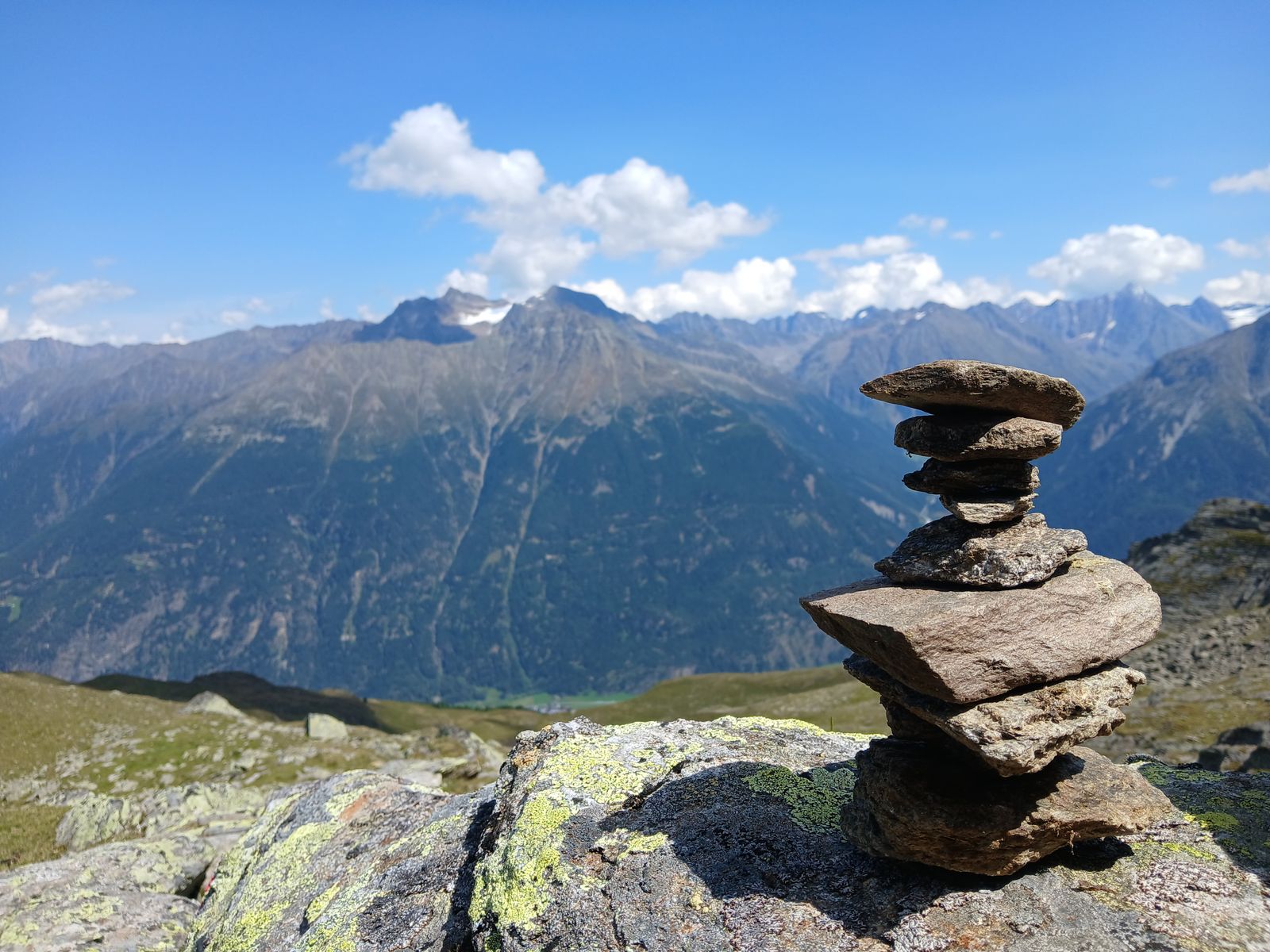
Cairns are not, however, exclusive to high mountains. They can also be found in deserts, lava fields, on rocky coastlines, across plateaus and along historic routes.
As a general rule beside mountain trails: it is better not to
“I only stacked a few stones” is not necessarily harmless from a navigation perspective
The next hiker cannot know whether the tower was built by the trail authority or by another visitor.Under the Leave No Trace principle, the landscape should generally be left as you found it. The organisation recommends that visitors do not build new cairns unless this is specifically permitted, and that existing route-marking cairns should not be altered.
A rock is not necessarily “just lying there”: it may be part of the soil and the local habitat
The environmental issue does not begin with the tower itself, but with removing rocks from where they naturally lie
High-altitude, desert and waterside environments can be particularly sensitive.Leave No Trace specifically points out that moving stones in rivers and streams can disturb habitat used by aquatic organisms. For this reason, so-called “zen rock stacks” are not always a low-impact activity.
Only treat it as a route marker when cairns are genuinely used that way on the specific trail
A cairn can be a useful navigational marker, but by itself it does not prove that you are going the right way
Different countries, national parks and hiking routes use stone cairns differently.The U.S. National Park Service specifically warns that not every park uses cairns as official trail markers. In some places, stone piles are maintained by trail managers, while in others visitor-built rock stacks have no official meaning at all.
| Situation | What might it mean? |
|---|---|
| A regular sequence of cairns along the route | More likely to be part of the route-marking system, but check the local trail description or map. |
| A single cairn on a summit | It may mark the summit, serve as a memorial or simply be a pile built by previous visitors. |
| Many different stone towers in one small area | Often visitor-built structures; they should not be relied upon for navigation. |
| A cairn combined with painted trail markings | More likely to be an intentional part of the route-marking system. |
| A stone pile at a historic or archaeological site | It may also have cultural significance; do not move the stones. |
On high-altitude or poorly marked routes, do not navigate exclusively by following stone piles. Use the area’s official trail markings, map, route description and, where appropriate, GPS-based navigation.
The simplest rule: look at it, understand it, but do not alter it
Five simple rules that avoid interfering with either navigation or the environment
Do not try to solve uncertainty by building your own stone marker.A mountain stone tower may be an important route marker – so it should not automatically be treated as a toy
A cairn: a deliberately constructed pile of stones that often serves as a navigation point
Cairns can serve as trail markers, summit markers, boundary markers, memorials or historic structures. They are especially useful in high mountain terrain because they can provide visible guidance across rocky landscapes where conventional trails or painted markings may be difficult to follow.
Do not build, dismantle or add to them: leave them as you found them
Not every stone tower is an official cairn, but this cannot always be determined just by looking at it. New rock stacks can mislead hikers, while moving stones can disturb soil, vegetation and small habitats. The most responsible approach is therefore to leave existing cairns untouched and avoid building your own stone towers.

Sources and background
The use, meaning and official trail-marking role of cairns can vary from one area to another. On any particular mountain route, information from the local trail authority, national park, mountaineering organisation or official map should take priority.
- U.S. National Park Service – Rock Cairns
- U.S. National Park Service – What are those stacks of rocks?
- Leave No Trace – Leave No Trace and Cairns
- Leave No Trace – Leave What You Find
- Leave No Trace – Skills & Ethics Guide
- Arches National Park – Leave No Trace and cairns
- Glacier National Park – rock stacks and environmental impacts
- Austrian Alpine Club – Trail Handbook, route markings and Steinmänner
- Swiss Alpine Club – Von Steinmännern
- Gaelic Place-Names – càrn: meaning and origin
Photos used in this article: