
From the climbing gym to the crag – how to start rock climbing
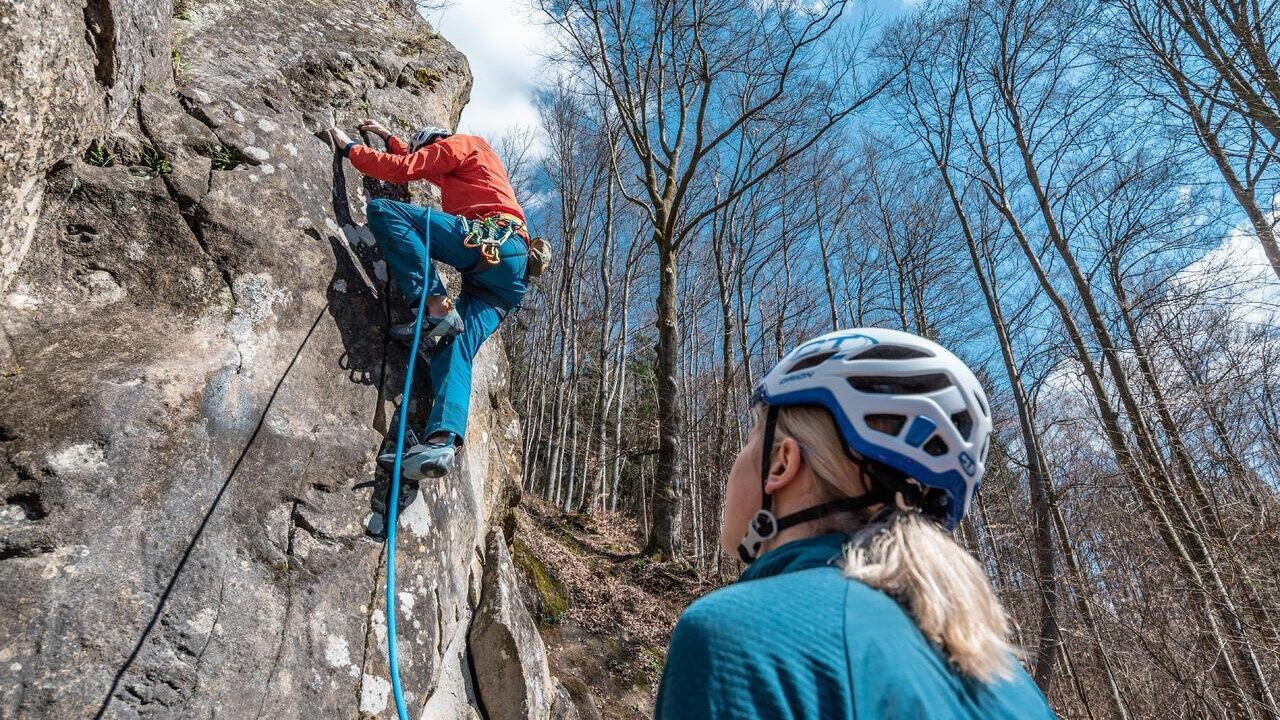
Indoor climbing is a great way to learn the basics of climbing, build strength, improve your coordination and experience what it feels like to solve an exciting movement problem several metres above the ground. After a while, however, many climbers begin to wonder what it would be like to experience the same thing outdoors, on real rock. Climbing on natural rock offers a completely different experience. The holds are not arranged along an artificial route, the environment is constantly changing, and the landscape itself makes the sport special. Outdoor climbing, however, also requires knowledge and skills that you may not necessarily learn in the climbing gym.
What does indoor climbing teach you, and what changes on real rock?
In a climbing gym, you can easily become familiar with climbing movements, try routes of different difficulty levels and develop your technique in controlled conditions. This provides an excellent foundation for outdoor climbing.
On natural rock, however, the shape and position of the holds are determined by the rock itself. You have to learn how to recognise usable handholds and footholds, plan your movements and adapt to the characteristics of the wall.
The difference is not only in the climbing experience itself. Rope management, belaying, a thorough knowledge of the equipment and the responsibility you have for your partner’s safety are all areas that require proper preparation.
Indoor climbing experience is therefore a good starting point, but on its own it does not prepare you for every situation you may encounter while climbing outdoors.
What equipment do you need?
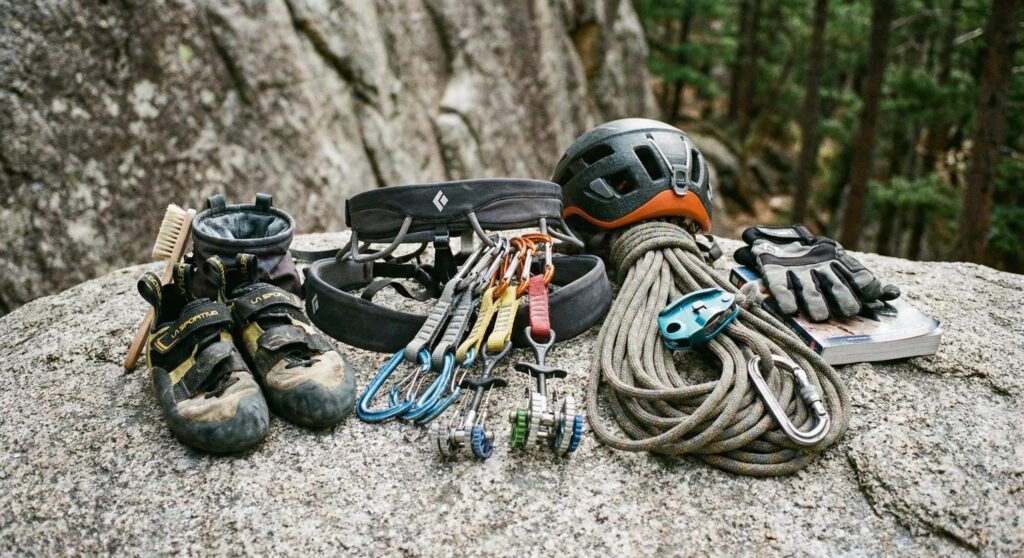
The equipment required for rock climbing depends on the route, the type of climbing and the conditions. Basic equipment typically includes the following:
Climbing shoes: help with precise footwork and provide better grip.
Harness: part of the rope-based safety system.
Climbing helmet: can provide protection against falling rocks and impacts.
Dynamic climbing rope: together with the appropriate belaying system, it is a fundamental piece of climbing safety equipment.
Belay devices, slings and carabiners: parts of the system connecting the climber and the belayer.
Climbing chalk: can help keep your hands dry, especially in warm weather.
When choosing equipment, it is not enough to check whether an item is generally suitable for climbing. You need equipment that is appropriate for the specific use, compatible, in good condition and used correctly.
As a beginner, it is therefore not necessarily worth buying a complete set of equipment immediately. During your first outdoor climbing experience with instruction, you can become familiar with the essential equipment and also gain a better understanding of what you may need later.
Why is it worth starting with a rock climbing course?
In outdoor rock climbing, technical knowledge and safety are inseparable. Reaching the top of the wall is not enough: you need to know how to belay your partner, how to handle the rope and what to do when something does not go according to plan.
A properly structured beginner course can teach you, among other things:
how to use climbing equipment correctly;
knot tying and basic rope-handling skills;
the fundamentals of belaying and partner checks;
movement techniques on rock;
safety checks before climbing;
the basics of assessing the route and the conditions.
The value of a course does not come only from the time spent on the wall. It is important that the instructor explains the purpose of each step clearly and patiently, checks that it is performed correctly and provides enough opportunities to practise.
The goal is not to be able to handle every situation independently after a single weekend, but to gain a solid foundation for further development.
If you are considering organised professional training, it is worth choosing a rock climbing course that places emphasis not only on practical climbing but also on safe equipment use and the important details.
Where should you try outdoor climbing?
When choosing a suitable location, you need to consider the difficulty of the available routes, accessibility, the type of rock, the equipment required, the available protection and belaying options, and the weather.
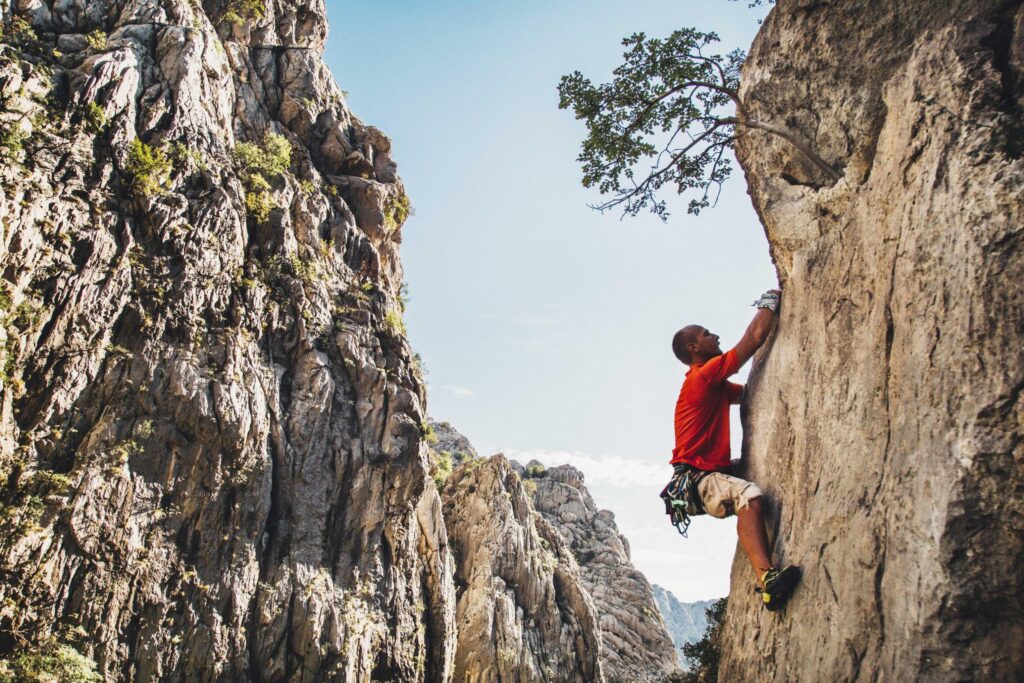
Paklenica National Park in Croatia, for example, is known for its limestone walls and varied climbing routes and is rightly regarded as a famous climbing destination. The area offers everything from shorter sport routes to longer multi-pitch climbs. Individual routes, however, require different levels of experience and equipment, so you should always choose a destination that matches your level of preparation.
Other European climbing destinations also offer unique experiences, but as a beginner, choosing the most famous or spectacular wall is not the most important consideration. Instead, look for a place where the conditions, routes and instruction are appropriate for your current skill level.
Most importantly: build your skills gradually
One of the special things about outdoor rock climbing is that, alongside the physical challenge, it offers continuous learning. Every new route can bring different movements, decisions and experiences.
It is worth building on your indoor climbing foundations, learning the specific characteristics of outdoor climbing through proper instruction and always matching the challenges you take on to your actual level of skill.
Safe climbing does not depend on mastering a single technique. Correct use of equipment, cooperation with your climbing partner, assessing the conditions and understanding your own limits all work together to allow you to enjoy the sport safely over the long term.