
Buying Used Rock Climbing Gear? Expert Advice
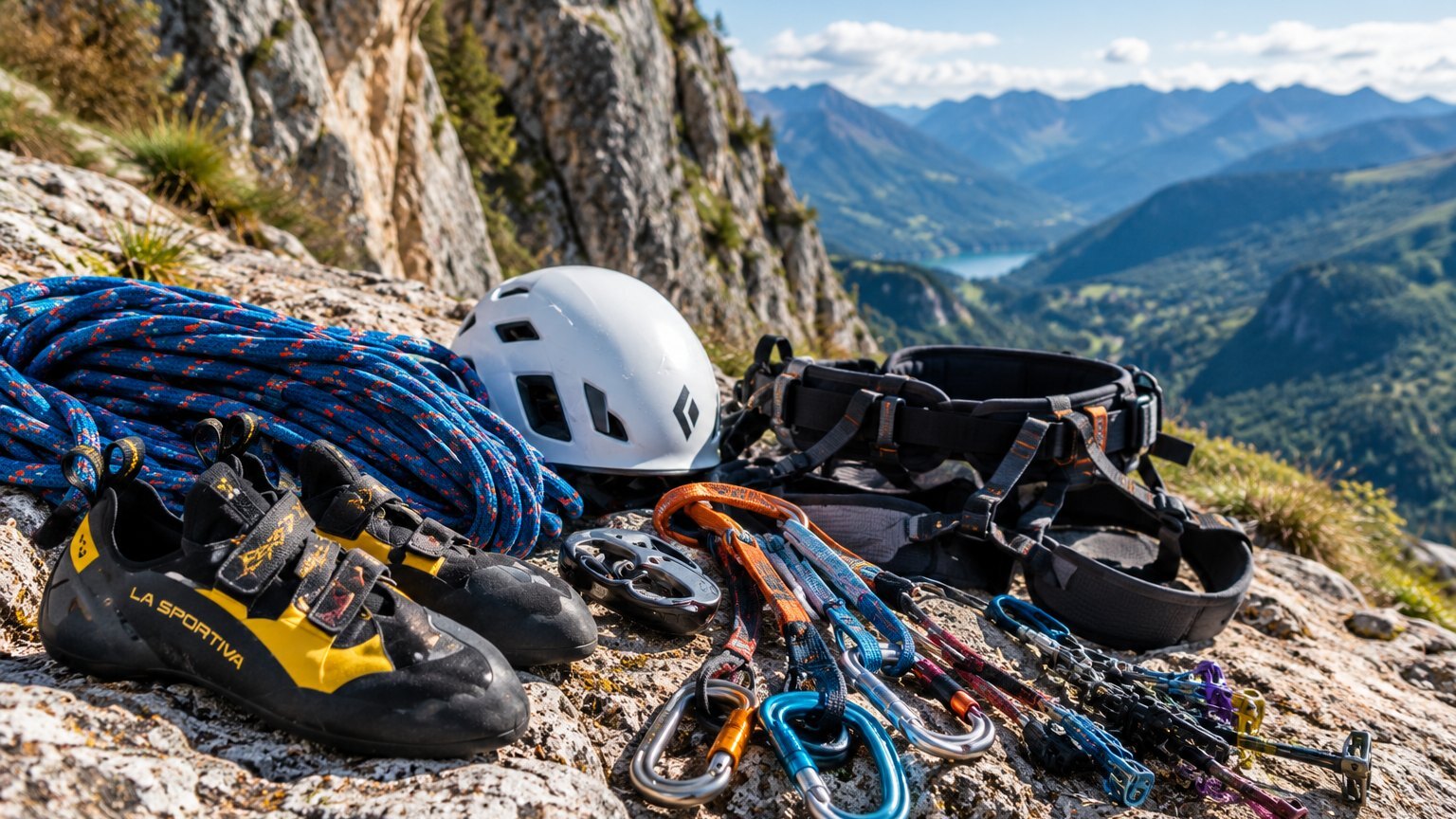
Rock climbing is not necessarily an inexpensive sport. Buying the right equipment can cost a considerable amount, especially when you are just getting started. It is no surprise that many climbers consider buying second-hand gear to save money. Used climbing shoes, a harness or even a rope might seem like a substantial saving – but is cutting costs a good idea for every piece of equipment? Here is the answer from a Climbers instructor: buying used can be an excellent choice for certain items, but other pieces of gear call for much greater caution because your safety depends on them. Let’s look at what you should check before buying.
Which climbing equipment is worth buying second-hand?
Climbing shoes: a good second-hand option
Not all climbing equipment ages in the same way. Some items are relatively easy to assess, while with others, their appearance tells you very little about what they have been through.
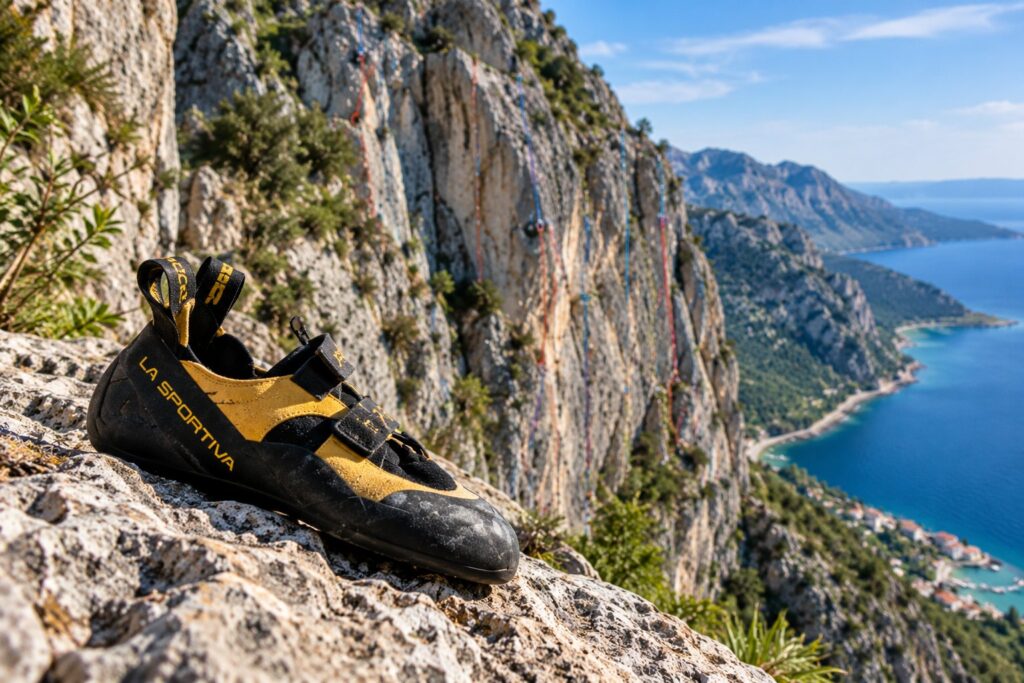
Climbing shoes are one of the best examples of equipment worth looking for on the second-hand market. A well-kept pair in the right size can save you a lot of money, particularly if you are not ready to invest in an expensive model just yet.
Many people buy climbing shoes online without trying them on or doing much research first. This is a classic beginner’s mistake. Rather than deal with the hassle of returning them, they often sell the shoes at a reduced price in climbing groups.
Sometimes the shoes prove uncomfortable after only a few sessions, or the buyer tries climbing and decides the sport is not for them after all.
That is how you can find excellent, barely used shoes for a fraction of their original price!
Before buying used shoes, check the following:
– Sole and toe: Is the rubber excessively worn, peeling away or cracked?
– Upper: Are there tears, serious damage or deformations that affect support?
– Fit and shape: Does the shoe fit your foot properly?
– Smell and hygiene: Consider whether the shoes can be cleaned and what condition they are in.
There is a common misconception that climbing shoes must be worn without socks because you will feel the shoe better and place your feet more precisely. I see two problems with that argument.
First, an ordinary sports sock barely 1 mm thick will not ruin your footwork, let alone your accuracy. In my view, people who insist otherwise are often repeating something they heard because it sounded professional.
Second, without socks there is nothing in the shoe to absorb perspiration, and an absolutely terrible smell can develop very quickly. No miracle disinfectant spray will necessarily get rid of it later, because it can soak into the leather upper.
Of course, if you never intend to sell the shoes, this might not seem like a problem. You may not notice your own shoes’ smell – but the people around you certainly will whenever you take them off.
Climbing clothing, bags and accessories
Climbing clothing, backpacks, chalk bags and many other non-safety-critical accessories can generally be bought second-hand without much difficulty.
The main things to check here are wear, stitching, zips and the overall condition of the material. With clothing and backpacks, previous use is not necessarily a disadvantage.
A chalk bag is also worth looking for second-hand. You can often find one in good condition for far less than the retail price – sometimes even with chalk still inside.
These little waist-mounted bags can cost thousands, or even tens of thousands, of forints when new, yet they can sometimes be picked up for next to nothing compared with their original price.
Harness, helmet and rope: a different level of risk
Some climbing equipment is directly involved in arresting a fall or physically protecting the climber. For these products, you cannot make a purchase decision based on price and outward appearance alone.
HARNESS
The first question to ask yourself is:
„Is it worth risking my life to save a few thousand forints?”
Because that is precisely what is at stake when you consider buying a used harness. Like other safety-critical climbing equipment, harnesses can be damaged. They have strict conditions of use and important storage requirements. With a harness from an unknown seller, you simply cannot know exactly what you are buying.
Taking someone at their word can be a trap:
The seller may not even realise why passing on a used harness to a stranger is problematic. But YOU CANNOT KNOW how it was actually used, where it was stored, how old it is, what it was washed with, how long it spent in direct sunlight or whether it came into contact with chemicals or other damaging substances. The harness may have weakened without the owner’s knowledge and may no longer offer adequate protection, however good it looks.
Of course, this does not mean buying a harness from somebody else is always out of the question. Perhaps a friend or relative you have climbed with for years decides to take a break or give up the sport and sells their equipment. That is a very different situation. If you genuinely know how the harness was used, when it was bought and how carefully it was maintained, you can confidently buy it knowing far more about the equipment than you would with an unknown seller.
HELMET
Helmets are somewhat different because certain kinds of damage can leave visible signs. They are also generally more resistant to cleaning and washing than textile climbing equipment. Regardless of which helmet you are considering, inspect it thoroughly. Look and feel carefully for serious damage that may not be obvious at first glance. Minor scuffs and superficial marks are not necessarily significant.
Also check the straps and the head-size adjustment system. Make sure nothing is broken and that the helmet is not being sold because part of it has failed.
CLIMBING ROPE
This is where I would sound the alarm.
We are talking about one of the most important, most critical, most vulnerable and most demanding pieces of climbing equipment. If you want to climb and need a rope, buy a new one. This is not where you should try to save money! This is not just a matter of principle: a rope can suffer serious damage that is completely invisible from the outside. An apparently pristine sheath does not, on its own, tell you whether the rope is safe.
There are very durable, perfectly usable climbing ropes available at good prices (although not necessarily from shops in Hungary)! If you need your own rope mainly for the climbing gym or for local crags, you may rarely need more than 40 metres. In that case, save money by buying a shorter rope rather than an older or less trustworthy one.
In 2026, a standard 60-metre rope from a recognised brand (Edelrid, Petzl or Mammut) can be found at reputable online retailers for roughly HUF 38,000–40,000, while 40-metre ropes are offered for around HUF 20,000–30,000. That is an amount worth saving up for.
What about metal climbing equipment?
Metal climbing hardware is generally more durable, but that does not mean every used item is safe.
CARABINERS AND BELAY DEVICES
The situation is much the same as with harnesses.
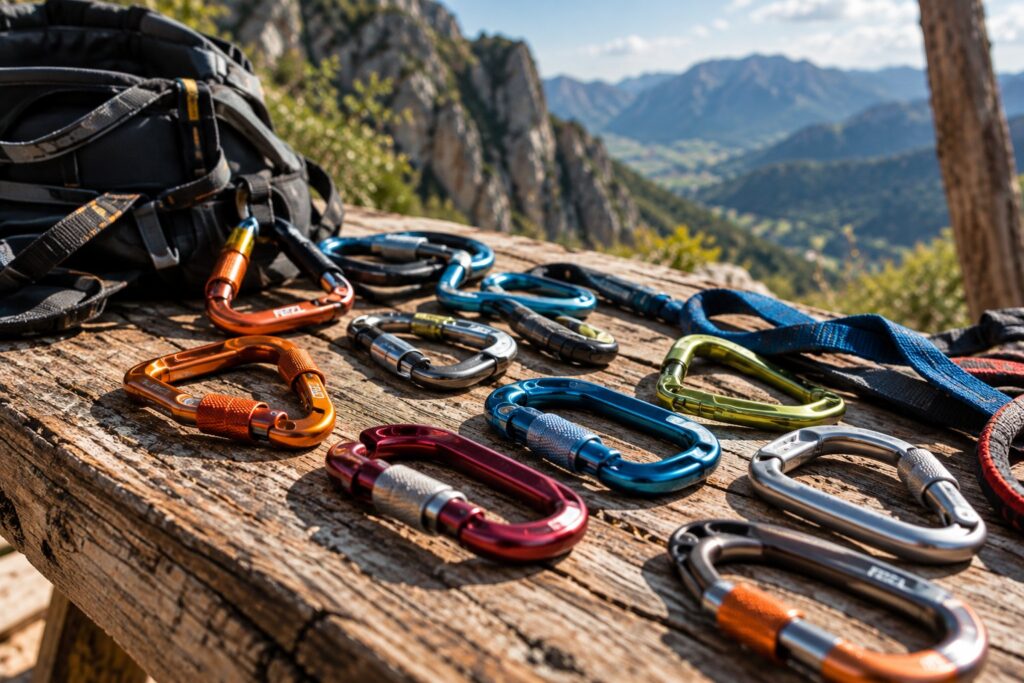
If you cannot be certain the equipment was used correctly, was not repeatedly thrown about, dropped from a considerable height or simply found at the bottom of a crag on someone’s last climbing trip, buying it is NOT RECOMMENDED.
If it comes from a friend you trust who bought a new one simply because they preferred its colour, that is a different story. Buying metal hardware with an unknown history, though, is like playing Russian roulette. It may have microcracks or hidden damage caused by impacts – inside or out – that could lead a carabiner or belay device to fail under load. The danger might only become apparent at the exact moment the equipment needs to hold you.
Check the manufacturer’s instructions
Look up the exact model of the equipment and read the manufacturer’s instructions for use, inspection, maintenance and retirement. Different products have different requirements.
When it comes to climbing, the lowest price should never be your main consideration!
If you are unsure, ask someone knowledgeable for help or sign up for a quality rock climbing course!
A climbing course will help you understand the main pieces of equipment, what they are designed to do, how they should be used and how to inspect them. That reduces the chance of buying gear that does not suit your needs or level of experience.
In summary
Buying second-hand equipment is not necessarily a bad decision.
Climbing shoes, clothing, backpacks and many accessories can be excellent purchases when their condition and price are right.
But equipment that is essential to your safety demands much greater care. If you do not know its history and its appearance does not tell you whether it is sound, do not risk your health just to save a few thousand forints!
The best saving is choosing equipment you can use safely for years and trust from the very first moment.