

Tick Removal, Bite Care and Vaccination: A Complete Guide for Hikers

Finding a tick attached to you after a hike is unpleasant, but the situation is usually manageable if you know the right order of steps. The most important thing is to remove the attached tick as soon as possible, then note the date and location of the bite and watch for symptoms over the following days and weeks. It is also important to distinguish between two different diseases: Lyme disease is a bacterial infection, while tick-borne encephalitis – TBE/FSME – is a viral disease. The vaccine commonly referred to as the “tick vaccine” protects against the latter; it does not protect against Lyme disease.
Do not wait for it to detach on its own, and do not delay removal just so a doctor can remove it.
Grip the tick as close to the skin as possible and pull it out with steady, even pressure.
What matters is monitoring afterwards: a spreading rash, fever or other new symptoms may require medical evaluation.
TBE/FSME vaccination needs to be planned in advance; it does not replace care after a recent tick bite.
- Remove it as soon as possible Grip the tick close to the skin and pull it out with steady, even pressure.
- Do not try to remove it by coating it with substances Instead of oil, cream, petroleum jelly, heat or other home remedies, the goal is prompt mechanical removal.
- Clean the area afterwards Record the date and location of the bite, then watch for symptoms over the following days and weeks.
- See a doctor for a spreading rash or illness The Lyme disease rash is not always a classic bull’s-eye, so enlargement of the skin lesion is particularly important.
- The vaccine protects against TBE, not Lyme disease If you regularly hike in tick-prone areas, it is worth discussing vaccination with a doctor in advance.
Do not panic or wait: first check whether it is actually attached, then prepare to remove it
Ticks often attach without being noticed
After a hike, pay particular attention to skin folds and areas that are difficult to see.You do not need to wait for a doctor solely to have the tick removed. If you can reach it safely, prompt removal is what matters.
Grip it close to the skin and pull it out slowly and steadily — that is the essential technique
How to remove a tick correctly
Fine-tipped tweezers or a purpose-made tick-removal tool are the most practical options.
| Step | What should you do? |
|---|---|
| 1. Expose the area | Move clothing or hair aside so you can clearly see the tick. |
| 2. Grip | Use the tweezers to grip the tick as close to the skin and mouthparts as possible. Avoid squeezing its body. |
| 3. Pull | Pull upward and away with steady, even pressure. Do not jerk or twist. |
| 4. Check | Check the bite site. If a tiny piece of the mouthparts remains and cannot be removed easily, do not cut or scrape the skin. |
| 5. Clean | After removal, wash or disinfect the bite site and your hands. |
Do not cover the tick with oil, grease, cream or petroleum jelly, do not heat or burn it, and do not try to force it to detach with chemicals. The goal is prompt mechanical removal.
Cleaning, date, location and observation — complicated aftercare is unnecessary
For the next few weeks, accurate information matters most
If symptoms appear later, it helps to know exactly when and where the bite occurred.A small red mark or local irritation may appear briefly at the bite site. This is not, by itself, the same as the erythema migrans associated with Lyme disease. The important difference is that the skin lesion associated with Lyme disease may appear days later and gradually expand.
The concerning sign is not the sight of the tick, but new or worsening symptoms
Do not dismiss these symptoms as “just the bite”
Symptoms of tick-borne diseases do not necessarily appear immediately.| Symptom | Why does it matter? |
|---|---|
| An enlarging, spreading rash | It may indicate Lyme disease. It does not necessarily have to look like a classic bull’s-eye. |
| Fever, chills, severe headache | These may be part of a tick-borne infection, especially after a recent bite or known exposure. |
| Muscle and joint pain, unusual fatigue | These can also occur among the early symptoms of Lyme disease. |
| Neck stiffness, confusion, coordination problems, weakness | These may indicate neurological involvement; urgent medical evaluation is required. |
| Facial palsy, palpitations, shortness of breath | These can occur among the less common later complications of Lyme disease. |
For severe illness, difficulty breathing, confusion, seizures, limb weakness or other rapidly worsening neurological symptoms, do not wait at home to see whether they improve.
If you see a doctor, mention whether you had a tick bite, when it happened, where you had been and when the symptoms began. This is often more useful information than whether you managed to keep the tick itself.
Two different diseases, two different pathogens — and vaccination protects against only one of them
This distinction is worth understanding clearly
“Tick-borne infection” does not refer to a single disease.| Lyme disease | Tick-borne encephalitis – TBE/FSME | |
|---|---|---|
| Pathogen | Bacterium | Virus |
| Typical early signs | Spreading erythema migrans, fever, headache, fatigue, and muscle or joint symptoms may occur. | Fever, headache, weakness, nausea/vomiting; in more severe cases, neurological symptoms. |
| Is there a vaccine? | There is currently no Lyme disease vaccine used in routine prevention in Hungary. | Yes. TBE/FSME vaccination is available. |
| Treatment | It can be treated effectively with antibiotics selected by a doctor, especially when recognised early. | There is no specific antiviral treatment; management is supportive, and severe cases may require hospital care. |
Erythema migrans can also be a uniformly red, oval or irregularly expanding patch. The classic central clearing or bull’s-eye is only one possible appearance.
TBE/FSME vaccination is most useful when protection is established before exposure
Who should particularly consider it?
The decision depends not only on where you live, but also on how often and in what environments you hike.
TBE/FSME vaccines are available in Hungary. The exact timing of the vaccination series depends on the vaccine, age, previous doses and how much time remains before expected exposure. For this reason, it is worth planning the vaccination series well before hiking season or travel.
TBE vaccination is not a “treatment” for a recent tick bite and it does not protect against Lyme disease. After a recent bite, ask a doctor about the timing of vaccination.
The most useful protection is not a single method, but several simple measures used together
You can reduce the risk before, during and after a hike
Clothing, repellent, staying on the trail and checking yourself after the hike work best together.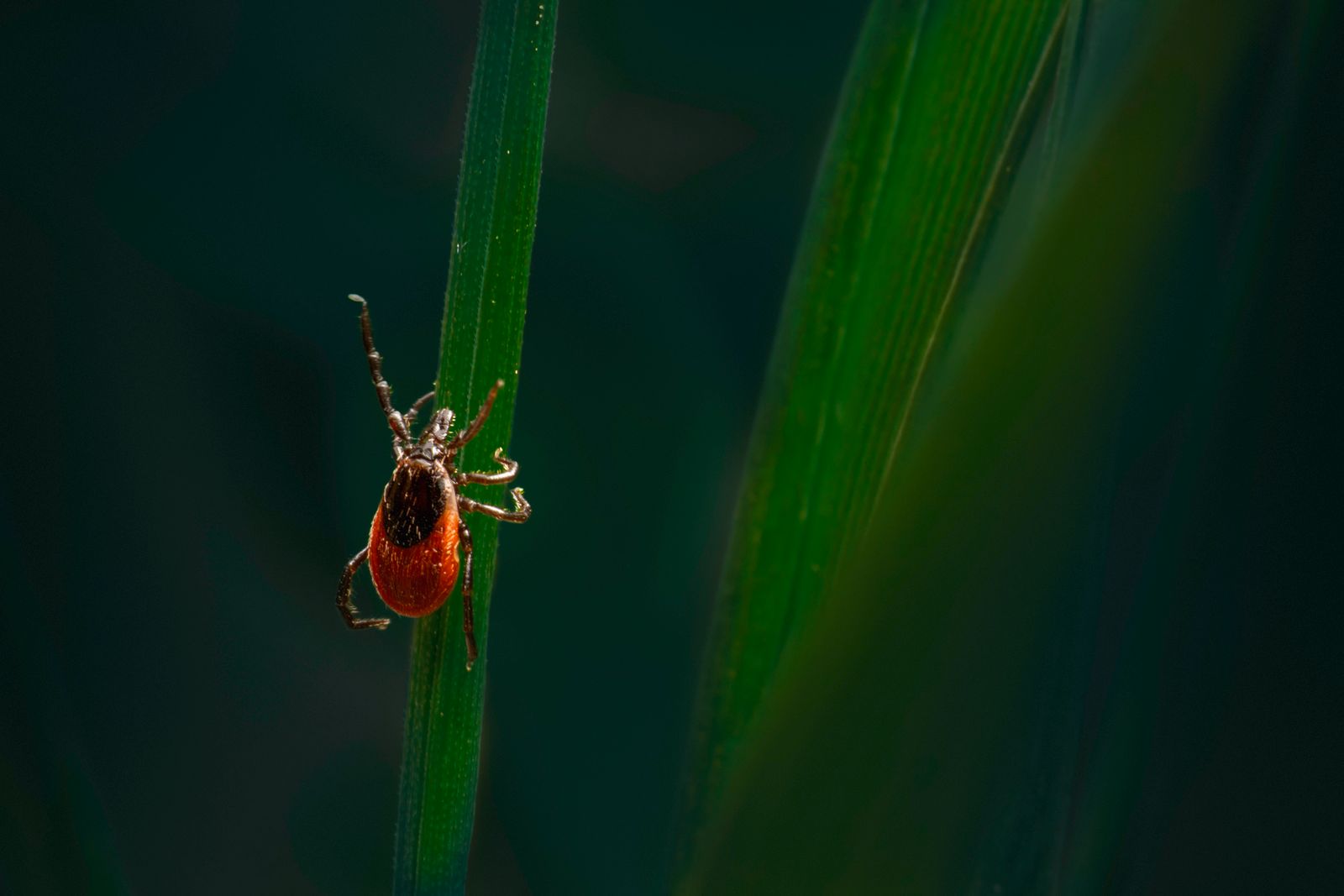
| When? | What should you do? |
|---|---|
| Before the hike | Closed footwear, long trousers and suitable tick repellent; treated clothing where appropriate. |
| During the hike | When possible, stay on the trail and avoid unnecessary shortcuts through tall grass or dense undergrowth. |
| During breaks | Avoid sitting directly in tall grass or dense leaf litter when a drier, clearer spot is available. |
| After returning home | Shower, perform a full-body tick check, and inspect clothing and gear; check children and pets as well. |
Tick exposure cannot be eliminated completely. The goal is to reduce the number that reach your skin and to find and remove any attached tick as quickly as possible.
If you find a tick: remove → clean → record → monitor → seek medical care if needed
Prompt, correct removal is better than any home remedy
Grip the tick close to the skin, pull it out steadily, clean the area and record when the bite occurred. Afterwards, do not keep checking the spot every minute; instead, know which symptoms should prompt medical attention.
Prevention + regular tick checks + considering TBE vaccination
If you spend a lot of time in forests, ticks are not a one-off problem but a recurring outdoor risk. A good routine therefore combines appropriate clothing, repellent, post-hike checks, knowing how to remove a tick correctly and — where appropriate — TBE/FSME vaccination planned in advance.

Sources and background
This article provides general information and is not a diagnosis or personalised medical advice. Seek medical help for severe or worsening symptoms, a spreading skin lesion, fever, neurological symptoms or uncertainty.
- Egészségvonal – Lyme disease
- Egészségvonal – tick-borne encephalitis vaccination
- CDC – What to Do After a Tick Bite
- CDC – Signs and Symptoms of Lyme Disease
- CDC – Symptoms of Tick-borne Encephalitis
- WHO – Tick-borne encephalitis
Photos used in this article: