
Edible wild plants, berries and fruits for hikers
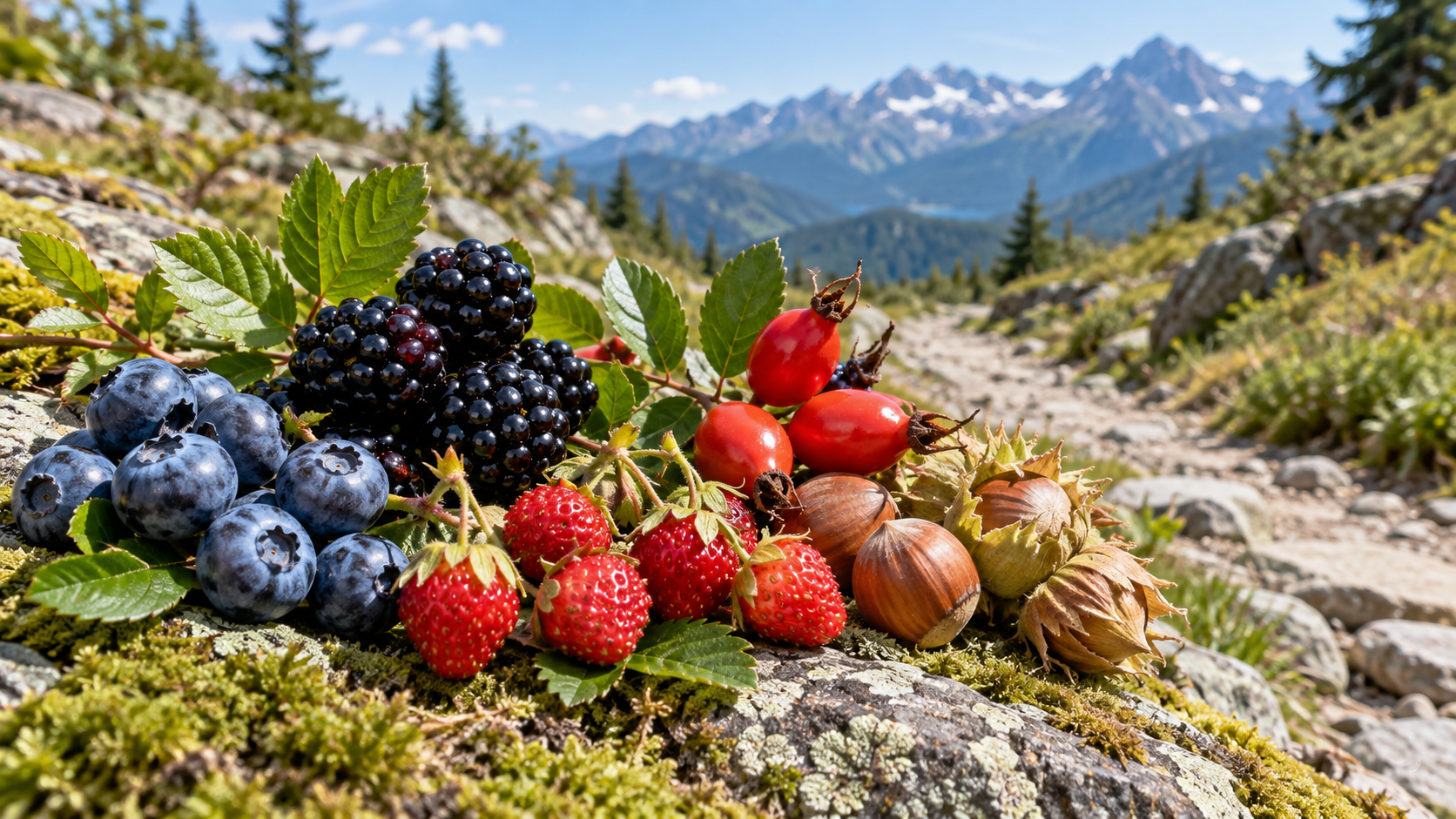
On a summer or autumn hike, it can feel as if the forest and woodland edge are full of free snacks. Many wild plants, berries and fruits are edible, but when eating something gathered in the wild, the first question is not whether it tastes good, but whether you have identified it with 100% certainty. No photograph, app or online article can replace reliable species knowledge. Never taste an unknown plant just to decide from its flavour whether it is edible.
Colour, berry shape or a plant-ID app result alone is not enough for identification.
When ripe, they can be eaten directly if the species is certain and they come from a clean location.
For example, ripe black elderberries should only be eaten after proper heat treatment.
Protected areas may require permission, and forest foraging is also subject to quantity limits and land-use rules.
- Some can be eaten straight from the plant Once positively identified, ripe wild blackberries, raspberries and wild strawberries are typical wild fruits you may eat during a hike.
- Autumn brings more fruit You may encounter sloes, rose hips, Cornelian cherries, hawthorn, hazelnuts, crab apples and wild pears.
- Not every edible plant is a trail snack Elderberries need heat treatment, while nettles are better eaten cooked rather than raw.
- If you are unsure, do not eat it There is no safe “tasting amount” for an unknown berry. Leave it on the plant.
With wild plants, correct identification matters more than whether a species is generally edible
“It looks like it” is not enough
Several poisonous plants have leaves or fruits that can resemble edible species at first glance.If you are uncertain about even one important detail of a plant’s identification, do not eat it. Missing out on a handful of berries is insignificant compared with the consequences of a mistaken identification.
Wild blackberries, raspberries and wild strawberries: the most obvious wild fruits on a hike
Rubus species are among the ones you are most likely to encounter
They are common in summer and early autumn along woodland edges, clearings, scrub and sunny tracks.
| Plant / fruit | When is it common? | Eating |
|---|---|---|
| Wild blackberry | Late summer to autumn; along scrubby woodland edges and tracks. | The ripe dark fruit can be eaten directly if the species is positively identified and it comes from a clean location. |
| Wild raspberry | Mainly in summer; on cooler upland woodland edges and clearings with plenty of light. | Can be eaten directly when ripe. |
| Wild strawberry | Late spring through summer; on sunny woodland edges and clearings. | The ripe red fruit is edible, but gather it only if you can identify the plant with certainty. |
Blackberries and raspberries are a good starting point for learning wild edible fruits because many hikers already recognise their characteristic aggregate fruits and growth form. Even so, do not identify them from a single feature: examine the whole plant and its habitat as well.
Do not eat fruit from dusty roadsides, beside sprayed areas or where it may have been contaminated by animal faeces. Wash it with clean drinking water when possible. Use stream water only if you are also sure it is safe to drink.
Sloes, rose hips, Cornelian cherries, hawthorn, hazelnuts and wild fruit
Autumn offers the widest choice, but not every fruit is ideal straight from the bush
Some make a pleasant snack on the trail, while others are better suited to jam, tea or other processing.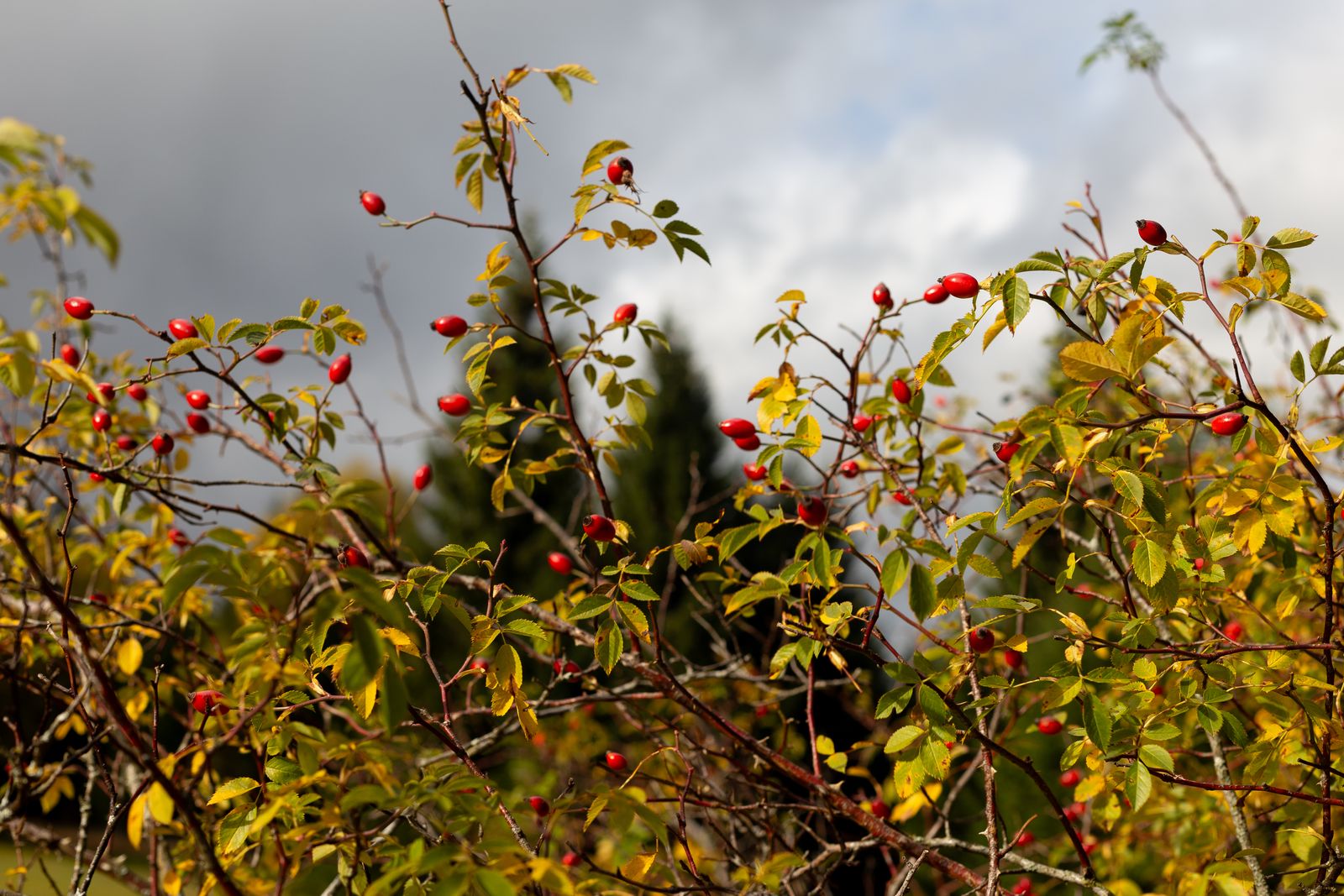
| Fruit | What is it like? | Use during a hike |
|---|---|---|
| Sloe | A blue-black, very astringent stone fruit; in autumn, especially after frost, it becomes less harsh. | The flesh is edible, but do not chew the hard stone. It is better for tasting a few fruits than as a large snack. |
| Rose hip | The red fruit of wild roses; it may remain on the plant from late summer into winter. | The flesh is edible, but the inner seeds and hairs can irritate, so it is awkward on the trail and more practical when processed. |
| Cornelian cherry | A red, elongated stone fruit when ripe, with a sweet-tart flavour. | The flesh is edible when fully ripe. Do not confuse it with other dogwood species. |
| Hawthorn | Red fruit with a somewhat floury texture; several species occur in Hungary. | The fruit flesh is edible, but do not chew the hard seeds. It is better for occasional tasting. |
| Hazelnut | A hard-shelled nut that ripens in autumn. | An intact ripe kernel can be eaten directly if it is not musty, mouldy or rancid. |
| Crab apple, wild pear | Small fruit, often sour or astringent. | Edible when ripe, but do not confuse it with ornamental or other unknown fruits. |
In the wild, being fully ripe matters. Hard, unripe or damaged fruit may not only taste worse but can also be more likely to cause digestive problems. Leave mouldy, fermenting or animal-damaged fruit where it is.
Wild garlic, dandelion and nettle: edible plants with very different risks
Wild garlic is tasty, but it is one of the most important examples of dangerous misidentification
Because its leaves can be confused with lily of the valley and autumn crocus, collect it only if you can identify it reliably.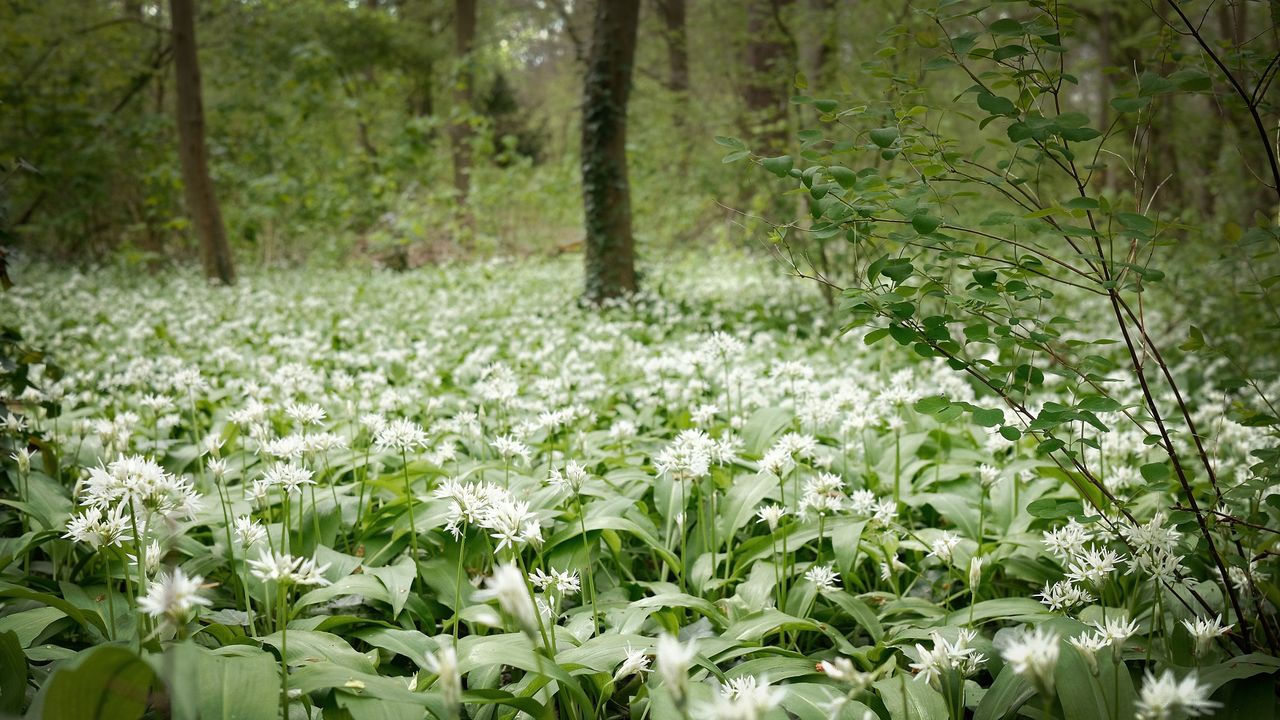
Hungary’s food safety authority, Nébih, also highlights the risk of confusing wild garlic with poisonous lily of the valley. Do not gather large handfuls blindly: check leaves individually, and do not let the strong smell of already-picked wild garlic mask an unfamiliar leaf mixed into the bunch.
Black elder is a good example of why the word “edible” can be misleading on its own
Some plants need heat treatment first
Do not assume that an edible wild plant is something you can simply eat straight from the bush.| Plant / fruit | Why not eat it directly? | Safer use |
|---|---|---|
| Black elderberry | Raw or unripe berries, as well as leaves, shoots and bark, may contain toxic compounds and can cause illness. | Use only fully ripe fruit after proper heat treatment, for example in cordial, jam, compote or another processed form. |
| Nettle | The stinging hairs on fresh leaves irritate the skin and mucous membranes. | Blanched, cooked, in soup or in another heat-treated dish. |
| Sweet chestnut | Raw it is hard and more difficult to digest, and confusing it with horse chestnut is dangerous. | Roasted or boiled, after certain species identification. |
| Acorn | Its high tannin content makes it unsuitable as a direct trail snack. | It can be used as food only after suitable processing; it is not something to rely on for eating during a hike. |
Official Hungarian health guidance specifically stresses that with black elder, even ripe berries should be eaten only after heat treatment. So seeing fruit on an edible plant does not mean it is safe to eat raw straight from the bush.
In the wild, the biggest risk is often not what you know, but what only looks familiar
Some look-alikes where uncertainty is not acceptable
This table is not an identification guide; it shows situations where the consequences of a mistake can be especially serious.| Edible plant | Dangerous look-alike | What should you do? |
|---|---|---|
| Wild garlic | Lily of the valley, autumn crocus and other plants with similar leaves. | Collect it only if you can identify it confidently to species level. Do not base the decision on a single sign such as smell. |
| Black elder | Other elder species, such as dwarf elder, as well as unripe fruit. | Identify the whole plant, not just the black berries. Do not eat the berries raw even when the plant is correctly identified. |
| Sweet chestnut | Horse chestnut. | If you cannot reliably distinguish the tree, husk and fruit, do not collect it for food. |
| Unknown red or black berries | Yew, privet, spindle, pokeweed and fruits of other poisonous species. | Berry colour does not indicate whether a fruit is edible. Leave unknown berries on the plant. |
If you have eaten an unknown or potentially poisonous plant, or develop vomiting, severe diarrhoea, confusion, seizures or other serious symptoms, seek urgent help. If severe poisoning is suspected, call 112. In Hungary, the Health Toxicology Information Service poison emergency line is available 24/7 at 06 80 20 11 99.
Wild fruit is not automatically free for the taking: location and quantity matter
Key foraging rules in Hungary
In forests, ownership, forestry and nature-conservation rules may all apply at the same time.For wild garlic, Nébih specifically states that up to 2 kg per person per day may be collected for personal use in state-owned forests that are not protected natural areas. If you are unsure about the status of the area, check the current information from the relevant forestry company or national park.
Do not strip an entire bush or patch. Take only what you will actually use, and leave enough fruit, leaves and flowers for the plant to persist and for wildlife to feed on.
What can you find when? A simple seasonal guide for hikers
Nature does not follow a fixed calendar, but this is a useful starting point
The exact ripening time can vary considerably with weather, elevation and habitat.| Period | Typical edible species | What should you watch for? |
|---|---|---|
| Early spring | Wild garlic, young nettles, dandelion. | Because wild garlic has dangerous look-alikes, collect it only with reliable species knowledge. |
| Late spring – early summer | Wild strawberries, early raspberries, edible flowers and leaves. | Avoid sprayed margins, roadsides and contaminated areas. |
| Summer | Wild raspberries, wild blackberries, wild strawberries. | Eat only ripe, intact fruit; in warm weather it can ferment and spoil more quickly. |
| Late summer – autumn | Blackberries, Cornelian cherries, hazelnuts, crab apples, wild pears, rose hips, hawthorn and sloes. | Many poisonous red and black berries are also conspicuous at this time of year – never identify berries by colour alone. |
| Late autumn – early winter | Sloes and rose hips often remain on the plants. | Frost can improve the flavour, but do not eat damaged, mouldy or fermenting fruit. |
-
Do I know exactly what this is? If not, I do not eat it.
-
Do I know exactly which part is edible? A plant’s flowers may be usable while other parts are unsafe.
-
Can it be eaten raw? For elder, nettle, chestnut and other plants, this is a separate question.
-
Does it come from a clean location? Leave it alone beside busy roads, sprayed areas, polluted water or places contaminated by animal faeces.
-
Am I allowed to collect here? Protected status, private ownership or specific forestry rules may restrict collection.
-
Am I taking only what I need? Wild fruit is food for wildlife as well as for us.
“It looks familiar, so I’ll taste it.”
This is not a safe method with wild plants. Poisonous species can also have attractive, harmless-looking fruits.
Species identification → edible plant part → preparation method → clean habitat → foraging rules.
If you have a certain answer to all five points, wild plants can be an interesting addition to a hike. If any point is uncertain, leave the plant untouched.
Sources and background
This article is for general information and is not a plant identification guide. Always identify a species with certainty before eating it. Foraging and nature-conservation rules may vary by location, so also check the current information provided by the land manager.
- Hungarian state nature conservation – collecting plants and mushrooms
- Hungarian Decree 61/2017 (XII. 21.) FM – forest products and personal-use quantities
- Nébih – wild garlic collection rules and risk of misidentification
- Egészségvonal – elderflower and elderberry: heat treatment and poisoning risk
- Egészségvonal – suspected poisoning, 112 and Poison Emergency contact details
- Nébih – wild mushrooms: consume only with reliable species identification
- Wikimedia Commons – Blackberries, Ivar Leidus, CC BY-SA 4.0