What to Pack in Your Carry-On for a Hiking Trip: Complete Checklist and Rules
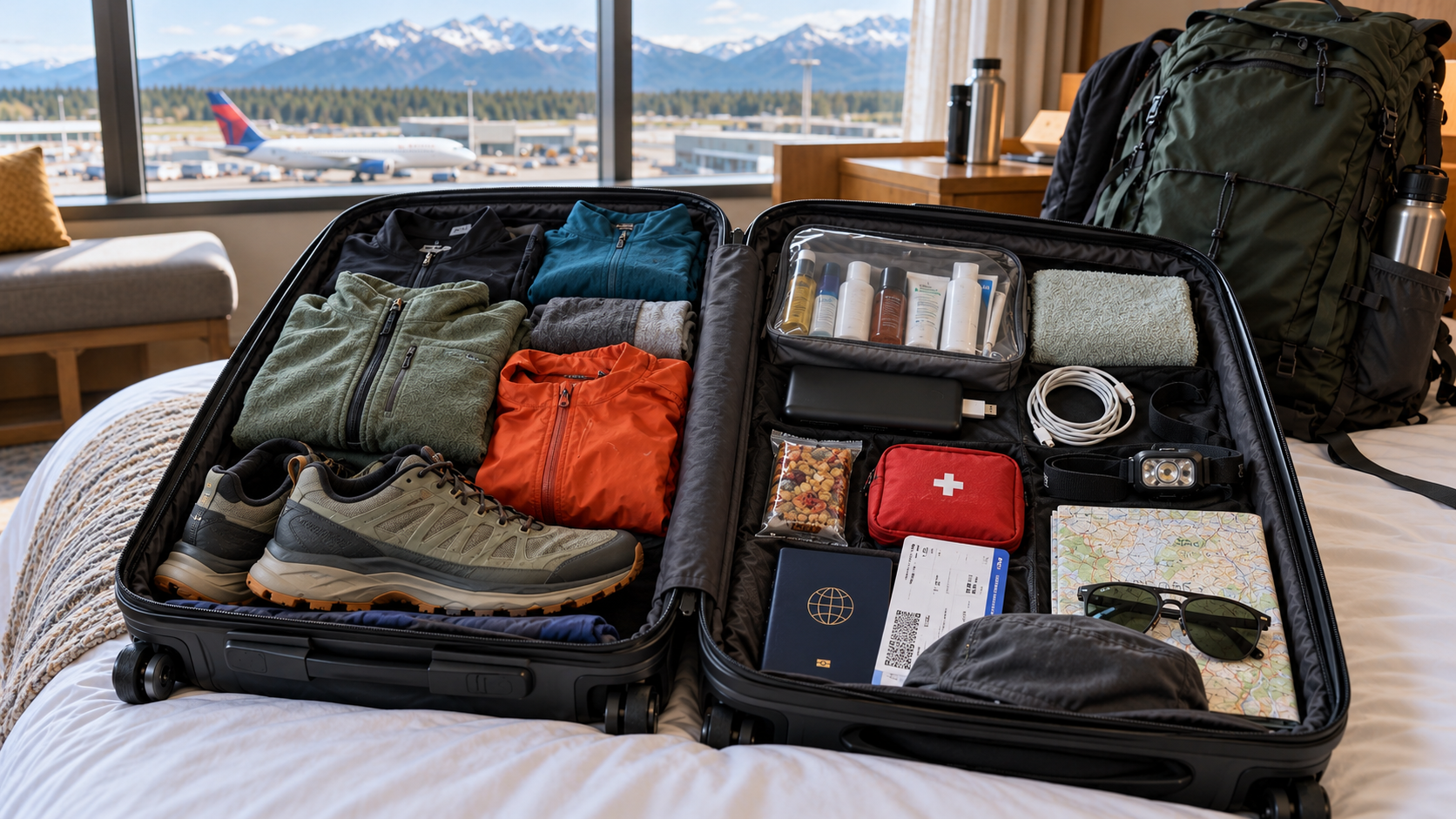
Hiking boots, layered clothing, a headlamp, a first-aid kit and a power bank – but what can you actually take on a plane? A practical packing list for 4–5 days, Wizz Air and Ryanair size limits, and rules for trekking poles, knives and camping stoves.
A 3–5-day hiking trip by plane, with day hikes starting from your accommodation.
Wear your boots; pack versatile layers in your suitcase.
Size, number of bags, liquids, batteries and prohibited items.
Do not assume trekking poles, knives or gas canisters are allowed in the cabin.
What size cabin suitcase can you bring on the plane?
“Hand luggage” does not necessarily mean a wheeled suitcase.
A paid overhead-bin suitcase and a free under-seat bag are two different categories.When flying to a hiking destination, the first question is not how many T-shirts to bring, but exactly what baggage allowance your ticket includes . Hiking footwear, rainwear and a daypack can quickly fill an overhead-bin-sized suitcase.
| Airline | Free small bag | Larger cabin suitcase |
|---|---|---|
| Wizz Air | 40 × 30 × 20 cm, up to 10 kg; under the seat | 55 × 40 × 23 cm, up to 10 kg; WIZZ Priority |
| Ryanair | 40 × 30 × 20 cm; under the seat | 55 × 40 × 20 cm, up to 10 kg; Priority & 2 Cabin Bags |
These dimensions reflect the airlines’ published rules available in October 2026. Handles, wheels, side pockets and bulging fabric can all count toward the size limit. Other airlines may have different allowances. Check the restrictions for every leg of a connecting journey.
If you fly with both airlines, a suitcase measuring no more than 55 × 40 × 20 cm may be a sensible starting point for the larger cabin-bag category – but only if you actually purchased the necessary allowance.

Divide your gear into three zones
Bulky footwear and thick outerwear take up the most space.
Plan three zones: what you wear, what goes in the cabin suitcase, and what stays in an allowed personal bag.Hiking boots or trail shoes, long trousers, a T-shirt and a thicker jumper or jacket: this saves space.
Spare clothes, rain jacket, socks, toiletries, first-aid supplies and lightweight hiking equipment.
Travel documents, wallet, phone, medication, cables, power bank and essentials for the first day.
If your ticket includes only one free small bag , you do not automatically get a separate cabin suitcase. In that case, adapt the three-zone approach to one permitted bag plus the clothes you wear. Do not assume a second daypack is free.
Do not pack the suitcase to its absolute limit. Leave space for small purchases, a protective bag for wet rainwear and items you need to remove quickly at security.
What clothes should go into your cabin suitcase?
Pack layers that work together, not five completely different hiking outfits.
The weather and access to laundry at your accommodation determine how many items you need.For a 4–5-day, snow-free hiking trip with a fixed accommodation base , the following is a sensible starting list:
- 2–3 quick-drying T-shirts – technical or merino base layers instead of cotton.
- 1 pair of lightweight long hiking trousers plus, optionally, 1 pair of thin shorts.
- 1 fleece or lightweight insulating layer – for cold mornings and exposed ridges.
- 1 waterproof, windproof shell jacket , preferably with a hood.
- 4–5 pairs of underwear and 3–4 pairs of suitable hiking socks .
- 1 thin hat or neck gaiter ; add light gloves for higher mountains.
- 1 casual/travel outfit suitable for evenings and the flight.
In colder seasons, a lightweight down or synthetic insulated jacket, thermal leggings and suitable gloves may be essential. What matters most is not the number of garments but the season, elevation, wind and precipitation .

Instead of four pairs of hiking trousers, one reliable pair and a travel backup are usually enough. A bulky cotton sweatshirt takes up disproportionate space in a cabin suitcase.
Which hiking shoes should you bring, and what should you wear on the flight?
Wear your tried-and-tested hiking shoes while travelling.
A second pair of heavy boots is rarely worth the space it occupies in a cabin suitcase.Your main hiking shoes should not be brand-new : a long descent on rocky ground quickly reveals whether they fit. Wearing boots on the flight keeps them out of your luggage; security staff may occasionally ask you to remove them.
Sturdy trail shoes or boots with suitable tread; choose based on experience and the socks you use.
Well-broken-in trail-running shoes with good grip may be enough, depending on ankle support and your pack weight.
Ultralight sandals or slippers are optional – only if space allows.

Wearing heavy hiking boots can save luggage weight, but remember you may walk long distances through airports. If your route requires technical winter footwear, a cabin suitcase is often insufficient.
Do you need a separate hiking backpack alongside the cabin suitcase?
A daypack suitable for hiking is not necessarily compliant with airline baggage limits.
Check both the number of bags allowed by your ticket and their external dimensions.For day hikes, a lightweight 15–25-litre backpack is often sufficient, depending on weather and water requirements. It should hold water, rainwear, food, a headlamp, first-aid supplies and a warm layer.
- If your fare permits two cabin bags, the smaller personal bag can be your daypack, provided it also meets the size requirements .
- If you are travelling with only one suitcase, a lightweight foldable daypack with suitable load capacity can go inside it.
- Do not assume that a heavily framed backpack with dangling straps and trekking poles attached externally is cabin-compatible.

A “cabin suitcase + daypack” means two bags . It only works if your ticket allows both; otherwise one must fit inside the other.
Phone, offline maps, headlamp and power bank
In the mountains, your phone acts as a map, camera and emergency backup.
On an aircraft, however, lithium batteries are subject to separate rules.- Phone and charging cable , plus a mains adapter suitable for your destination.
- Offline maps and GPX files downloaded before departure. Do not leave downloading them until the last minute at the airport.
- Headlamp with a working battery and, ideally, a backup option.
- Power bank with clearly marked Wh capacity; protect spare batteries from short circuits.
- Take a watch, camera or satellite communicator only if you will actually use it.
According to IATA guidance, power banks and spare lithium batteries must not go in checked baggage ; keep them in cabin baggage. Up to 100 Wh is generally permitted, although airlines may impose stricter limits on quantity and use. Between 100 and 160 Wh , special approval and additional restrictions may apply; batteries above 160 Wh are generally prohibited. If staff require you to gate-check your cabin suitcase, remove power banks and spare batteries first.

Wh = mAh × nominal cell voltage / 1000. For example, 20,000 mAh × 3.7 V / 1000 ≈ 74 Wh . Always rely on the device label and your airline’s rules.
What first-aid supplies and medication should you pack?
A useful first-aid kit does not need to be large – it needs to be well chosen.
Keep it accessible, and avoid prohibited sharp tools.- A selection of adhesive dressings , blister plasters and sterile gauze.
- Elastic bandage, antiseptic wipes and disposable gloves.
- Any regularly prescribed medication , preferably in its original packaging.
- Medicines suited to your own medical needs, used according to their instructions.
- Compact emergency blanket and whistle; add more equipment for longer or remote hikes.
Medically necessary liquid medicines may be subject to specific screening procedures and exemptions. Prescriptions or medical certificates may be required for certain medicines or destination countries. Rules for scissors, tweezers, needles and other sharp items vary; if you are uncertain, do not pack them in cabin baggage.

Do not place essential medication in a bag that could be checked at the gate. Keep it accessible in a bag permitted by your airline.
Shower gel, creams, sunscreen and drinking water: what is allowed?
The container’s capacity matters, not how much liquid remains inside.
As a general planning rule at EU airports, use containers of no more than 100 ml.For cabin baggage, containers holding 100 ml or less and a transparent, resealable bag with a maximum capacity of 1 litre are the safest starting point. Rules can vary by airport and screening equipment; on connecting flights, plan for the stricter rule.
Sunscreen, shampoo, shower gel, toothpaste, face cream and liquid or gel deodorant.
Solid soap, shampoo bars, compact toothpaste and travel-size products – provided they meet local rules.
Take an empty, leakproof water bottle through security and refill it where permitted.

Security screening looks at the container’s stated capacity , not the liquid left inside. Check exemptions for liquid medicines separately.
What hiking food should you take on a plane?
Solid, securely packaged foods are usually simpler than spreads and liquids.
The destination country’s food import and biosecurity rules are a separate issue.- Oat bars, energy bars, biscuits, muesli, oats, nuts and dried fruit.
- A compact sandwich or dry baked snack for travel day.
- Electrolyte powder or tea, if permitted for import at your destination.
- An empty collapsible or rigid water bottle, in accordance with airport security rules.
Foods such as honey, jam, peanut butter, hummus, yoghurt and similar spreads or liquids may count as liquids or gels at security. Countries outside the EU may restrict or prohibit bringing in meat, dairy, seeds and plant products; passing airport security does not automatically mean customs will allow the item into the country.
If shops are available at the destination, food for the first day generally makes better use of space. Choose lightweight, dry, high-calorie options.
Which hiking items should not go in your cabin suitcase?
Rigid, pointed and bladed equipment causes the most frequent problems for hikers.
Your airline’s rules and those of departure, transit and arrival airports can all matter.| Equipment | In cabin baggage | Sensible alternative |
|---|---|---|
| Trekking poles | Uncertain or banned in many places; sharp tips are especially problematic | Checked baggage or renting/buying at the destination |
| Hiking knife or multitool with blade | Do not plan to bring it into the cabin; sharp, pointed and longer-bladed items are restricted in the EU | Checked baggage or buying at the destination |
| Tent pegs, metal stakes | Generally unsuitable as pointed items | Checked baggage; check destination rules |
| Crampons or large traction devices | Sharp metal spikes create a high risk of refusal | Checked baggage or rental at the destination |
| Whistle, compass, map | Generally permitted | Cabin suitcase or personal bag |
| Standard hiking headlamp | Generally permitted, subject to battery rules | Protect against accidental activation |
For trekking poles, there is no single worldwide cabin-baggage rule . UK government travel guidance does not allow hiking poles in hand luggage, while some US rules may conditionally allow blunt-ended versions. Do not plan your journey on the assumption that security will let them through.

Even short, folded poles can be rejected at security. Before travelling, request written clarification from your airline and check your departure airport’s rules.
Can you fly with a camping stove or gas canister?
Gas canisters and fuel are dangerous goods, not just packing items.
A checked suitcase is not a solution for a full fuel canister.Gas cartridges, liquid camping-stove fuel and solid fire starters are generally prohibited in both cabin and checked baggage. Rules for fully emptied stove components depend on their previous use, cleaning, the airline and the applicable regulations.
- Do not hide a gas canister among your hiking clothes – a small size does not make it legal to carry.
- A stove burner or stove head without fuel may sometimes be permitted, but you must check in advance , and no fuel residue may remain.
- If you are going on a camping trip, the simplest solution is often to buy fuel at the destination ; confirm the canister type before departure.
- Local conservation and fire-safety regulations also apply to open flames and camping stoves.

Do not promise your hiking partner that you can simply “check” stove fuel. Restrictions on flammable fuel apply regardless of baggage type.
How to organise the inside of your cabin suitcase
The right order saves space and helps you avoid unpacking everything at security.
Keep electronics, liquids and small equipment easy to remove.- 1. Heavy, flat items: place them securely near the suitcase wheels.
- 2. Clothing: use two small packing cubes – one for hiking clothes and one for travel/casual wear.
- 3. Rain jacket and warm layer: keep them in a separate, quickly accessible compartment.
- 4. Toiletries bag: place it near the top if you need to remove it at security.
- 5. Electronics: pack them so that screens and batteries cannot be damaged.
- 6. Important documents and medication: keep these in a small personal bag or another continuously accessible location.

Pack everything, including the liquids bag, then weigh the packed suitcase and check its true external dimensions .
How much could a 4–5-day hiking suitcase weigh?
Do not use every gram of a 10 kg allowance: the suitcase itself can be heavy.
This is an illustrative calculation, not a guaranteed baggage weight.| Item | Example weight |
|---|---|
| Empty cabin suitcase | 2.3 kg |
| 3 T-shirts + underwear + 4 pairs of socks | 0.9 kg |
| Light trousers + casual clothes | 0.8 kg |
| Rain shell + fleece + hat | 1.0 kg |
| Toiletries + liquids bag | 0.5 kg |
| First aid + medication | 0.3 kg |
| Cables, headlamp and small devices | 0.5 kg |
| Space-saving daypack | 0.3 kg |
| Lightweight food and small items | 0.6 kg |
| Total | 7.2 kg |
In this example, you wear the heavy hiking shoes , while the phone and power bank can go into a permitted, accessible personal bag. If your fare allows only one bag, their weight and volume must be included in that single item. This model does not apply if you need crampons, a tent or bulky winter equipment.
With a 3.5 kg suitcase, only 6.5 kg remains for contents under a 10 kg limit. Always weigh your actual fully packed bag.
Complete carry-on packing checklist for a hiking trip
In ten minutes, find out what you have forgotten – and what needs to come out.
Check flight compliance first, then hiking equipment.Before the flight:
- Confirm the number, dimensions, weight and Priority allowance of all cabin bags on your booking.
- Keep your documents, insurance, route plan and accommodation details available.
- No gas canisters, fuel, knives or sharp tent pegs in cabin baggage.
- Liquids packed in compliant containers and an appropriate bag.
- Power bank and spare batteries carried in the cabin, protected against short circuits.
For the hike:
- Broken-in hiking shoes, proper socks, layered clothing and rain protection.
- Reliable daypack, water bottle, headlamp, offline maps and GPX files.
- First-aid kit, required medication, sun protection and food.
- Confirm the route, forecast, required permits and mountain huts.
- Plan to check, rent or buy poles, stove or camping equipment at your destination.
Frequently asked questions about packing for a fly-to-hike trip
These are the issues that most often force travellers to repack their bags.
These answers do not replace the rules that apply to your specific flight.Can I bring collapsible trekking poles into the cabin?
Do not assume you can. The tip design, the security screening staff and the airline’s rules all matter. Checked baggage or local rental is safer.
Can I wear my hiking boots on the plane?
Usually, yes. Security may ask you to remove them. Your shoes should also be comfortable for walking around the airport.
What is the difference between a 10 kg cabin suitcase and a 10 kg checked bag?
A cabin suitcase travels with you in the passenger cabin if your fare permits it; a 10 kg checked bag is handed over at the bag-drop desk. The same weight does not mean the same entitlement.
Can I take a 20,000 mAh power bank on board?
Many models with a nominal 3.7 V cell voltage are approximately 74 Wh and therefore generally fall below the 100 Wh category. Check the actual device label, permitted quantity and your airline’s rules.
Are honey and peanut butter solid foods?
No. Honey and spreadable products may be subject to liquid or gel restrictions at airport security.
Can camping stove gas go in checked baggage?
No. Gas canisters and flammable fuels are generally prohibited in both cabin and checked baggage. Plan to buy fuel after arrival.
What size daypack can I take alongside a cabin suitcase?
You can take only as many bags as your booking allows. A small personal bag must remain within the specified external under-seat dimensions.
Do I need a rain jacket if the forecast looks good?
In exposed, windy and changeable mountain conditions, a wind- and waterproof layer is worthwhile. A favourable forecast is not a substitute for planning.
Can I carry sunscreen and medicine in containers larger than 100 ml?
Sunscreen is generally subject to the liquids rule. Exceptions may apply to medically necessary medicines, but check airport and destination-country requirements beforehand.
The secret to a successful carry-on hiking trip is to consider equipment choices and flight security rules together from the moment you book.
A good cabin suitcase is not necessarily a full one
Wear your boots; pack a rain jacket and versatile layers
Broken-in shoes, suitable socks, an insulating layer and a rain shell matter more than a fifth change of clothes.
Check your baggage allowance and restricted items in advance
The free small bag is not the same as a Priority cabin suitcase. Do not discover restrictions on trekking poles, knives, tent pegs or stove fuel only at security.
Prepare for both the flight and the mountains
Measure your bag, download your maps, check the rules and leave room for essential hiking gear. If you need technical equipment, decide early whether to check a bag or buy/rent the equipment on arrival.


Sources, photographs and usage
Rules checked: October 2026. Airlines’ size, weight, baggage quantity and battery rules can change. Local security checks at departure and transit airports and the destination country’s import rules also apply. This guide cannot guarantee that any specific item will pass security.
- Wizz Air – cabin baggage dimensions
- Ryanair – current baggage rules
- Your Europe – cabin baggage and liquids
- IATA – lithium batteries and power banks
- IATA – baggage, restricted items and screening
- GOV.UK – sports equipment, including trekking poles
- FAA – fuels and gas canisters
- FAA – transporting camping equipment
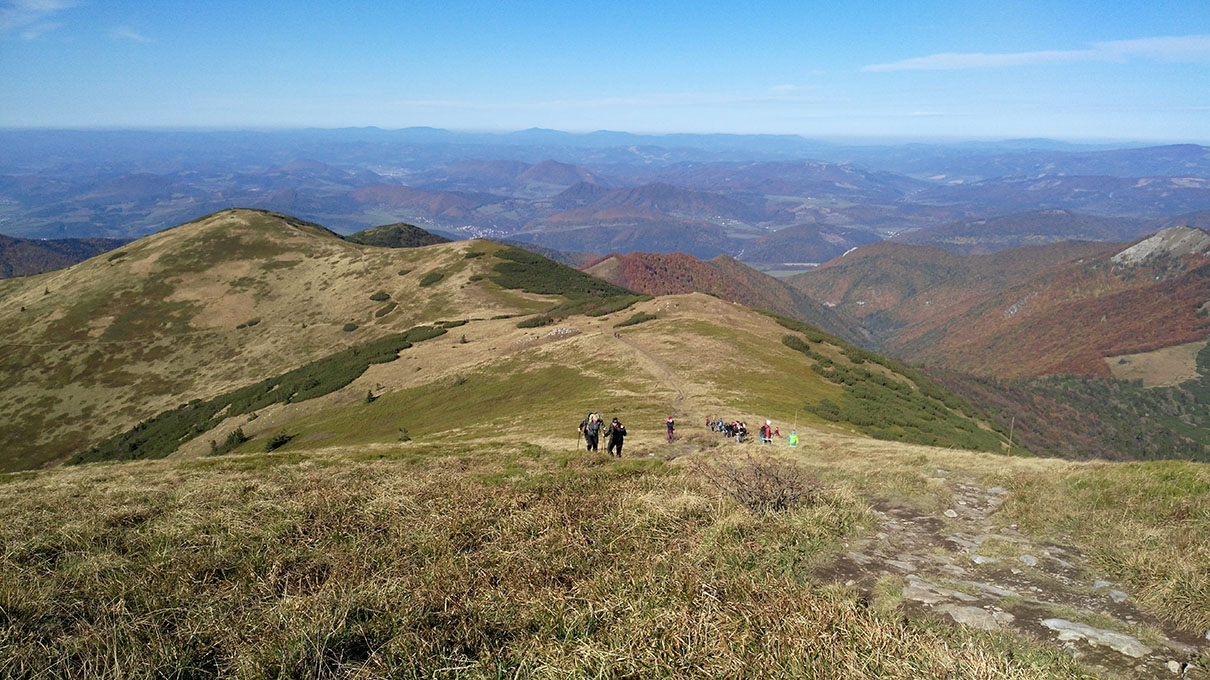
Photo sources and licences: the images come from their respective Wikimedia Commons file pages. Each page identifies the creator and the applicable free licence. Captions and the source links below refer to the exact files; certain Creative Commons licences require attribution and disclosure of modifications.
- All our luggage.jpg – Kathryn Greenhill / Wikimedia Commons (featured image)
- Holiday Packing List – Packing Luggage for Vacation.jpg – Family Destinations Guide / Wikimedia Commons
- Hard-shell-jacket.jpg – Skarkkai / Wikimedia Commons
- Climbing Boots.jpg – Iainmccurdy / Wikimedia Commons
- Quechua backpack – A.jpg – Fructibus / Wikimedia Commons
- Charging a smartphone with a USB power bank.jpg – Mk2010 / Wikimedia Commons
- First-aid travel kit 1.jpg – Renée Kools / Wikimedia Commons
- Small bottle for carrying liquids while on air travel.jpg – Netha Hussain / Wikimedia Commons
- Retracted trekking poles.jpg – Sarang / Wikimedia Commons
- Gas cylinder for camping stoves.jpg – Tpikonen / Wikimedia Commons
- Wizz Air and Ryanair baggage sizer.jpg – Kenzel2 / Wikimedia Commons
- Lago di Misurina.jpg – Giovanni / Wikimedia Commons
- Seceda pieralongia sacun 2012 026.JPG – Wolfgang Moroder / Wikimedia Commons
- Lago di Sorapis (1).jpg – Samuel Boatto / Wikimedia Commons
Hiking recommendations: the three cards use the existing TN Article Engine v6.0 recommendation structure with location-specific images. Check live route details on the Túraprogramok route pages.