What to Cook in the Mountains? 7 Delicious, Easy Hiking Recipes
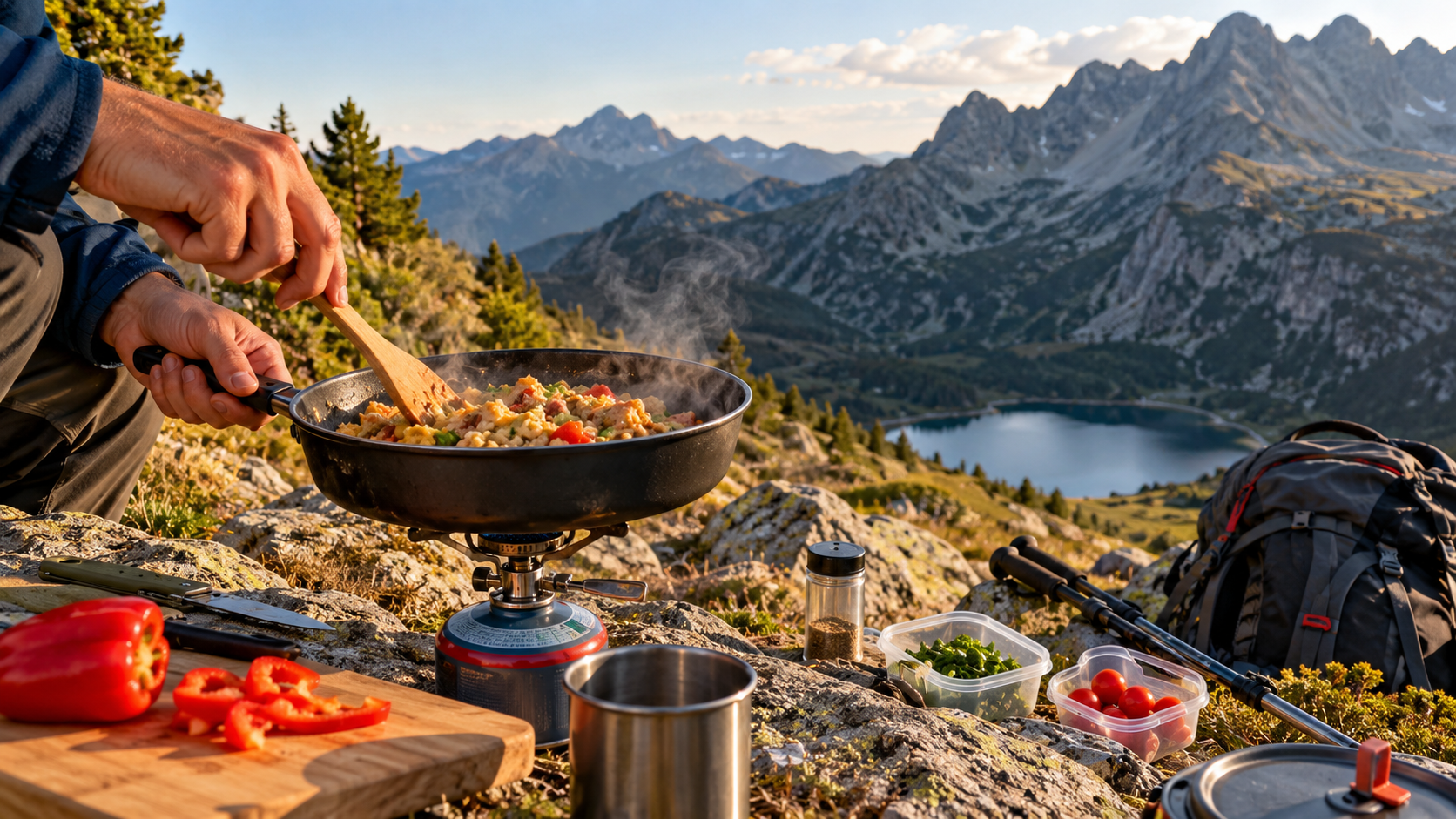
In the mountains, the best meal isn’t one that needs ten different pots and pans. It’s one you can prepare with just a few ingredients, little water, and minimal fuss—safely —and that you will genuinely enjoy at the end of the hike. On a quick day trip, a filling cold lunch may be all you need. On a multi-day trek, however, pack weight, shelf life and fuel requirements become much more important. This guide gives you seven practical recipes, with ingredient weights, water requirements, preparation times and variations for the trail. The goal: tasty mountain meals without unnecessary weight or risky cooking.
Exact quantities, ingredient lists and step-by-step instructions.
Find out which recipes need cooking and which only need hot water.
Useful for day hikes and when stove use is prohibited.
Perishable food storage, safe water and packing out waste.
- You don’t necessarily need a stove on a day hike.A tortilla wrap, whole fruit, peanut butter, nuts and a properly packed sandwich are often simpler options.
- If you cook, choose one-pot recipes.Oatmeal, couscous, pasta, ramen and lentil soup can all be made with minimal equipment.
- Include cooking water in your plan.Allow separately for the water specified on the packet, drinking water and cleaning your cookware.
- Perishable food needs refrigeration.Without a reliable way to keep food cold, avoid carrying raw meat, egg-based spreads or highly perishable toppings on multi-day hikes.
- Cook only where it is permitted.Never use a gas stove inside a tent. Check local regulations in protected areas and during fire restrictions.
What should you cook on a mountain hike?
Start with the hike length and the water you have available
The best recipe for a two-hour walk is not necessarily the best for a two-day route far from mountain huts.The most important question when planning mountain meals is not what would look impressive in a photograph. Instead, ask yourself: Will there be a safe place to eat, enough safe water, permission to use a stove, and enough time to finish cooking? In strong wind, rain and cold, a simple recipe also gives you an important margin of safety.
A tortilla wrap or pre-packed cold meal. No stove, fuel or washing up required.
Individually packed trail mix and a pre-made sandwich; couscous for a longer break.
One-pot pasta, ramen or lentil soup with easy-to-measure ingredients.
Bring a hot drink or soup in a thermos. Cook only in a safe, sheltered location where stove use is allowed.
The quantities in these recipes are for one adult, for one meal . They are not universal daily calorie recommendations. Your needs will vary with distance, elevation gain, exertion, cold and individual circumstances.
Quick, hot oatmeal on a camping stove
One of the best breakfasts for an early start
Oats, dried fruit and nuts can be pre-portioned and packed together dry.
Ingredients
- 60 g quick-cooking rolled oats
- 20 g raisins or dried cranberries
- 15 g walnuts or almonds
- 1 tsp sugar or honey, to taste
- A pinch of cinnamon; optionally 15 g powdered milk
Instructions
- Pack everything at homePut the oats, dried fruit and cinnamon into one resealable bag.
- Heat the waterPour water into your pot and bring it to a boil. Mix powdered milk separately until smooth, if using.
- Thicken the oatmealAdd the oats and stir. Cook gently for 2–4 minutes, or follow the package instructions.
- ServeSprinkle the nuts over the top and add a little extra water if needed.
When you have almost no time for cooking, use quick oats or instant oats. Depending on the brand, hot water and a few minutes covered may be enough. Only carry a fresh banana if it won’t get crushed in your pack.
Why does it work on a hike? The entire dry breakfast is easy to measure and can be flavored in many ways. Never pour untreated stream water over the oats: cooking also requires safe water.
Vegetable tortilla wrap – a mountain lunch without a stove
Save yourself the stove, the pot and the washing up
Ideal for day hikes; timing and refrigeration matter when using fresh, perishable fillings.
Ingredients
- 1 large tortilla, approximately 60 g
- 35–50 g unopened, shelf-stable vegetable spread or olive tapenade, as confirmed by its label
- 1 small tomato and half a bell pepper
- 30 g lettuce or grated carrot
- Optional: 30 g cheese, only if safely refrigerated
Instructions
- Prepare at homeWash and dry the vegetables. Keep juicy tomato pieces in a separate small container.
- Fill just before eatingSpread the filling on the tortilla and add the chopped vegetables.
- Roll it tightlyFold in both sides, then roll the wrap so it is easy to eat by hand.
Many sandwich spreads require refrigeration even before opening. Choose only a product whose label allows unopened storage at room temperature, and eat the portion immediately after opening. You can also use a little olive oil and dried seasoning instead of a spread.
Do not plan to carry meat, egg, mayonnaise or soft-cheese fillings for hours in the heat without refrigeration. In general, perishable foods should not remain without refrigeration for more than 2 hours, or more than 1 hour at temperatures above 32°C (90°F).
Vegetable couscous with almost no cooking
Dry couscous needs little equipment and minimal preparation
An excellent option when you can boil water but don’t have time for a long cooking session.
Ingredients
- 80 g precooked, instant couscous
- 20 g chopped sun-dried tomatoes
- 15 g olive oil in a small sealed sachet
- ½ tsp dried basil or parsley
- ½ vegetable stock cube or a little salt
- Optional: 30 g olives in a sealed sachet
Instructions
- Combine the dry ingredientsMix the couscous and dried seasonings in the pot.
- Add hot waterUse only the amount indicated on the packet: different instant couscous products need different amounts of water.
- CoverLeave to stand for 5 minutes, then fluff with a fork.
- Finish the dishStir in the oil, sun-dried tomatoes and olives.
Do not confuse instant couscous with grains that require longer cooking. Take specifically precooked couscous that rehydrates quickly. The photograph illustrates a serving suggestion with fresh vegetables; the trail version deliberately uses lighter, dried ingredients.
Couscous needs only one pot and a spoon, and it is easy to flavor. In cold wind, do not leave it exposed while rehydrating: keep it covered or use an insulated food container.
One-pot tomato pasta
Comfort food before a night in the mountains, without a separate saucepan for the sauce
Portion the ingredients at home to reduce preparation time on the trail.
Ingredients
- 90 g short pasta with a quick cooking time
- 35–40 g tomato paste in a small, unopened sachet
- 1 tsp olive oil
- A pinch of oregano, garlic powder and salt
- Optional: 20 g grated firm hard cheese, stored safely
Instructions
- Boil the waterBring water to a boil in your pot, then add the pasta.
- Cook it in one potCook for the time stated on the packet, stirring regularly. If too much water remains, carefully reduce the amount.
- Add the sauceStir the tomato paste, oil and seasonings into the hot pasta near the end.
- Check the consistencyIf it is too thick, add a little safe water and heat through.
Choose pasta with a short cooking time. You can reduce the amount of water that needs draining, but do not use so little that the food cannot cook through properly. The time and water figures are estimates and depend on your pasta and stove.
If reducing pack weight matters, don’t carry a glass jar of tomato sauce. Small, unopened portions of tomato paste and dried herbs are easier to pack.
Mountain ramen – more than just a packet of instant noodles
A quick soup can be more substantial with a few thoughtful additions
Packet noodles are only the starting point; choose toppings that can be stored safely.
Ingredients
- 1 packet of instant noodles, approximately 65–85 g
- 15–20 g dehydrated mixed vegetables
- 1 tsp sesame seeds or peanuts
- 1 small sachet of soy sauce, optional
- Part of the enclosed seasoning sachet, to taste
Instructions
- Heat the waterPour the amount of water stated on the noodle packet into your pot.
- Add vegetables firstDried vegetables may need longer to rehydrate than instant noodles.
- Cook the noodlesAdd the noodles for the final few minutes and cook for the time stated on the packet.
- Season to tasteTaste before adding more seasoning: packet mixes are often already quite salty.
Do not carry raw eggs or perishable meat for several hours without refrigeration. For extra protein, use an unopened, heat-treated or shelf-stable alternative appropriate for the storage conditions, and consume it once opened.
Practical benefit: the same pot can be your cooking vessel and your bowl. You don’t need a separate frying pan or plate.
Red lentil soup in a small camping pot
A warm, easy-to-season meal for cool evenings
Dry red lentils are easy to portion, but they need to be cooked thoroughly.
Ingredients
- 75 g dry split red lentils
- 10–15 g dried soup vegetables
- 1 tsp olive oil
- A little ground cumin and smoked paprika
- Salt and, optionally, a pinch of dried lemon zest
Instructions
- Rinse the lentilsIf directed on the packet, rinse them in safe water.
- Bring to a boilPut the lentils, dried vegetables and water into one pot. Bring to a boil, then reduce the heat.
- Cook until tenderSimmer, stirring occasionally and adding water if necessary. Cooking may take longer at altitude or in cold conditions.
- SeasonStir in the oil, cumin, paprika and salt at the end.
This dish needs more stove time and fuel, so it is less convenient for a lightweight day hike than couscous. It is better suited to a longer bivouac or an authorized cooking area. The picture shows served lentil soup; the trail recipe is a simplified variation.
If you have very little fuel, choose instant, precooked lentil soup or another just-add-hot-water meal instead. Dry lentils must be properly cooked until tender.
Homemade trail mix with nuts and dried fruit
The simplest “recipe” for short breaks along the route
No cooking, water or refrigeration required, and easy to portion.
Ingredients
- 60 g walnuts or almonds
- 40 g raisins or chopped dried apricots
- 30 g peanuts or pumpkin seeds
- 20 g dark chocolate, optional in cool weather
Instructions
- Measure everything at homeMix the dry ingredients in a clean container.
- Divide into three portionsSmaller bags make it easier to access and portion the mix.
- Keep it within reachPut the day’s portion in an accessible pocket of your backpack, and bring the packaging back with you.
Tree nuts and peanuts can cause allergic reactions. Chocolate may melt in hot weather, so leave it out in summer.
On a long, demanding hike, trail mix is a supplementary snack, not an automatic substitute for all your meals. Plan enough fluids and a varied diet.
What equipment do you actually need to cook in the mountains?
A small kit is enough for most of these recipes
A common mistake is carrying more pots and utensils than you will ever use.
Use only where permitted. Estimate fuel based on the number of times you will boil water, the temperature and the wind.
Often sufficient for simple meals for one person; the exact size depends on the recipe and how you serve it.
A lid reduces heat loss. It is also wise to carry a backup way to light the stove.
Allow for cooking, handwashing and cleaning as well as drinking water.
Never cook in a tent, enclosed vestibule or poorly ventilated shelter: fire and carbon monoxide can be life-threatening. Use the stove outdoors on stable, non-flammable ground, respecting your surroundings and current restrictions.
A gas camping stove is not the same as a campfire, but that does not automatically mean you can use it anywhere. Rules vary between national parks, forests, campsites and protected mountain areas.
How to pack your food without carrying unnecessary weight
Portion ingredients at home and plan for the rubbish too
A meal is genuinely lightweight only when you have planned its ingredients, water requirements and waste.Measured portions weigh less than a whole bag of couscous or a full jar of sauce, and you won’t need to measure ingredients on the trail. Carefully pre-portioned dry ingredients are often safer and more practicalthan ready-made meals carried for hours in the heat.
Label it with the meal name, water requirement, cooking time and allergens. Pack out the packaging after every meal.
Carry oil, purée and sauce in leakproof containers that are unopened or sealed appropriately.
Do not guess your portions from one large shared bag. Separate your food for day one and day two.
Don’t base your entire cooking-water plan on a stream marked on the map. Have a reserve and a way to treat water.
If you plan 400 ml for dinner and 250 ml for breakfast, that is at least 650 ml of cooking water, in addition to what you will drink and use for cleaning. Estimate extra water losses, additional boiling requirements and local conditions separately.
One-day and two-day mountain meal plans
Examples, not a rigid diet – decide where and when you will cook in advance
These menus are a starting point; actual energy needs and water availability differ from person to person.| Situation | First meal | Later meal | Planned cooking water | Notes |
|---|---|---|---|---|
| Short walk | Tortilla wrap + fresh fruit | Trail mix | 0 ml of cooking water | Quick, no-stove option |
| Longer day hike | Oatmeal before setting out | Cold tortilla wrap + trail mix | 0 ml on the trail | Don’t assume there will be a place to cook en route |
| Two-day hike – Day 1 | Pre-packed cold lunch | Couscous or pasta | approx. 130–450 ml | Depends on the recipe chosen |
| Two-day hike – Day 2 | Hot oatmeal | Trail mix + cold backup meal | approx. 220–250 ml | Plus drinking water and cleaning water |
The table illustrates how to plan cooking water , not your total daily fluid or calorie needs. On multi-day hikes, pack a separate no-stove backup meal in case your stove fails or cooking is prohibited.
Which foods spoil, and when can trail food become dangerous?
Even the best recipe is no good if the food spoils along the way
A broken cold chain and contaminated water are more serious problems than personal taste.Raw meat, egg-based dishes, many dairy products and ready-to-eat meals requiring refrigeration are not suitable for sitting in a warm backpack for hours. According to the USDA, perishable food should spend no more than 2 hours unrefrigerated in the temperature danger zone, or no more than 1 hour above 32°C (90°F). You cannot reliably judge whether food is safe simply by its appearance or smell.
Unopened, commercially shelf-stable products; dried pasta; oats; instant couscous; dried lentils; whole fruit; nuts and seeds.
Cold cuts, soft dairy products, fresh hummus, egg-based fillings and pre-cooked meat dishes. Always check the label.
Wash your hands, use safe water and clean cookware before food preparation. Contaminated equipment poses a risk too.
Without reliable refrigeration, do not carry perishable cooked leftovers into the following day.
Water from a stream or lake can look clean without being safe. Carry or treat the water you need for food preparation too. Boiling can reduce microbiological risks, but does not remove chemical contamination.
Wind, cold, altitude, water and the rules for using a camping stove
Where you cook matters more than how difficult the recipe is
Protecting nature and personal safety are part of the same task.At high altitude, water boils at a lower temperature, so food may take longer to soften even with the same cooking time. The wind cools the pot and increases fuel consumption, while cold affects the performance of some gas mixtures. Choose your stove and fuel in line with the manufacturer’s instructions and the conditions you expect.
Choose stable, non-flammable ground, away from dry vegetation, busy trails and steep slopes. Never operate a stove inside a tent.
A designated rest area is not automatically a permitted cooking area. Check the rules of the land manager, national park or accommodation provider.
If safe water is scarce, do not choose a recipe requiring large amounts of cooking water.
Pack out food scraps and packaging. Do not pour greasy leftovers or dishwater directly into streams or lakes.
General Leave No Trace guidance recommends handling washing up and strained dishwater at least approximately 60 metres (200 feet) away from watercourses where local rules allow. Collect and pack out any food scraps separately.
What else should you know about cooking in the mountains?
Short answers to common hiking food questions
Always adapt the recipes to your route and equipment.Do you need a gas stove for a day hike?
No. Cold tortilla wraps, sandwiches, whole fruit and trail mix are enough for many hikes, with none of the risks associated with cooking.
What is the quickest hot meal?
Usually instant couscous or instant noodles, provided you can boil water. The exact time depends on water volume and stove performance.
Is soup made with stream water automatically safe?
No. Microbiological safety and possible chemical contamination are separate issues. Use reliably treated water.
Why shouldn’t I carry raw meat into the mountains?
Without proper refrigeration and thorough cooking, the risk of foodborne illness increases. Beginners should choose shelf-stable ingredients.
What can I eat if fires and stoves are not allowed?
No-cook tortilla wraps, bread with peanut butter, nuts, fruit, properly stored ready-to-eat meals or shelf-stable foods that are safe to eat cold.
Which recipe is best for multi-day backpacking?
Pre-portioned oats, instant couscous, dried pasta and nuts are easy to plan. Red lentils require more cooking time and fuel.
Can I use a camping stove inside a tent when it rains?
No. Never use a lit stove in an enclosed or poorly ventilated tent because of the risk of carbon monoxide poisoning and fire.
Should I cook the pasta at home in advance?
Only if you can transport it safely refrigerated and eat it within the recommended time. For longer hikes without refrigeration, choose dry ingredients instead.
Before leaving, decide on your cooking location, meal times and reliable water supply. If any of these are uncertain, a no-cook lunch may be the better plan.
The best mountain meals are simple, tasty and easy to plan
Pack a well-wrapped cold meal
A tortilla wrap, trail mix and whole fruit are quick to access and don’t need a cooking area.
Choose a familiar, one-pot recipe
Hot oatmeal, couscous, tomato pasta or ramen – know your portions and water needs before setting out.
Adapt the food to the hike, not the other way around
Choose your menu according to your route, the weather, available water and local rules. Store perishable foods safely, and always pack out your waste.

Sources, safety information and images
These are original recipe suggestions simplified for outdoor use, not medical nutrition plans. Cooking times and water requirements vary with packaged ingredients, altitude and stove performance. Safety guidance is based on the professional sources below.
- USDA FSIS – Food Safety While Hiking, Camping & Boating
- USDA FSIS – Which foods should you pack for hiking?
- CDC – Making water safe by boiling and treating it
- US National Park Service – Leave No Trace
- NSW National Parks – Camping safety (gas stoves and enclosed tents)
- Pexels – image use licence
Free-to-use illustrations: The hero photo and section images are original photographs available free of charge on Pexels. Some food photographs illustrate serving suggestions; the recipes explain how to prepare the trail versions. Online reuse is governed by the Pexels licence.
- Dajana Reçi / Pexels – Cooking Pot on a Camping Stove
- Taryn Elliott / Pexels – A Person Cooking Oatmeal Using Portable Stove
- ROMAN ODINTSOV / Pexels – Person Holding Tortilla Wrap
- Mirela Missmg Gi / Pexels – Delicious Healthy Dish with Couscous and Fresh Vegetables
- Greta Hoffman / Pexels – A Person Putting Tomato Sauce in Pasta
- Taryn Elliott / Pexels – Instant Noodles on a Cooking Pot
- Nadin Sh / Pexels – Soup in Bowl
- Francisco Jacquier / Pexels – Nuts in a Bowl on a Wooden Table
- Taryn Elliott / Pexels – Cooking Kit with Pot on Rock
Túraprogramok: The live photos, distances, elevation gains and other statistics in the suggested hikes may be populated by TN Article Engine v5.9 using the connected API. The appearance of a hiking route does not imply that cooking is allowed there.